Skip to content


The benefits of influencer marketing reach far past likes: trusted creators bring small businesses new customers, reusable content, and sales they can track. This guide shows owners and marketers 10 advantages, the KPI behind each one, and the risks and FTC rules to plan for.
How the benefits of influencer marketing work
The benefits of influencer marketing come from borrowed trust. A brand pays a creator with cash, free product, or commission, and the creator presents the offer to followers who already value that person’s opinion.
That trust explains the budget shift. In Influencer Marketing Hub’s 2026 survey of more than 600 marketers, 87.49% expected their influencer budgets to grow this year.
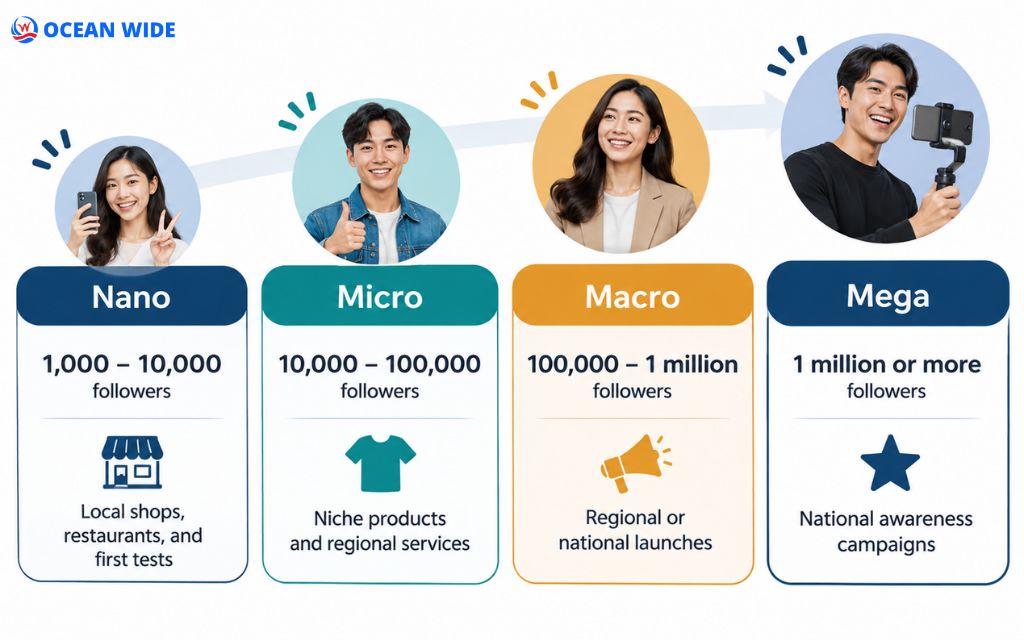
Creators fall into 4 common tiers. Follower ranges differ by source, so treat the figures below as working definitions, not fixed rules.
| Creator tier | Typical followers | Best fit |
| Nano-influencer | 1,000 to 10,000 | Local shops, restaurants, and first tests |
| Micro-influencer | 10,000 to 100,000 | Niche products and regional services |
| Macro-influencer | 100,000 to 1 million | Regional or national launches |
| Mega-influencer | 1 million or more | National awareness campaigns |
Most small businesses start with nano- and micro-creators. The same survey found that more than half of respondents planned to expand nano and micro partnerships, while macro plans stayed flat.
10 advantages small businesses gain from influencer marketing
Influencer marketing gives small businesses 10 core advantages, from targeted reach to loyal advocates. Each benefit below explains what you get, when it works, and which metric proves it.
1. Reach the exact audience you want
Creators give you a ready-made niche audience. A local fitness creator speaks to gym-goers, while a home-improvement creator speaks to homeowners planning their next project.
This works when the creator’s audience matches your customer by location, age, and interest. We ask every creator for audience-insight screenshots before we sign. Track: reach among target followers and audience match.
2. Build trust faster than traditional ads
Recommendations from a familiar face carry social proof that a banner ad lacks. Followers watch the creator use the product, ask questions in the comments, and get real answers.
Trust grows when the creator has used the product and speaks in their own voice. Scripts that sound like ad copy erase that edge. Track: comment sentiment, saves, and shares.

3. Increase brand awareness
Influencer posts put your name in front of thousands of new people in a single day. Awareness is the leading goal: 55.1% of marketers in the IMH 2026 survey chose it as a top KPI.
Repeated exposure beats one viral post, so plan 3 to 5 posts per creator. Track: reach, impressions, and branded search volume. Our guide to reach vs impressions explains how to read both numbers.
4. Drive website traffic, leads, and sales
Creators move followers from interest to action with a link, a code, or a booking offer. Give each creator a unique promo code and a UTM-tagged link, so every sale has a clear source.
Send that traffic to a page built for the offer, not your homepage. A social media landing page that converts keeps the creator’s message and your call to action aligned. Track: link clicks, conversion rate, and promo-code redemptions.

5. Get ready-made content you can reuse
Every creator post doubles as a photo, video, or testimonial you can use again. One 60-second video can become 3 short clips, a paid ad, and an email header.
Reuse requires written usage rights. Your contract should name the platforms, the time period, and whether you can run the content as ads. Our playbook on how to repurpose content for social media covers the next steps. Track: assets per campaign and cost per asset.
6. Get found in social search and on Google
People now search TikTok, Instagram, and YouTube the way they search Google. Creator posts with your brand name, product terms, and location tags give those platforms more content to surface.
Creator blogs and videos can also earn brand mentions and links. Google asks sites to mark paid links with rel=”sponsored” or rel=”nofollow”, so treat these links as visibility, not a ranking shortcut. Track: branded search, profile visits, and referral traffic.

7. Start small with a flexible budget
Influencer marketing scales to your budget. You can begin with free products for 3 to 5 nano-creators, then pay for content once you see which creators move results.
Fees rise with follower count, usage rights, and the number of deliverables. Ask every creator for a rate card before you set the budget. Track: cost per engagement and cost per acquisition.
8. Test messages and launch products faster
Creators give you fast market feedback. Their comment sections show which features people ask about, which objections come up, and which price points draw pushback.
Brief 3 creators with 3 different hooks, then keep the angle that earns the most saves and clicks. Track: engagement rate by message and recurring comment themes.

9. Make your paid ads work harder
Creator content often performs well as paid social ads because it looks native to the feed. Meta and TikTok let brands run ads through a creator’s handle, with that creator’s permission.
This pairing extends your best posts to new, targeted audiences. Our digital advertising services team uses the same targeting tools for this step. Track: click-through rate and cost per result versus brand-made ads.
10. Turn creators into long-term brand advocates
A 6- or 12-month partnership builds deeper trust than one sponsored post. Followers see the creator return to your product, which signals genuine use.
Long-term creators also learn your brand voice and need shorter briefs. That repeat exposure supports brand loyalty among the creator’s audience and your own customers. Track: repeat purchases from creator-referred customers.

Which KPI proves each influencer marketing benefit?
Each benefit needs one primary KPI, set before the campaign starts. Use this table to match your goal with the right metric and tracking method.
| Benefit | Primary KPI | How to track |
| Targeted reach | Audience match | Creator audience insights |
| Faster trust | Saves, shares, and sentiment | Native post analytics |
| Brand awareness | Reach and impressions | Platform insights |
| Traffic and sales | Conversions | UTM links and promo codes |
| Reusable content | Assets per campaign | Content library log |
| Social search | Branded searches | Google Search Console |
| Flexible budget | Cost per acquisition | Spend divided by new customers |
| Message testing | Engagement by hook | Side-by-side creator briefs |
| Paid ads | Cost per result | Ads manager reports |
| Long-term advocacy | Repeat purchases | CRM or POS data |
For definitions and benchmarks, see our list of essential social media KPIs.

How local and small businesses can use influencer marketing
Local businesses gain the most from creators who live where their customers live. A nano-creator with followers inside a 10-mile (16 km) radius can drive more foot traffic than a national account with 1 million followers.
These 4 business types show how the benefits translate into real campaigns:
- Restaurants: Invite 3 local food creators to a tasting night and give each one a menu item to feature. Our guide to social media marketing for restaurants covers the full plan.
- Landscaping and home services: Share before-and-after project footage with a local home or garden creator.
- Home care and health services: Focus on caregiver and family stories, and avoid health claims that need clinical proof.
- Print shops and B2B services: Partner with industry creators on LinkedIn, YouTube, or podcasts, where buyers research vendors.
Choose the platform your customers already use. Pew Research Center’s 2025 survey found that 84% of U.S. adults use YouTube, 71% use Facebook, and about half use Instagram.

Drawbacks and risks to weigh before you start
Influencer marketing carries 5 common risks, and each one has a practical fix. Knowing them early protects your budget and your reputation.
- Fake followers: Bought followers inflate reach. Check engagement patterns and audience location before you sign.
- Brand mismatch: A creator’s past posts can clash with your values. Review at least 3 months of their content.
- Unclear results: Posts without codes or UTM links leave sales untracked. Set up tracking before content goes live.
- Rising costs: Macro- and mega-creators charge more per post, plus fees for usage rights. Start with smaller tiers and scale proven partners.
- Platform dependence: Algorithm changes can cut reach overnight. Spread campaigns across 2 or more platforms and collect customer emails.
Influencer marketing may not fit yet if your website can’t handle new traffic or your product has supply limits. Fix those basics first, then invest in creators.

FTC disclosure rules every brand should follow
Every paid or gifted creator post needs a clear disclosure under FTC guidance. The FTC treats free or discounted products as a material connection, the same as cash.
The FTC’s influencer guidance sets 4 core rules:
- Placement: Put the disclosure with the endorsement, where viewers can’t miss it, not only in a bio or behind a “more” link.
- Video: Say the disclosure in the video itself, in audio and on screen.
- Wording: Use plain terms, such as “ad,” “sponsored,” or “Thanks to [brand] for the free product.”
- Vague tags: Skip unclear labels, such as “sp,” “spon,” or “collab.”
The FTC also warns that platform disclosure tools alone may not be enough. Its Consumer Reviews and Testimonials Rule, effective October 21, 2024, bans fake reviews and fake social media indicators, and it allows civil penalties for knowing violations.
We add disclosure terms to every creator brief and check each post before it goes live. This section is general guidance, not legal advice.

5 steps to get the benefits of influencer marketing
To get the benefits of influencer marketing, follow these 5 steps in order:
1. Set one goal: Pick awareness, traffic, or sales, and match it to 1 KPI from the table above.
2. Vet 5 to 10 creators: Check audience location, engagement rate, and past sponsored posts.
3. Write a brief and contract: List deliverables, deadlines, usage rights, payment, and disclosure terms.
4. Track every post: Use unique codes, UTM links, and a shared results sheet.
5. Keep what works: Renew top performers, drop the rest, and boost the best posts with paid ads.

When to work with an influencer marketing agency
An agency makes sense once creator outreach takes more time than your team has. In IMH’s 2026 survey, 66.33% of respondents ran influencer programs fully in-house, while about 21% used an agency or a hybrid model.
Consider outside help in 3 situations:
- Scale: You need to vet dozens of creators each month.
- Production: You need photo and video work on top of creator posts.
- Integration: You want creator content tied to paid ads, landing pages, and reporting.

Plan creator campaigns with The Ocean Wide Social Marketing Service
The Ocean Wide social marketing service turns the benefits of influencer marketing into measurable results, from first outreach to final report. Our team handles influencer outreach, end-to-end campaign management, and user-generated content strategy.
We also run the pieces that make creator content pay off: paid social ads on Facebook, Instagram, TikTok, and LinkedIn, plus short-form video and analytics dashboards. Every campaign starts with one goal and one KPI, so you see what your budget buys.
Our Denver-based social marketing team works with small and local businesses across Colorado and the U.S. Request a free social media audit or call (720) 334-0899 to plan your first campaign.

FAQs about influencer marketing benefits
Is influencer marketing worth it for small businesses?
Yes, influencer marketing is worth it for most small businesses that start with nano- or micro-creators and track sales. Low entry costs and local reach make it a practical test, if you set one goal and one KPI first.
What are the advantages and disadvantages of influencer marketing?
The main advantages are targeted reach, faster trust, and reusable content, while the main disadvantages are fake followers, unclear tracking, and rising costs. Careful vetting and unique tracking links reduce most of these risks.
Do you have to pay influencers?
Cash payment is optional; many nano-creators accept free products, but gifted posts still need an FTC disclosure. Paid fees make sense when you need fixed deliverables or usage rights.
Are micro-influencers better than big influencers?
Micro-influencers fit most small businesses better because their audiences are niche and often local. Big influencers suit national launches that need mass awareness.
How do you measure influencer marketing ROI?
Measure ROI by subtracting campaign cost from creator-driven revenue, then dividing the result by campaign cost. Unique promo codes and UTM links attribute each sale to the right creator.
How long do the benefits of influencer marketing take to show?
Awareness gains show within days, while sales and loyalty often build over 1 to 3 months. In IMH’s 2026 survey, 65.9% of respondents expected payback within 1 month, so set your own baseline before judging.