Skip to content

Social media marketing for restaurants works when each post leads a hungry viewer to a table, an order, or a booking. This guide is for owners and managers of independent restaurants, cafés, and food trucks. We break the work into a 5-step strategy, platform choices, content ideas, and a tracking system, so you spend fewer hours and see which posts bring guests in.
What is social media marketing for restaurants?
Social media marketing for restaurants is the use of platforms, such as Instagram, TikTok, and Facebook, to attract new diners, bring regulars back, and drive reservations or orders. It combines content, community replies, creator partnerships, and paid ads.
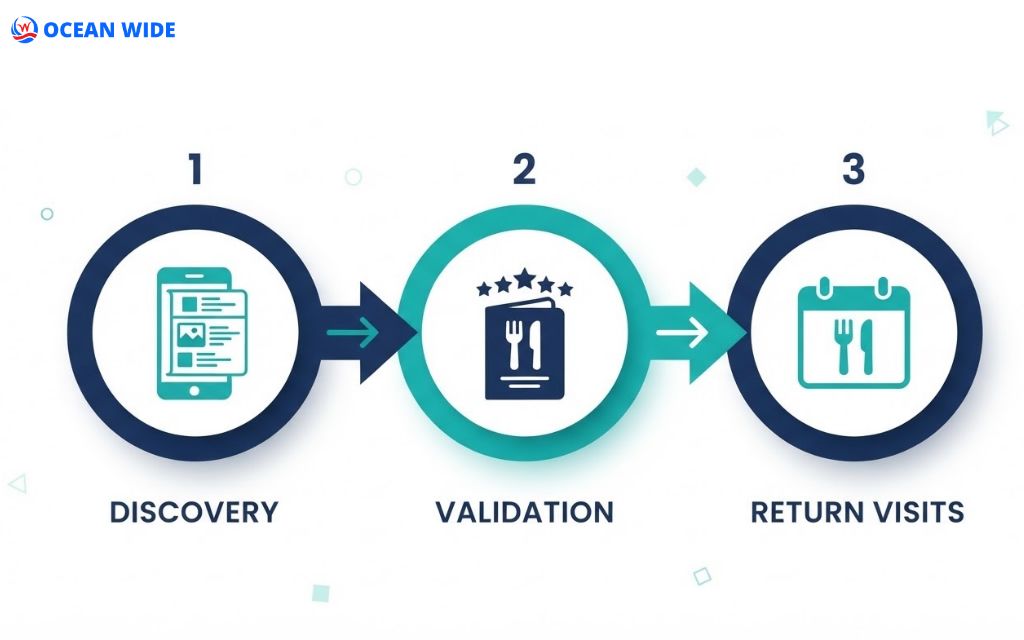
Social media does 3 jobs for a restaurant: discovery, validation, and return visits. New guests find you in a feed or a search. Hesitant guests check your menu, prices, and room before they commit.
Regulars see a new special and return on a slow Tuesday. Each job needs a different post type, which is why a plan beats random posting.
Can restaurants increase sales through social media?
Yes, restaurants can increase sales through social media when posts connect to a clear offer and an easy way to book or order. Survey data supports the link, though most studies rely on self-reported answers.
In a 2019 MGH survey of 1,069 U.S. adults, 45% said they had tried a restaurant for the first time because of the restaurant’s own social post. The same survey found a warning sign: 21% said a restaurant’s posts had stopped them from trying it.
Among diners who follow and engage with restaurants on social media, 74% said they are more likely to visit or order. In Deloitte Digital’s 2025 State of Social research, restaurants reported an average 9.9% lift in B2C revenue in 2024 from their social strategies.
We read these numbers with care. Self-reported revenue differs from tracked revenue, and the 2019 survey predates TikTok’s growth in U.S. dining habits.
Social media sells meals when it removes doubt: guests see the food, the room, and the price before they arrive.
Social media works best on top of solid basics. Fix wrong hours on Google, broken menu links, and slow ticket times first, then scale content.

How to build a restaurant social media strategy in 5 steps
To build a restaurant social media strategy, set 1 goal, define your guests, pick platforms, plan content pillars, and set a cadence your team can keep. These 5 steps fit on 1 page and guide every post for the next quarter.
Step 1: Pick one business goal
One goal keeps every post accountable. Common goals include filling slow weeknights, growing direct online orders, selling event tickets, and booking catering.
When we plan a restaurant account at The Ocean Wide, we write the goal and its target number at the top of the plan, such as “20 more covers on Tuesdays.” Every post then answers to that number. A goal also tells you what to skip: a catering-focused bakery needs fewer trend videos and more event setups, menus, and client reviews.
Step 2: Define who you are feeding
Your guest profile decides tone, platform, and timing. A campus taco shop speaks to students at 10 p.m.; a steakhouse speaks to couples who plan date night 3 days ahead.
List 3 traits for your core guest: age range, distance from your door, and the reason they dine out, such as convenience, celebration, or discovery.

Step 3: Choose one or two platforms
Start with 1 primary platform and 1 support channel. Two well-run accounts outperform 5 neglected ones, and the next section compares each option in detail.
Step 4: Set 4 to 5 content pillars
Content pillars are the repeat themes that fill your calendar and end the daily “what do we post?” scramble. The table below shows 5 pillars that fit most restaurants.
| Pillar | Example post | Best format |
| Food and menu | New seasonal dish, cut open on camera | Reel or TikTok |
| Behind the scenes | Morning dough prep or produce delivery | Story or short video |
| People | Chef intro or a server’s favorite dish | Carousel or Reel |
| Guests and community | Reposted guest photo or charity night | Story or feed post |
| Offers and events | Trivia night or holiday prix fixe | Feed post plus Google post |

Step 5: Set a cadence your team can keep
A sustainable cadence for most independent restaurants is 3 to 5 feed posts per week plus daily Stories during service. Batch-shoot once a week or twice a month, since a 2-hour session before opening can produce 10 to 15 short clips.
Assign 1 owner for posting and replies. Shared logins without an owner lead to gaps during busy seasons.
Plan posts 2 weeks ahead in a shared calendar, and leave 1 open slot per week for timely moments, such as a sold-out dish, a snowstorm closure, or a local news mention.
How to choose the right platforms for your restaurant
Choose platforms by where your guests spend time and by the formats your team can produce. Pew Research Center’s 2025 survey found that 84% of U.S. adults use YouTube, 71% use Facebook, and about half use Instagram.
Adults under 30 are more likely than older adults to use Instagram, TikTok, Snapchat, and Reddit. YouTube and Facebook are the only platforms a majority of every age group uses.
| Platform | Best for | Key formats | Effort |
| Visual menu, brand mood, and local discovery | Reels, Stories, carousels, and Highlights | Medium | |
| TikTok | Reach beyond followers and trend-driven dishes | Short vertical video | High |
| Events, older regulars, and community groups | Events, posts, and reviews | Low to medium | |
| YouTube Shorts | Repurposed Reels and chef clips | Shorts | Low if repurposed |
| Catering, bakeries, desserts, and weddings | Pins and idea boards | Low |
Our default pairing for a neighborhood restaurant is Instagram as the hub and Facebook for events and older regulars. Add TikTok when someone on staff enjoys filming and the concept has a visual hook, such as a cheese pull, a flaming dish, or a 2 a.m. late-night menu.

How to set up profiles that make it easy to book or order
Your profile acts as a second front door, so every field should answer one question: how do I eat here? Complete these 6 elements on each platform.
- Name and handle: Match your restaurant name across platforms, and add the city if the name is taken.
- Bio: State cuisine, neighborhood, and 1 hook in under 150 characters.
- Hours and address: Copy them exactly from your website and Google Business Profile.
- Action button: Link to direct reservations or online ordering instead of your homepage.
- Story Highlights: Pin your menu, events, private dining, and reviews.
- Profile photo: Use your logo or signature dish, cropped for a small circle.
Mismatched hours across Instagram, Facebook, and Google confuse guests and erode trust. We audit these fields first on every restaurant account, because a correct profile helps every later post convert.

Restaurant social media content ideas that make people hungry
The posts that work for restaurants show food in motion, the people behind it, and a reason to visit this week. Use these 7 ideas to fill your pillars.
- Hero dishes and menu drops: Film a dish cut open, poured, or sauced, and announce new items with a launch date.
- Kitchen prep: Show dough stretching, stock simmering, or the morning produce delivery.
- Staff spotlights: Introduce the chef, a long-time server, or the dishwasher who keeps the line moving.
- Recurring series: Run 1 weekly format, such as a “Friday catch reveal.” BentoBox cites Brooklyn’s Lilia and its recurring pasta-flip Reels as a model.
- Guest reposts: Share tagged guest photos with credit and a thank-you.
- Events and limited-time offers: Promote trivia, wine dinners, holiday menus, and happy hour.
- Polls and questions: Let followers vote on the next special or name a new dish.
Short-form vertical video: what to film in one session
Short vertical video is the format platforms push to non-followers, so plan most shoots around it. Shoot in 9:16 at 1080 × 1920 pixels, keep clips 7 to 20 seconds, and show the food in the first 2 seconds.
A strong shot list covers 6 moments: the sizzle, the pour, the cut, the plating, the first bite, and the dining room at peak service.
Phone or professional shoot?
A recent smartphone handles daily Stories and trend videos. Book a professional photographer and videographer for menu launches, website images, and paid ads, where image quality carries more weight.
For phone shots, place the plate within 3 feet (1 m) of a window, shoot from 12 to 18 inches (30 to 45 cm) away, and wipe the lens before every session. Our photography, videography, and drone video team at The Ocean Wide handles launch shoots, so one session can supply a month of posts.

Local moments for Denver and Colorado restaurants
Colorado restaurants have built-in content hooks: patio season, Broncos and Rockies game days, ski-season weekends, and the first snow. Tie a dish or a special to these moments, and tag nearby businesses when you collaborate.
A 4-week sample content calendar
Use this calendar as a starting template, then adjust it to your menu cycle and event schedule.
| Week | Monday | Wednesday | Friday | Weekend |
| Week 1 | Chef intro Reel | Menu carousel | Weekend special video | Guest reposts |
| Week 2 | Prep time-lapse | Poll for next special | Event announcement | Live service Stories |
| Week 3 | Staff favorite dish | Vendor spotlight | Recurring series episode | Guest reposts |
| Week 4 | Behind-the-bar video | Best guest photos recap | Next month teaser | Event Stories |

How to grow your restaurant’s social media following
To grow your restaurant’s social media following, make the account easy to find in local search and give in-person guests a reason to follow. Diners now search social apps for food the way they search Google, so plain-language keywords matter as much as hashtags.
- Location tags: Tag your exact address on every post and Reel.
- Caption keywords: Write the dish, cuisine, and neighborhood in plain words, such as “birria tacos in Denver.”
- Local hashtags: Use 3 to 5 specific tags for city, neighborhood, and cuisine instead of broad tags like #food.
- Collabs: Co-post with nearby breweries, coffee roasters, or farms to share audiences.
- In-store prompts: Print a QR code on table tents, receipts, and to-go bags.
- Giveaways: Offer dinner for two for a follow, a tag, and a share, with written rules and an end date.
Growth also follows consistency. Accounts that post on a fixed schedule train followers to expect content, and repeat viewers become repeat guests.
Follower count alone tells you little. Five hundred followers who live within 5 miles (8 km) of your door are worth more than 10,000 followers in another state.

How to work with food influencers and stay FTC-compliant
Food influencers bring a ready audience, but every comped meal or payment creates a duty to disclose. The FTC defines a “material connection” to include a financial relationship, such as paying a creator or giving free or discounted products or services.
Pick creators by audience location, not follower count. A micro-creator with 8,000 local followers can send more diners than a national account with 500,000 followers spread across the country.
Our influencer process for restaurants follows 4 steps:
- Audience check: Ask for follower location data before you invite a creator.
- Written brief: Agree on deliverables, posting dates, and content usage rights in writing.
- Clear disclosure: Require “#ad” or the platform’s paid-partnership label at the start of the caption or on screen.
- Unique code: Give each creator a promo code so you can count redemptions.

How to handle engagement and social customer care
Engagement means replying, not just posting. Comments, DMs, and tags are public customer service, and future guests read how you respond.
Set response targets your team can hit: within 2 hours during open hours for DMs and booking questions, and within 24 hours for comments. Handle negative comments with a 3-step rule:
- Acknowledge the issue publicly in 1 or 2 sentences.
- Move the details to DM or a phone call.
- Resolve the problem and invite the guest back if they agree.
Keep fair criticism visible. A deleted complaint invites screenshots, while a calm public reply shows the next reader how you treat guests.

How to use paid social to reach diners near you
Paid social puts your best posts in front of people near your door who do not follow you yet. Use it for a specific offer, event, or launch with an end date.
Paid reach works best with organic proof behind it. Start by boosting a post that already performs well organically, then move to Meta Ads Manager or TikTok Ads for more control. Target a radius of 3 to 5 miles (5 to 8 km) for dine-in, run 3 to 4 creative versions, and shift budget to the winner after 5 to 7 days.
Our Digital Advertising team manages paid campaigns on Facebook, Instagram, TikTok, and LinkedIn for local businesses.

How to turn followers into diners with reservations, orders, and Google
Followers become diners when each post ends in a clear next step. Add a booking or ordering link to your bio, Stories, and captions, and repeat the offer on your Google Business Profile.
Google Business Profile posts share announcements, offers, and events on Search and Maps, and offers appear near the top of the profile. Posts older than 6 months get archived unless you set a date range, and Google may reject posts that include a phone number.
Restaurants can also add menu photos to the profile’s Menu tab. We pair each social campaign with a matching Google post, so a guest who searches your name after a Reel finds the same offer. Our Denver SEO services cover the local search side of that connection.
Capture contact details as well. A QR code that leads to an email or SMS list turns a one-time viewer into a guest you can reach without an algorithm.

How to measure restaurant social media ROI
Measure social media ROI by tracking actions that lead to revenue, not likes alone. The table below groups 5 metrics from reach to sales.
| Metric | What it tells you | Where to find it |
| Reach and views | How many people saw the post | Platform insights |
| Saves and shares | Whether people plan a visit | Platform insights |
| Profile visits and link clicks | Intent to book or order | Platform insights and link tool |
| Bookings and orders from social | Direct revenue | UTM data in Google Analytics and booking system |
| Promo code redemptions | Sales tied to a post or creator | POS reports |
Use 4 attribution tools: UTM parameters on every link, a social-only promo code, a “How did you hear about us?” question at booking, and a POS comparison of campaign days against the same weekday 4 weeks earlier. We review these numbers monthly with restaurant clients and cut formats that draw views but no bookings.
Compare results by pillar, not by single post. One viral video can distort a month, while pillar averages show which themes bring guests in week after week.

Social media playbooks by restaurant type
Each restaurant type needs its own platform mix, content focus, and main KPI. Use the table to match your concept.
| Type | Lead platforms | Content focus | Main KPI |
| Quick service and fast casual | TikTok and Instagram | Speed, value, and trend dishes | Online orders |
| Full-service casual | Instagram and Facebook | Specials, events, and staff | Reservations |
| Fine dining | Chef craft, sourcing, and tasting menus | Bookings and private events | |
| Café and bakery | Instagram and Pinterest | Morning rituals and seasonal bakes | Repeat visits and preorders |
| Food truck | Instagram and Facebook | Daily location and sell-out alerts | Sales per stop |
| Catering | Facebook, Pinterest, and LinkedIn | Event setups, menus, and reviews | Quote requests |

7 common restaurant social media mistakes to avoid
These 7 mistakes waste staff hours and cost restaurant guests.
- Posting without a goal: Content drifts, and nobody can tell what worked.
- Using dark or blurry photos: Poor images make good food look unappetizing.
- Ignoring comments and DMs: Silence reads as poor service.
- Listing wrong hours or menus: Mismatches with Google send guests to a closed door.
- Buying followers: Fake accounts lower engagement rates and never book a table.
- Skipping influencer disclosures: Missing #ad labels create FTC risk.
- Promoting nonstop: Keep an 80/20 split between story-driven posts and sales posts.

Should you DIY, hire in-house, or work with an agency?
The right model depends on your hours, budget, and weekly content needs. Owners often underestimate the time, since planning, shooting, editing, posting, and replying can take 5 to 10 hours a week for 1 active account.
| Option | Best for | Owner time | Trade-off |
| DIY by owner or manager | New, single-location spots on a tight budget | High | Content stops when service gets busy |
| In-house hire | Groups with 3 or more locations | Low after hiring | Salary, training, and one person’s skill set |
| Agency | Owners who want strategy, production, and ads together | Low, mainly approvals | Monthly fee and fast feedback needed |
Ask any agency 4 questions before you sign: Who shoots the content? How do you report results tied to bookings or orders? Who replies to comments, and how fast? Who owns the accounts and content if we part ways?

The Ocean Wide’s Social Marketing Service for restaurants
Our Social Marketing Service brings social media marketing for restaurants under one team: strategy, content production, community management, and paid social. We manage Facebook, Instagram, TikTok, LinkedIn, YouTube, and Pinterest from Denver, with designers, developers, and strategists in the U.S. and Vietnam.
Each engagement follows our 5-phase process: discovery and business analysis, strategy development, content creation and campaign setup, launch and optimization, and reporting and growth planning.
For restaurants, that means a calendar built around your menu cycle, photo and video shoots by our in-house production team, comment and DM management, and monthly reports on the metrics in this guide. Start with a free social audit through our social marketing page.

FAQs about social media marketing for restaurants
What is the best social media platform for restaurants?
Instagram is the best starting platform for most restaurants, because it combines photos, short video, Stories, and a booking link in one profile. Add TikTok for younger diners and Facebook for events and older regulars.
How often should a restaurant post on social media?
Post 3 to 5 times per week on your main platform and share Stories daily during service. Consistency matters more than volume.
How much should a restaurant spend on social media marketing?
Budget depends on whether you pay for content, management, and ads separately. Start ads with a small test budget tied to 1 offer, measure bookings, and scale only what returns revenue.
Can a restaurant handle social media without a specialist?
Yes, a restaurant can run social media in-house with a simple plan, a smartphone, and 1 person who owns the task. Bring in help when posting stalls in busy seasons or when you start paid ads
How do restaurants get more user-generated content?
Give guests a reason and a place to share: a photo-worthy dish or corner, a visible handle on menus, and regular reposts with credit.
How long does social media marketing for restaurants take to show results?
Early signals, such as saves, profile visits, and link clicks, appear within 4 to 8 weeks of consistent posting. Revenue patterns need about 3 months of tracked data.
Do restaurants have to disclose free meals given to influencers?
Yes, under FTC guidance a free or discounted meal counts as a material connection, and the creator must disclose it. Write the disclosure requirement into your creator agreement.