Skip to content


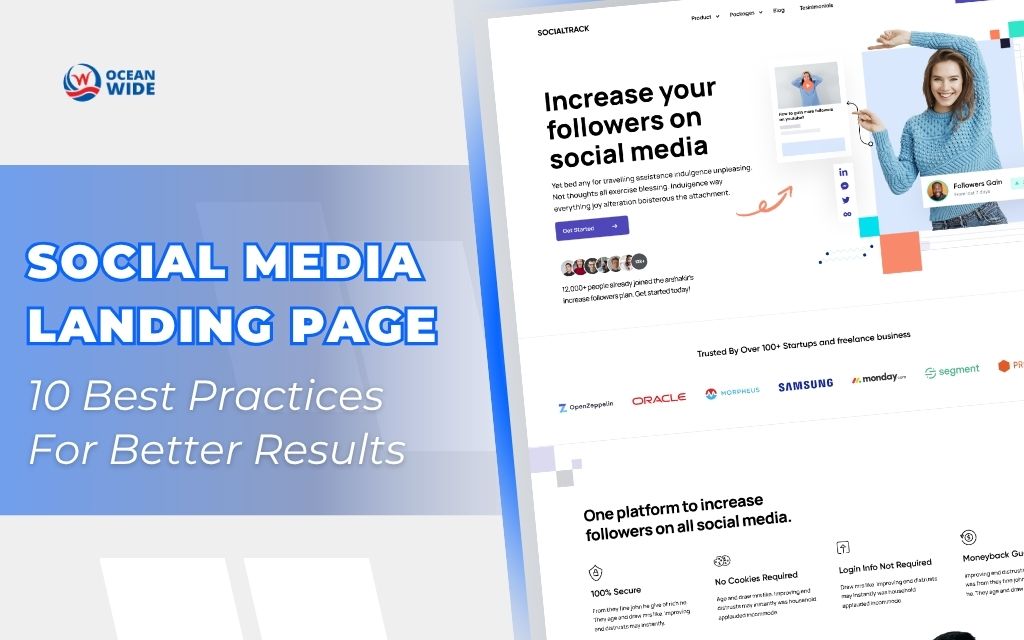
Social campaigns can earn attention and clicks, yet the result still depends on what visitors find next. A social media landing page carries the campaign message forward, removes unnecessary distractions, and gives people a clear reason to act. The Ocean Wide connects social strategy, creative, paid media, and website experience so the journey feels consistent from the first post to the final conversion.
What Is A Social Media Landing Page?
A social media landing page is a focused page created for visitors who arrive from a social post, ad, bio link, creator campaign, or promotion. Unlike a homepage, it usually supports one offer and one primary action, such as booking a consultation, requesting a quote, registering for an event, or making a purchase.

That narrower purpose helps visitors understand the offer without searching through an entire website. It also gives your wider social media content strategy a stronger destination once a post encourages someone to click.
Why Does A Social Media Landing Page Matter?
A click from social media only matters if the experience after it keeps the visitor moving forward. That is where a social media landing page adds value: it keeps the message focused, removes unnecessary detours, and makes the next step easier to understand.

Recent benchmark data across more than 41,000 landing pages found a median conversion rate of about 6.6%, which shows how much performance can depend on what happens after the click.
It Keeps The Campaign Message Consistent
The landing page should continue the promise made in the social post or ad. If the campaign promotes a free consultation, visitors should see that offer immediately rather than arrive at a general service page.
It Gives Visitors A Clear Next Step
Social traffic often arrives with limited patience, so the page should make the next action obvious. One primary CTA keeps attention focused and reduces the need to choose between several unrelated paths.
The action should also reflect audience intent. Cold visitors may respond better to a guide or consultation, while warm prospects may already be ready to book, request a quote, or purchase.
It Makes Social Traffic Easier To Measure
Dedicated pages make it easier to separate traffic by platform, campaign, audience, or creative. From there, marketers can see what happens after the click rather than relying only on platform-level numbers.
UTM parameters and conversion events can connect social visits with bookings, form submissions, purchases, or other outcomes. That gives campaign reporting much more useful context.
What Should A High-Converting Social Media Landing Page Include?
A high-converting social media landing page should make the offer understandable within moments. Copy, visuals, proof, layout, and CTA placement all need to support the same goal instead of competing for attention.
A Clear Headline That Matches The Social Post Or Ad
The headline should confirm that visitors have arrived at the right place. Keep the wording close enough to the original campaign message that the transition feels natural.
For example, an ad that promises a “Free Website Consultation” should lead to a page built around that exact offer rather than a broad company introduction.

One Strong Value Proposition
Visitors should understand the value of the offer almost immediately. So, keep the message specific by showing what they will get, why it matters, and how it solves a real need. A clear value proposition gives the page a stronger purpose and helps people decide whether the offer is worth their attention.
One Primary Call To Action
The main CTA should reflect the campaign goal and remain easy to find throughout the page. Clear actions such as “Book A Consultation”, “Request A Quote”, or “Get The Guide” tell visitors exactly what happens next.
Secondary links should remain limited. Too many options can weaken the purpose of the page and distract visitors from the action the campaign was built to generate.
Relevant Visuals That Support The Offer
Visuals should make the offer easier to understand, not simply make the page look more polished. Product images, service examples, before-and-after results, or real project photos can show what visitors can expect. Keep the style consistent with the social post or ad so the transition feels natural.

Social Proof That Builds Trust
Trust matters more when visitors arrive from social media and may know very little about the business. Reviews, testimonials, case results, or customer examples can give the offer more credibility. Place the strongest proof near key decision points, especially around the CTA or form.
A Form That Asks Only For What You Need
Every additional form field creates another point of friction. Ask only for information required to complete the immediate next step. A quote request may need contact details and a short project description, while a downloadable resource may only require an email address. Keep the form proportionate to the value and commitment involved.
A Mobile-Friendly Layout
Much of social traffic arrives from mobile devices, so a social media landing page should be comfortable to use on a smaller screen. Text needs to remain readable, buttons should be easy to tap, and forms should not require awkward zooming or horizontal scrolling.

Fast Page Speed
A slow page can lose attention before visitors even see the offer. Compress large images, reduce unnecessary scripts, and keep heavy animations to a minimum. Faster loading creates a smoother transition from the social post and gives users a better chance to reach the CTA.
How Should You Match The Landing Page To Social Media Traffic?
The closer the message, intent, and page experience match the original social touchpoint, the easier it becomes for visitors to understand the offer and take the next step.
- Match the message to the post or ad: Keep the headline, offer, and key promise consistent so visitors immediately recognise the campaign they clicked
- Match the page to audience intent: Give colder audiences more context and reassurance, while warmer visitors may need a shorter path to action
- Match the page to the platform: Adapt the page experience to how people arrive, with more visual emphasis for Instagram and more detail for business-focused traffic
Where Should You Use A Social Media Landing Page?
A social media landing page is most valuable when the campaign has a specific offer, audience, or measurable action. Dedicated destinations also make attribution clearer because visitors from each campaign can be evaluated separately.
Common use cases include:
- Paid social campaigns
- Link-in-bio promotions
- Product launches
- Event registrations
- Lead magnets
- Service enquiries
- Limited-time offers
- Retargeting campaigns
- Creator partnerships

How Can You Improve Social Media Landing Page Conversions?
Once a social media landing page is live, optimisation should focus on reducing friction and strengthening the connection between the original campaign and the destination. Small, focused improvements are often easier to evaluate than a complete redesign.
Remove Unnecessary Distractions
Navigation, unrelated links, pop-ups, and several competing offers can pull attention away from the main action. Keep the elements that help visitors understand the offer and make a decision.
The page does not need to reproduce the full website. Its role is to complete one focused campaign journey.

Strengthen Message Match
Keep the offer, headline, visual cues, and CTA aligned with the post or ad that generated the visit. Visitors should never need to work out whether the page still relates to what they clicked.
Reduce Friction Around The CTA
The CTA should feel easy to understand and complete. Simplify the form, explain what happens after submission, and remove steps that do not contribute to the immediate goal.
If users repeatedly reach the CTA but do not convert, compare the size of the request with the value offered. The commitment may simply feel too high too early.
Use A/B Testing To Improve Performance
Test one important variable at a time, such as the headline, CTA wording, hero visual, form length, or layout. Keep the other elements stable so the result remains easier to interpret.
Avoid reacting to a very small sample. Give the test enough traffic to reveal a useful pattern before changing direction.

How Do You Measure Social Media Landing Page Performance?
For a social media landing page, the most useful metrics show whether people stay engaged, take action, and move closer to the campaign goal.
- Conversion rate: Shows how many visitors complete the primary action
- Click-through rate from social: Measures how effectively social content sends traffic to the page
- bounce or engagement behaviour: Reveals whether visitors stay, scroll, or leave quickly
- Cost per conversion: Shows how much paid traffic costs for each completed action
- Revenue or lead quality: Helps determine whether conversions create meaningful business value

What Social Media Landing Page Mistakes Should You Avoid?
Strong results can drop quickly when the page creates confusion or unnecessary friction. Keep the experience focused by avoiding these common mistakes:
- Sending traffic to a generic homepage
- Using too many competing CTAs
- Breaking message consistency after the click
- Asking for too much information
- Overloading the page with text
- Ignoring mobile usability
- Using weak or irrelevant visuals
- Hiding trust signals
- Forgetting conversion tracking
- Testing too many changes at once
Build Better Social Campaign Destinations With The Ocean Wide
Social media can generate attention, but the value often depends on what happens after the click. At The Ocean Wide, we connect campaign strategy, content, paid social, and landing page experience so each step feels consistent and supports a clear business goal.
Our team focuses on the full journey rather than treating social traffic and website performance as separate pieces. Through our Social Marketing Service, we help shape stronger campaign messaging, clearer conversion paths, and more useful performance tracking, while our web team can support responsive pages built around the action you want visitors to take.

If your social campaigns are attracting clicks but not enough enquiries, bookings, or sales, we can help tighten the path from post to conversion. Call The Ocean Wide at (720) 334-0899 to discuss a more connected campaign experience.
Final Thoughts
Strong results come from keeping the journey after the click clear, relevant, and easy to follow. With the right message, CTA, layout, and tracking in place, a social media landing page can turn more traffic into meaningful action. That connection also makes campaign performance easier to understand and improve over time.
FAQs About Social Media Landing Pages
Should Every Social Media Campaign Have Its Own Landing Page?
Not every campaign needs a dedicated page. Separate landing pages make the most sense when the campaign has a specific offer, audience, conversion goal, or paid budget.
How Long Should A Social Media Landing Page Be?
Length should depend on the complexity of the offer and how much information visitors need before acting. Simple offers can stay concise, while higher-commitment services may require more detail, proof, and reassurance.
What Is The Difference Between A Social Media Landing Page And A Homepage?
Homepages introduce the wider business and usually give visitors several paths to explore. By contrast, a social media landing page focuses on one campaign, one offer, and one primary action.