Skip to content



Your Black Friday marketing strategy decides whether one of the largest shopping weekends of the year lifts your sales or only trims your margins. Black Friday falls on the day after Thanksgiving, and many shoppers begin comparing prices and building gift lists before the sale starts.
Brands that plan early reach buyers while they are still choosing where to shop. This guide covers the plan, ten strategies across email, text messages, social media, and paid ads, a timeline, brand examples, common mistakes, and the metrics that show what worked, so you can launch a focused campaign and keep the customers it brings.
What shapes a Black Friday marketing strategy in 2026
Demand for the weekend remains strong. Bain & Company expects U.S. retail sales from Black Friday through Cyber Monday to exceed $85 billion in 2026, up 8.75% from last year and well above the 4.5% growth it forecasts for the full holiday season.
Shoppers also treat price with more care. Bain reports that more than half of consumers plan to change their holiday spending, and higher prices rank among the top reasons.
The takeaway for marketers is that shoppers respond to clear value, early contact, and a simple path to purchase. Many buyers decide what to buy, and often where, before the sale begins, so the ten strategies below build a Black Friday marketing strategy around those needs.
How to build a Black Friday marketing strategy plan
Planning protects your margins. Discounts without a goal teach customers to wait for the next markdown, so decide what the campaign must achieve before you change a single price.
Start with these four decisions:
- Goal: Choose one primary result, such as revenue, new customers, or booked appointments.
- Baseline: Review last year’s sales, best-selling products or services, and traffic sources to see what already works.
- Margin floor: Calculate the lowest price you can offer while covering costs, labor, and shipping.
- Budget split: Assign money to email, social media, paid ads, and creator partnerships before the season starts.
Set aside part of the budget for retargeting ads aimed at October site visitors, and decide early whether to run them in-house or hire a digital advertising service for setup, bidding, and reporting.
Confirm inventory, staffing, shipping cutoffs, and site capacity, because a sold-out promotion or a crashed checkout costs more than a smaller offer that runs smoothly.
Close the plan with a content calendar that lists every email, text message, social post, and ad by date, owner, and goal. Build it backward from the sale date and schedule the first touchpoints for early November.
10 black friday marketing strategies that drive sales
These ten strategies cover the channels and moments that shape a Black Friday campaign. Choose the ones that fit your products, audience, and team, and run fewer strategies well instead of all ten at once.
Build your email and text message list early
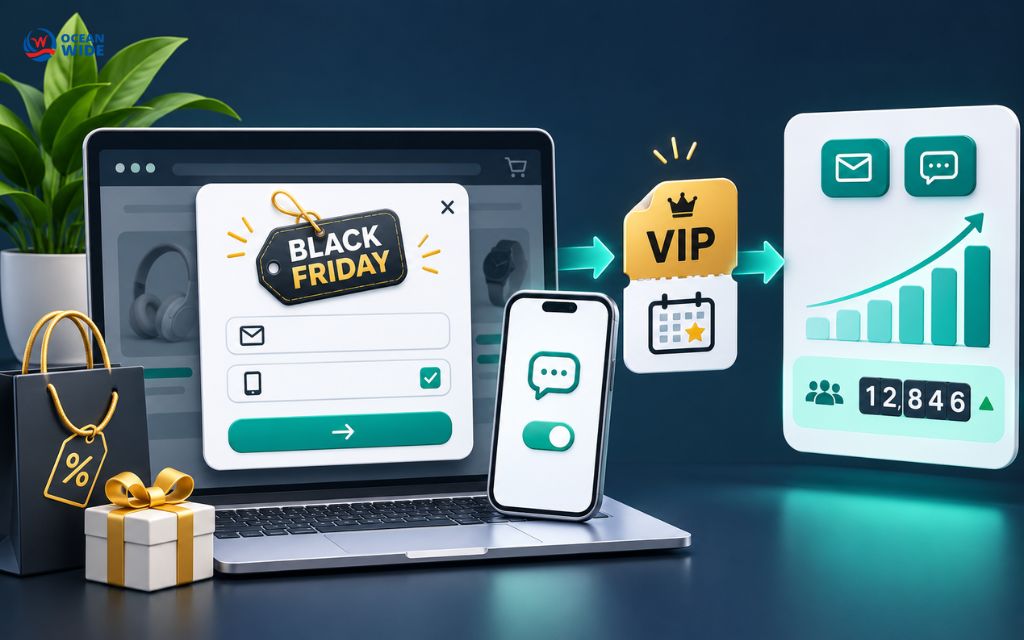
Your existing contacts already know your brand, so grow that list before the sale. Invite visitors to join a VIP list through a website pop-up, a checkout message, and a link in your social media bio.
Offer an early-bird perk, such as a first look at the deals, to encourage sign-ups. Subscribers give you a direct channel that does not depend on ad auctions or platform algorithms.
Start early or rename your sale
Black Friday no longer begins on Friday. Kate Spade offered email subscribers 30% off everything five days before the sale, and Death Wish Coffee renamed the final day of its promotion Cyber Mug Day.
Pick a start date and a name that fit your brand, and tell your list in advance so the early start does not surprise anyone.

Show the right offer to the right segment
Segmentation protects your margins. Send the deepest offers to customers who need an extra push, such as cart abandoners or buyers who have not returned in months, and keep full-price messaging for loyal customers who buy without a discount.
Bundles, free shipping thresholds, gifts with purchase, and limited editions also give shoppers a reason to choose you without cutting the price below your margin floor.

Personalize messages and landing pages
Relevant recommendations raise the odds that a shopper finds something to buy. Show products based on browsing history, past purchases, or trending items in a category, and send visitors from an ad or email to a landing page that matches the offer they clicked.
Mobile deserves a test before launch. Adobe Analytics reported that mobile carried 57.5% of Cyber Monday online sales in 2025, so check that the offer appears at the top of the screen, pages load fast, and checkout needs as few fields as possible. Add digital wallet payments if your platform supports them.

Run a teaser-to-last-chance sequence with cart reminders
Three stages cover the sale without overwhelming subscribers:
- Teaser: Announce that a sale is coming and invite people to join the early-access list.
- Announcement: Send the main offer on Black Friday morning, with a clear deadline and one primary button.
- Last chance: Remind buyers in the final hours so shoppers who planned to wait have a reason to act.
Add an automated reminder for shoppers who leave items in their cart, and segment by purchase history when you can. If your customers live in different time zones, schedule each send for the local morning, and write subject lines that state the offer plainly.

Plan black friday social media posts and campaigns
Social media works as both a discovery channel and a deal channel, so start black friday social media posts before the sale and keep them going through the weekend. Refresh profile photos and bio links with a sale theme, preview products, explain the offer, and answer common questions before shoppers ask.
Black friday social media campaigns perform better when each post has one job. Mix short videos, product carousels, behind-the-scenes content, and countdown stories, then match each format to a goal such as clicks, saves, or direct messages.
Your black friday social media campaign strategy should state the offer, deadline, and link in every post. Service providers can follow the same pattern, and black friday social media posts for life coaches can promote a prepaid session bundle, a few discounted discovery calls, or a gift certificate that a client can give to a friend.

Partner with influencers and creators
Creators lend trust to your offer. Sprout Social’s Q3 2026 Pulse Survey found that 30% of respondents say promo codes shared by influencers make them more likely to buy, more than any other factor listed.
Choose creators whose audience matches your buyers, and reach out early. Send each creator a short note that names a product they already use and offers a promo code you can track, because influencer outreach earns more replies when the message speaks to that creator’s audience.

Run giveaways and loyalty rewards
Giveaways grow your audience and keep the sale in conversation. Blume ran a giveaway for its SuperBelly line that also mentioned its Black Friday sale and required specific actions to enter.
Loyalty perks work the same way for existing customers, because SWISSGEAR gave rewards members early access to a 60% off sale. Announce member perks by email and social media before the public sale opens.

Keep messaging consistent across channels
Shoppers move between social media, email, your website, and stores, so every channel should show the same offer, dates, and tone. Gymshark ties its annual Blackout event across social channels, physical stores, email, and Reddit posts so each touchpoint supports one campaign.
Write one offer summary with dates, terms, and links, and share it with everyone who posts, replies to messages, or answers phones.

Test creative and offers before the weekend
Testing replaces guesses with data. Start before the sale, compare subject lines, creative formats, and landing pages, and keep the version that earns the most clicks and orders as the weekend approaches.
Sprout Social suggests comparing a short video with a static graphic that carries the same message. Change one element at a time so you know what caused the result.

Black friday marketing timeline for the weeks before and after the sale
Use this timeline as a checklist, and compress the early steps if you are starting late:
| When | What to do |
| Three to four weeks before | Finalize the goal, offers, and margin floor, and launch the early-access sign-up. |
| Two weeks before | Publish teaser content, test the sale page on mobile, and confirm inventory and staffing. |
| Black Friday week | Send early-access invitations, start countdown posts, and turn on retargeting ads. |
| Black Friday, November 27 | Send the main announcement in the morning, answer customer messages quickly, and send a last-chance reminder in the final hours. |
| Small Business Saturday and Cyber Monday, November 28 and 30 | Promote partner offers on Saturday, and use Monday to reach shoppers who browsed but did not buy. |
| After the sale | Send thank-you messages, review results, and invite new buyers to make a second purchase. |
Customer care needs coverage across that window, so assign someone to monitor comments and direct messages through the weekend and reply within a few hours.
If fewer than four weeks remain, drop the broadest tactics first. Build the early-access list, choose one offer, write the three emails, and prepare the mobile sale page, and you will have a complete campaign.
Black friday marketing examples from real brands
Real campaigns show how the strategies above work together. These three brands used different assets to earn attention:
- Glossier: Team members shared the items they planned to buy for themselves and as gifts in an Instagram carousel, which turned employees into a word-of-mouth channel without a full influencer partnership.
- Lowe’s: The first 50 Lowe’s Rewards members in line at stores on Black Friday received a bucket of branded products, and each bucket carried a chance to win $2,000 toward an appliance, which prompted a wave of customer unboxing posts.
- GoPro: The brand shared community-submitted photos and videos with a humorous tone, which kept its feed focused on customers instead of discounts.
Each campaign started from something the brand already had, such as a team, a rewards program, or a community, so you can adapt the idea to your own assets.
Black Friday marketing mistakes to avoid
These errors appear often in Black Friday campaigns and are easy to prevent:
- Discounting without a goal: Cutting prices before you set a target and a margin floor lowers profit without adding customers.
- Starting late: Many shoppers compare offers before the sale, so a campaign that launches in the final days reaches them once and leaves little time to build interest.
- Inconsistent messaging: Different offers or dates across email, social media, and the website confuse shoppers and weaken trust in the sale.
- Skipping mobile testing: Slow pages or a hidden offer lose buyers before checkout, and mobile carried more than half of Cyber Monday online sales in 2025.
- Unanswered customer messages: Questions left waiting on peak days cost sales, so assign someone to reply through the weekend.
- No follow-up after the sale: Ending the campaign on Cyber Monday leaves new buyers without a thank-you or a reason to return.
How to measure your Black Friday marketing strategy
Measurement turns one weekend into a lesson for next year. Track these metrics by channel:
- Revenue and number of orders or bookings.
- Average order value.
- Conversion rate on the sale page.
- Cost to acquire each new customer.
- Email open and click rates, and text message click rates.
- New email subscribers and followers gained.
Review reach, clicks, and orders by channel in one place, and measure social media engagement next to revenue so you can see which posts brought buyers and which only brought likes.
Retention starts the day after the sale. Send new customers a thank-you message, share care or usage tips for what they bought, and offer a reason to return, such as early access to the next sale.
Write down what worked, what failed, and which offers earned the best margin, then store those notes with next year’s calendar.
Conclusion
Your Black Friday marketing strategy works best when it starts with one goal, one margin floor, and one clear offer, then reaches shoppers early through email, text messages, and social media. Mobile checkout, quick customer replies, and honest measurement protect the sales you win, and a thank-you plan keeps new buyers coming back after the sale ends.
The Ocean Wide helps businesses plan, launch, and report on holiday campaigns. If your team needs hands-on support with content, ads, and reporting, our social marketing services cover each step. Request a free audit, call (720) 334-0899 to start building your Black Friday marketing strategy today.
Frequently asked questions (FAQs)
When should you start black friday marketing?
Start three to four weeks before the sale with an early-access list and teaser content. Many shoppers begin comparing offers before November, so early contact reaches people while they weigh their options.
What is a good black friday discount?
The right discount stays above your margin floor and still moves product. Bundles, gifts with purchase, and early access can protect margins when a deep price cut is not possible, and a small test with one segment shows which offer works before the full launch.
What if you are starting black friday marketing at the last minute?
Focus on four steps: Build the early-access list, choose one offer, write the three emails, and prepare a mobile sale page. Add social posts and retargeting ads if time and budget allow.
How much should you spend on black friday marketing?
Set the amount from last year’s results and your margin floor, then split it across email, social media, and retargeting ads. Start with channels that reach existing customers, since those people already know your brand.