Skip to content


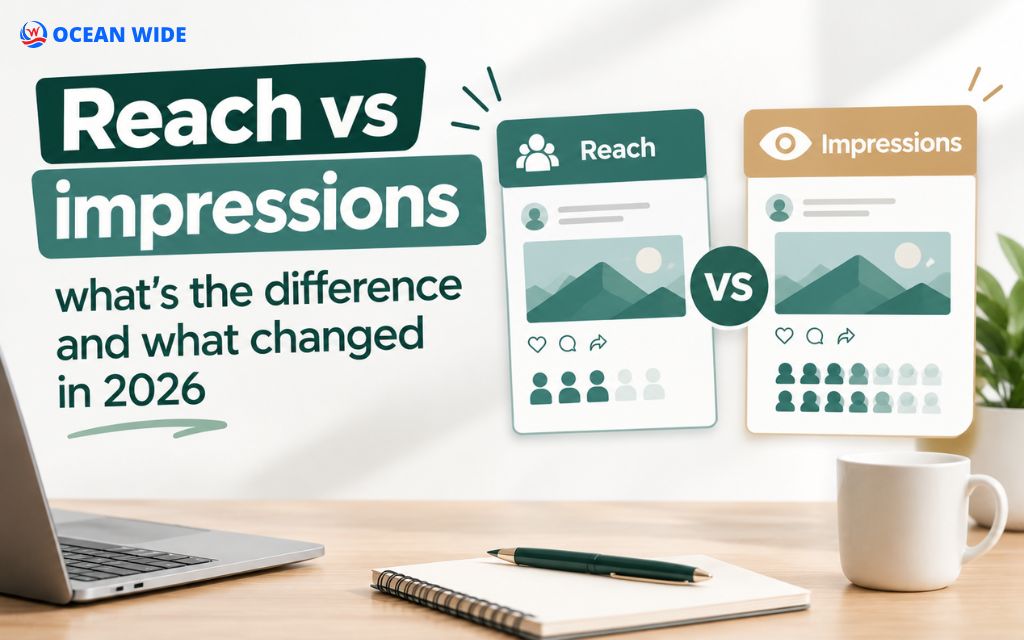
Reach vs impressions is the first question many business owners ask when they open Instagram Insights or Meta Business Suite. Reach counts the unique people who saw your content, while impressions count every time it appeared on a screen. This guide explains both metrics, how platforms label them in 2026, and which one fits your goal.
Reach vs impressions: what each metric means
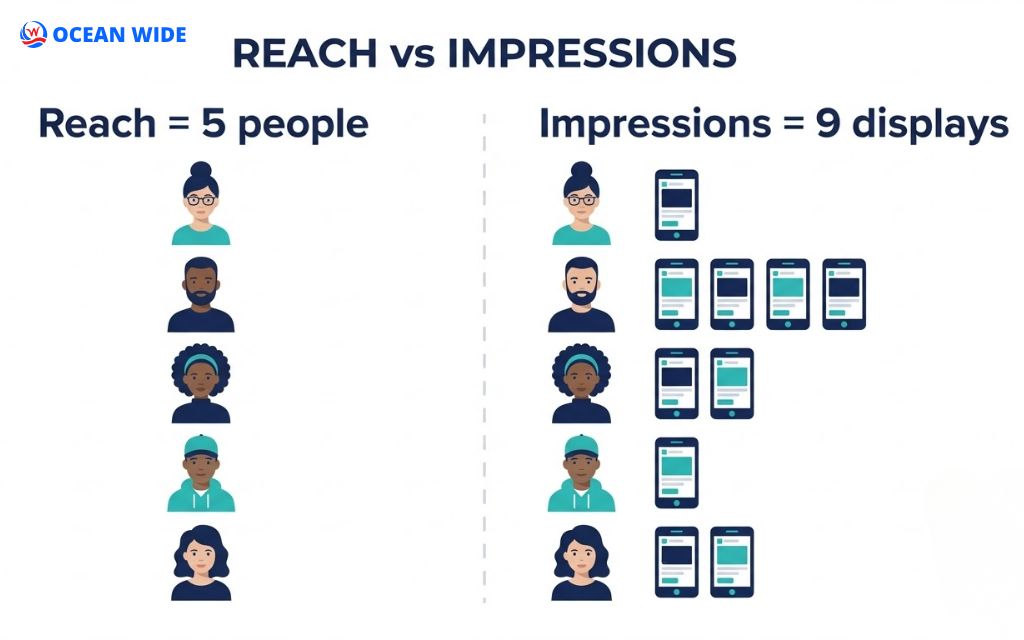
Reach vs impressions comes down to people versus displays. Reach is the number of unique accounts that saw your content at least once. Impressions are the total number of times that content appeared, including repeat views.
Both metrics describe visibility, not action. A person who scrolls past a post still adds 1 reach and 1 impression to your report.
What is reach on social media?
Social media reach is the count of distinct people or accounts exposed to a post, ad, or profile during a set period. If 400 followers see your Reel, your reach is 400, no matter how often each person replays it.
Platforms split reach into 2 main sources:
- Organic reach: counts people who saw unpaid content through feeds, Explore pages, search, or shares.
- Paid reach: counts people who saw content through ads or boosted posts.
Reach is also an estimate. TikTok states that its reach figures use sampling and serve as close estimates, and Meta labels ad reach as an estimated metric. Read the last 2 digits of any reach number as approximate.
What is an impression on social media?
A social media impression is one display of your content on a screen. If 1 customer sees your post in the morning and again after a friend shares it at night, you earn 2 impressions and 1 reach.
Impressions record an opportunity to see, not proof of attention. Marketers separate 2 types:
- Served impressions: count every time a platform delivers the content, even if it loads below the visible screen.
- Viewable impressions: count only when the content enters the visible area for a set share of pixels and time.
Each platform sets its own viewability rule. YouTube counts a thumbnail impression only after more than 50% of the thumbnail stays on screen for over 1 second. On a 6.1-inch (15.5 cm) phone, that means half the thumbnail must stay visible while the viewer scrolls.

Key differences between reach and impressions
The main difference between reach and impressions is duplication. Reach removes repeat views; impressions keep them. That rule explains why impressions are always equal to or higher than reach for the same post and date range.
| Factor | Reach | Impressions |
| What it counts | Unique people or accounts | Total displays |
| Repeat views | Counted once | Counted every time |
| Question it answers | How many people saw it? | How often was it shown? |
| Best use | Launches, new markets, audience growth | Retargeting, repetition, fatigue checks |
| Common labels | Reach, accounts reached, members reached | Impressions, views, thumbnail impressions |

A simple example of reach and impressions
Picture a Denver coffee shop that posts 1 photo on Instagram. In this illustrative example, 500 people see the post: 300 see it once, 150 see it twice, and 50 see it 4 times.
The post earns a reach of 500 and 800 impressions. The extra 300 impressions come from repeat exposure, not from new people.
Frequency: the metric that connects them
Frequency is the average number of times each person saw your content. Frequency = impressions ÷ reach. In the coffee shop example, 800 ÷ 500 = 1.6.
Frequency shows whether impressions spread to new people or repeat on the same audience. A rising frequency with flat reach signals repetition, while steady frequency with rising reach signals expansion. Meta Ads Manager, TikTok Ads Manager, and Google Ads all report frequency for paid campaigns.

How each platform reports reach and impressions in 2026
Each platform uses its own labels for reach and impressions, and several labels changed in 2025. The table maps the current names as of October 2026.
| Platform | Reach label | Impressions label | Note |
| Instagram (organic) | Accounts reached | Views | Views replaced impressions in April 2025 |
| Facebook (organic) | Reach (viewers) | Views | Page Insights API dropped impressions on November 15, 2025 |
| Meta Ads Manager | Reach (estimated) | Impressions | Frequency still reported |
| TikTok | Reach (estimated) | Impressions (ads), video views (organic) | Reach uses sampling |
| Members reached | Impressions | Counts members and Pages | |
| YouTube | Unique viewers (estimated) | Thumbnail impressions | Over 50% visible for more than 1 second |
| X | No native reach | Impressions | Breadth must be inferred |
Raw impression counts across these platforms measure different events. Compare trends within 1 platform instead of totals across platforms.

Instagram and Facebook: views, viewers, and accounts reached
Meta replaced organic impressions with Views on Instagram in April 2025, and Facebook followed. Views count how many times a photo, text post, or Story appeared on screen, including repeats, and how many times a Reel or video played. Meta noted that Views may run higher than old impression counts, while reach stays a separate metric.
On Instagram, reach appears as accounts reached, split into followers and non-followers. On Facebook, Meta is moving reach to a count of unique media viewers, so add a note to any year-over-year Facebook reach comparison.
Meta Ads Manager: reach, impressions, and frequency
Paid reporting keeps the classic trio. Ads Manager shows reach, impressions, and frequency for each campaign, ad set, and ad, and Meta treats reach as an estimated metric built on sampling.

TikTok: estimated reach and video views
TikTok defines reach as the number of unique accounts exposed to an ad impression at least once. Its Business Help Center notes that reach comes from sampling, and ad group reach rarely sums to campaign reach because 1 account can see several ad groups. Organic analytics in TikTok Studio center on video views.
LinkedIn: members reached and impressions
LinkedIn reports members reached, the number of distinct members and Pages that viewed your post, beside impressions, the number of times the post appeared on screen. Members reached works as LinkedIn’s version of reach.

YouTube: thumbnail impressions and unique viewers
YouTube counts a thumbnail impression under the 50% and 1-second rule. Displays on external embeds, the YouTube Kids app, and background tabs stay out of the count. Unique viewers is YouTube’s estimated reach figure.
X: impressions only
X reports impressions for each post but offers no native reach metric. To gauge audience breadth on X, track profile visits and follower growth beside impressions.

Views vs reach: are they the same?
Views and reach are different metrics. Views count plays or displays, including repeats; reach counts unique people. A Reel with 2,000 views and 1,200 reach played about 1.7 times per viewer.
The word “views” also shifts meaning by platform. On Meta, a view replaces the old impression for photos and Stories. On YouTube, a view counts when a video starts to play, which sits closer to a click than to an impression.

Impressions vs engagement: how the metrics work together
Impressions measure exposure; engagement measures response. Engagement counts actions such as likes, comments, shares, saves, and link clicks.
Engagement rate links the 2, but the denominator changes the result. A post with 40 engagements, 1,000 impressions, and 500 reach earns a 4% rate by impressions and an 8% rate by reach. Pick 1 formula, label it, and use it in every report.
When you build a social media dashboard, store that formula in a notes row so every team member reads the same rate. If reach grows while engagement stays flat, revisit your social media engagement strategy before you raise ad spend.

Impressions outside social media: Google Search and Google Ads
Impressions also appear in search and ad reports, with their own counting rules. In Google Search Console, an impression is each time someone sees a link to your site in Google results. Scrolling away and back during the same search adds no second impression.
Google Ads reports impressions for every ad display and offers Unique Reach for campaign types such as video and display. Unique Reach counts people across devices: 1 person who sees your ad on a phone, a laptop, and a tablet creates 3 impressions and 1 unique user.
Search impressions with few clicks often point to titles and descriptions that fail to earn the click. We read these numbers beside social reach when we plan SEO services and digital advertising for small businesses.

Reach or impressions: which should you prioritize?
Prioritize reach for awareness and impressions for recall. Set the goal before you publish, then choose the metric that measures it.
| Goal | Metric to watch | Reason |
| Launch a new product or service | Reach | You need new people, not repeat views |
| Enter a new city or audience | Reach | Shows market coverage |
| Retarget website visitors | Impressions and frequency | Repetition supports recall |
| Promote a time-limited offer | Impressions | Several exposures before the deadline |
| Check ad fatigue | Frequency | Rising frequency with flat results signals fatigue |
For unpaid channels, pair reach with follower growth. The tactics in our organic social media growth guide raise reach without ad spend.

How to read reach and impressions in your reports
Read reach and impressions together, then compare them with the previous period. The pattern between the 2 numbers tells you what to fix.
4 patterns between reach and impressions
Four patterns cover most monthly reports:
- High reach, low impressions: many new people saw content once, which suits awareness but weakens recall.
- Low reach, high impressions: a small audience saw content repeatedly, which suits retargeting but calls for a frequency check.
- High reach, high impressions: content spread wide and repeated, which fits launches and peak seasons.
- Low reach, low impressions: distribution stalled, which calls for a review of targeting, posting times, and formats.
5 reporting mistakes to avoid
These 5 mistakes distort reach and impressions reports:
- Comparing raw impressions across platforms: A LinkedIn impression and a YouTube thumbnail impression follow different rules.
- Adding reach across channels: One customer can appear in Instagram, Facebook, and TikTok reach, so the sum overstates your audience.
- Comparing years across the Views change: Instagram Views replaced impressions in 2025, so 2024 and 2026 figures measure different events.
- Treating reach as an exact headcount. Meta, TikTok, and YouTube report reach as an estimate.
- Confusing reach with engagement: Reach shows who saw content, while engagement shows who acted.

Set your own baseline before chasing benchmarks
Build a 3-month baseline for each platform before you set targets. Record average reach per post, impressions per post, and frequency, then measure each new month against that baseline.
A social media audience analysis shows whether the people you reach match the customers you want.
The Ocean Wide Social Marketing Service for clear social reporting
The Ocean Wide Social Marketing Service helps small businesses plan content, run paid social, and turn reach vs impressions data into clear next steps. Our Denver team sets 1 definition per metric, reports reach, impressions, and engagement in 1 consistent format, and records platform changes, such as Meta’s switch to Views.
Our Social Marketing work covers 3 areas:
- Content planning: for platforms such as Instagram, Facebook, and LinkedIn, built around your audience and goals.
- Paid social campaigns: with clear reach and frequency targets for each stage of the funnel.
- Monthly reports: that explain each change in plain language and set the next step.
Call (720) 334-0899 or request a free audit to review your current social reports.

FAQ about reach vs impressions
Is reach or impressions more important?
The more important metric depends on your goal. Reach leads for awareness and launches, while impressions lead for recall and retargeting.
Can reach be higher than impressions?
No, reach cannot exceed impressions for the same post and date range. If a dashboard shows it, check for mixed date ranges or a data error.
What is a good frequency for social ads?
A good frequency depends on campaign length, budget, and creative. Watch for rising frequency with a falling click-through rate, which signals ad fatigue.
Why did my Instagram impressions turn into views?
Meta replaced organic impressions with Views on Instagram in April 2025. Views include repeat displays and plays, so totals often run higher than old impressions.
What does reach mean on Facebook now?
Facebook reach is the number of unique people who saw your content. Meta is moving this count to unique media viewers, so recent figures may differ from older reports.
Are impressions the same as views?
On Instagram and Facebook, Views now replace impressions for organic content. On YouTube and TikTok, a view means a video played, which is a different event.
Why is my reach lower than my follower count?
Platforms show each post to a share of your followers based on interest and activity signals. Reach above follower count means shares or recommendations brought in non-followers.
How does a scroll-past count in reach vs impressions?
A scroll-past counts as 1 reach and 1 impression, if the content meets the platform’s viewability rule. An impression records an opportunity to see, not attention.