Skip to content

Marketing to the millennial generation in 2026 means reaching adults aged 30 to 45 who run households, hire local services, and research every purchase online. This guide shows small business owners and marketers which channels, messages, and metrics turn millennial attention into calls, bookings, and repeat sales.
Marketing to the millennial generation: Who you reach in 2026
Marketing to the millennial generation works when you target adults born between 1981 and 1996, who are 30 to 45 years old in 2026. Pew Research Center uses this birth range and places anyone born from 1997 onward in Gen Z.
Millennials also go by Generation Y or Gen Y. They grew up as the internet, smartphones, and social networks went mainstream. Today, many of them hold mortgages, raise kids, manage teams, and care for aging parents.
That shift changes your marketing. A campaign written for college students in 2012 misses the 2026 buyer who compares three lawn care quotes before dinner.
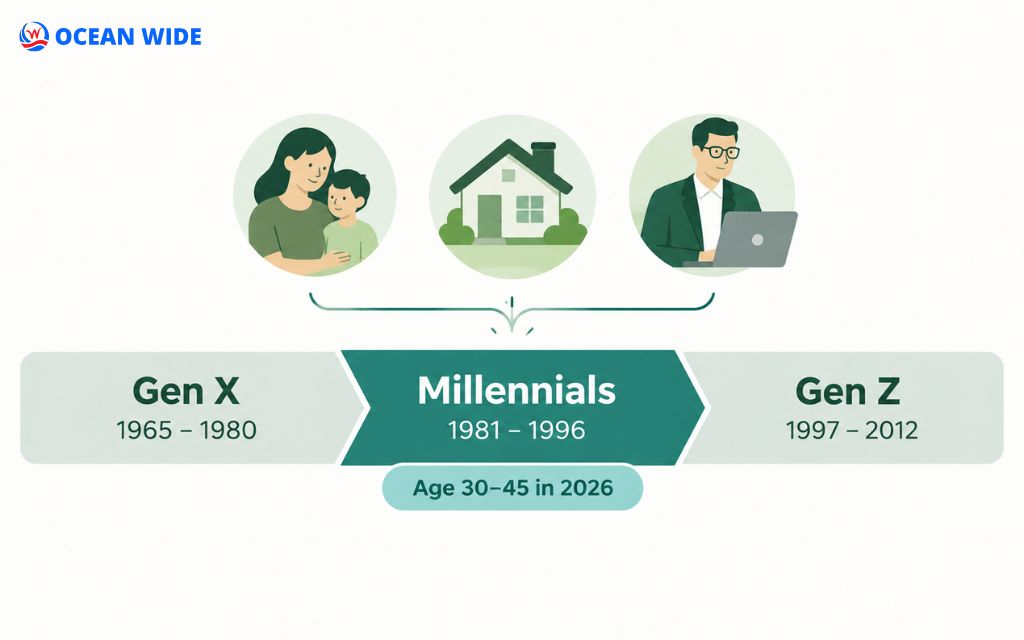
Millennials vs. Gen Z at a glance
Millennials and Gen Z share digital habits, but their life stages and buying triggers differ. The table compares both cohorts on 5 attributes.
| Attribute | Millennials (Gen Y) | Gen Z |
| Birth years | 1981–1996 | 1997–2012 |
| Age in 2026 | 30–45 | 14–29 |
| Typical life stage | Parents, homeowners, mid-career managers | Students, early-career workers, renters |
| Core platforms | Facebook, YouTube, Instagram | Instagram, TikTok, YouTube, Snapchat |
| Buying trigger | Reviews, clear value, convenience | Trends, creators, peer content |
Four life-stage segments inside one generation
Millennials are not one audience. Our team splits them into 4 segments when we plan campaigns, because each segment answers a different offer:
- Young parents want time savings, safety, and family-friendly options. A pediatric dentist or a meal-prep service speaks to them directly.
- Homeowners search for landscaping, remodeling, and home repair, and they compare quotes. Before-and-after photos and clear estimates move them to call.
- Mid-career professionals buy for themselves and often approve vendors at work. Expertise posts and documented project results build their confidence.
- Child-free urban professionals spend on dining, fitness, and travel. Events, seasonal menus, and loyalty perks catch their eye.
The sandwich caregiver, who supports children and parents at once, overlaps with several groups. Home care and health providers should write for this person by name.

Why millennials matter for small and local businesses
Millennials matter because they now decide many household purchases of local services, from childcare to roofing. eMarketer notes that millennials entered their peak earning and spending years in 2026, with the youngest turning 30.
Their buying path also favors small brands. Millennials search online, read reviews, and check social profiles before they contact a business. A local restaurant with a complete Google profile and an active Instagram account can compete with a chain on that path.
A typical millennial path to a local purchase runs in 5 steps: a search, a scan of reviews, a website visit, a quick look at social profiles, and then a call or booking. Every step is a place to win or lose the customer.
We see this pattern with clients in food service, landscaping, and home care. The first phone call often follows a review read or a short video watched the night before.
Expert tip from our strategy team: Before you publish a post, ask one question: would a 38-year-old parent with 10 free minutes find this useful? If the answer is no, rewrite it.

What millennials expect from the brands they buy from
Millennials expect 4 things from brands: honesty, clear value, convenience, and shared values. Each expectation shapes how you write offers, ads, and posts.
Authenticity and transparency
Authenticity means your marketing matches your real product, prices, and people. Millennials compare your ads with reviews, Reddit threads, and advice from friends. Any gap between promise and experience costs trust fast.
Show the owner, the crew, and the kitchen. Behind-the-scenes posts prove you are real better than any slogan.
Shared values belong here too. Millennials notice how a business treats its staff, its neighborhood, and its customers. Show local partnerships, sourcing choices, or community work only when they are real and ongoing.
Clear value, not the lowest price
Millennials pay for value they can see, not only for low prices. Many carry childcare, housing, and student loan costs, so they weigh each dollar. Spell out what the price includes, how long the work takes, and what happens if something goes wrong.

Convenience at every touchpoint
Convenience means a customer can find, book, and pay without friction. Online booking, text confirmations, and digital payments, such as Apple Pay, Venmo, and saved cards, remove reasons to delay.
Response time counts as convenience too. Reply to messages and form requests within the same business day, and show your hours, service area, and next available slot on every page.
Myths to drop before you plan a campaign
Three myths still appear in millennial marketing articles. Drop them before you write your next brief:
- “Millennials are young.”: The youngest turned 30 in 2026, so write for adults with families and careers.
- “Millennials left Facebook.”: Pew’s 2025 survey found that 80% of U.S. adults ages 30 to 49 use Facebook, the highest share of any age group.
- “Millennials have an 8-second attention span.”: This widely shared claim lacks a solid research basis. Millennials skip content that wastes their time, which is a relevance problem.

How to market to millennials: 8 strategies that work
To market to millennials, build trust first, remove friction second, and promote third. The 8 strategies below follow that order, from brand foundations to search visibility.
1. Build a brand millennials trust
Branding for millennials starts with a clear promise, a consistent look, and a human voice. Keep your logo, colors, photo style, and tone identical across your website, Google profile, and social accounts. Consistency signals a stable business.
Write like a neighbor who knows the trade. Swap “We provide comprehensive outdoor solutions” for “We mow, edge, and haul clippings every Tuesday.”
A brand style guide keeps this consistent as your team grows. One page with your logo rules, 2 to 3 brand colors, fonts, photo style, and 5 voice rules is enough for most small businesses.
2. Make your website fast and mobile-friendly
Your website must load fast and work on a phone, because most millennial research starts on mobile. Put your phone number, service area, and booking button at the top of the page. Keep contact forms to 3 to 5 fields.
Test your site on your own phone over a cellular connection. If a page takes longer than 3 seconds to show its main content, compress images, remove unused plugins, and simplify the layout. Add click-to-call and click-for-directions buttons for local visitors. If your site fails these checks, a website design & development project fixes speed and layout at the source.

3. Earn reviews and social proof where they search
Reviews often decide which local business a millennial calls. Ask happy customers for a Google review within 24 hours of the job, and reply to every review, positive or negative. The same rule applies when you handle social media complaints in comments and DMs.
Follow each platform’s rules. Google prohibits offering incentives for reviews, and Yelp asks businesses not to request reviews at all.
Make the request easy. Send a short text with a direct review link, and print a QR code on receipts, invoices, or table cards. Share standout reviews as social posts to extend their reach.
4. Teach, don’t just sell
Helpful content earns millennial attention because it answers real questions before the sale. A landscaper can publish a watering guide for new sod, which typically needs about 1 inch (2.5 cm) of water per week once established. A law firm can explain its intake steps in plain words.
Backed by a search optimization service, these pages rank in search, answer objections early, and show expertise without a sales pitch.

5. Personalize with your own customer data
Personalization works best with first-party data, such as past orders, service dates, and stated preferences. Send a reminder when a seasonal service is due, or a birthday offer to loyalty members. Email and SMS deliver these messages without depending on ad algorithms.
Start small. Tag customers by service type and last visit date in your CRM or booking tool, then send one relevant message per month. A home care provider, for example, can send a seasonal checklist to adult children who manage a parent’s care.
6. Create experiences and community
Experiences give millennials a reason to talk about your brand. Host a tasting night, a free workshop, or a neighborhood cleanup. Invite guests to share photos, and repost the best ones with permission.
Community also lives online. A private Facebook group, a monthly email for regulars, or a loyalty program with early access gives millennials a sense of belonging to your brand.

7. Be upfront about pricing and value
Price transparency shortens the millennial buying cycle. Publish starting prices or price ranges, and list what each package includes. Explain the 3 to 4 factors that move the final quote, if exact prices vary by job.
A landscaping company, for example, can list lot size, slope, irrigation, and plant choices as its 4 price drivers. That one list answers the question most prospects hesitate to ask on the phone.
8. Show up in search and AI answers
Millennials now ask search engines and AI assistants for recommendations, so your business needs clear, consistent information online. Keep your name, address, phone, hours, and services identical on your website, Google Business Profile, and directories. Answer common questions on your site in plain language that AI tools can quote.
Add an FAQ section to your key service pages and mark it up with FAQ schema. Specific answers, such as service areas, price ranges, and turnaround times, give AI systems facts they can cite.

How to reach millennials on social media
To reach millennials on social media, start with Facebook and YouTube, then add Instagram, TikTok, or LinkedIn based on your content and goal. Pew found that 84% of U.S. adults use YouTube, while 80% of adults ages 30 to 49 use Facebook and 58% visit it daily.
Each platform plays a distinct role in social media marketing for millennials:
| Platform | Role for millennial audiences | Best content formats |
| Local reach, groups, events, and reviews | Event posts, group answers, short video | |
| YouTube | Research and how-to viewing | Tutorials, project walkthroughs, video FAQs |
| Visual proof and brand personality | Reels, carousels, before-and-after photos | |
| TikTok | Discovery and entertainment | Quick tips, behind-the-scenes clips |
| Professional and B2B decisions | Expertise posts, team stories, project notes | |
| Planning home, food, and event projects | Idea boards, step guides, product pins |

Choose platforms by goal, not hype
Pick 1 or 2 platforms you can post on 3 to 5 times a week. A restaurant gains more from an active Instagram and Facebook than from 6 half-empty accounts. Add a channel only when the first ones run on a steady schedule.
Your industry narrows the choice. Restaurants and bakeries lean on Instagram and Facebook, home service companies on Facebook and YouTube, and law firms or B2B services on LinkedIn and YouTube.
Content formats that hold attention
Short vertical video under 60 seconds fits how millennials scroll on Facebook, Instagram, and TikTok. Mix 3 content types: education (tips), proof (results and reviews), and personality (team and process).
User-generated content, such as customer photos, tagged stories, and video testimonials, adds peer proof that paid ads cannot match.

Paid social targeting tips
Paid social lets you target millennials by age, location, and interests. Set the age range to 30–45, draw a radius of 5 to 15 miles (8 to 24 km) around your service area, and test 2 to 3 creative versions per ad set.
Review Meta’s current targeting options before each launch, because Meta updates them often.
Retargeting brings back warm prospects. Show a review-based ad to people who visited your pricing page, or a limited-time offer to people who watched half of your last video.
Millennials and influencers: How to work with creators the right way
Millennials respond to creators they already trust, so the right partnership feels like a recommendation, not an ad. eMarketer’s 2026 analysis ranks millennials alongside Gen Z as leaders in social commerce, including purchases driven by creator recommendations.
Micro and local creators vs. big names
Local nano- and micro-creators fit small businesses better than celebrities. These accounts usually hold 1,000 to 100,000 followers, live near your customers, and charge fees a small budget can cover.
Vet each creator before you pay. Check engagement quality, audience location, and past brand posts.
Put the scope in writing: the number of posts, the formats, the posting dates, the usage rights, and the fee or product exchange. Give each creator a unique link or discount code, so you can tie sales to the partnership.
FTC disclosure basics every business should know
Any creator you pay, gift, or discount must disclose that connection clearly. The FTC’s “Disclosures 101” guide covers payments, free products, discounts, and personal or employment ties. The disclosure must be hard to miss and use simple words, such as “ad,” “sponsored,” or “paid partnership.”
Write the rule into every creator agreement, and review each post before it goes live. Advertisers can share responsibility under the FTC’s Endorsement Guides. This section offers general guidance, not legal advice.

How to measure your millennial marketing
Measure millennial marketing by business outcomes, such as leads, bookings, and repeat purchases, not by likes alone. Match each goal to 1 or 2 metrics, then build a social media dashboard to review them every month.
| Goal | Key metric | Where to track |
| Awareness | Reach, video views | Meta Business Suite, YouTube Studio |
| Engagement | Saves, shares, comments | Native platform insights |
| Leads | Calls, form fills, cost per lead | Google Analytics 4, call tracking, ad manager |
| Sales | Bookings, revenue per campaign | POS, booking software, CRM |
| Loyalty | Repeat rate, review count and rating | CRM, Google Business Profile |
Test one change at a time, such as a new headline or a visible price, so you know which change moved the number.
Tag every campaign link with UTM parameters and use a tracking number for calls. These two steps show which post, ad, or creator produced each lead, so you can move the budget to what works.

Common mistakes when targeting millennials
Weak millennial campaigns tend to repeat the same 5 mistakes. Watch for these before you launch:
- Writing for 22-year-olds: Millennials are 30 to 45, and outdated slang reads as out of touch.
- Faking authenticity: Stock photos and scripted testimonials expose the gap between brand and reality.
- Spreading across every platform: Thin, irregular accounts suggest a business that may not answer the phone.
- Skipping disclosures: Undisclosed creator deals risk FTC scrutiny and public backlash.
- Ignoring reviews: An unanswered negative review stays visible to every future customer.

Grow your millennial audience with The Ocean Wide’s Social Marketing Service
Our Social Marketing Service plans, creates, and manages social campaigns for 30- to 45-year-old buyers. The Ocean Wide is a Denver digital marketing agency founded in 2019, serving restaurants, landscaping companies, home care providers, law firms, and other local businesses.
Every engagement follows 5 steps: discovery and business analysis, strategy development, content creation and campaign setup, launch and optimization, and reporting and growth planning. The service covers 4 areas:
- Strategy: audience research, competitor analysis, platform selection, and KPI planning.
- Content: short-form video, graphics, carousels, and brand voice development.
- Management: scheduling, comment and DM handling, and community building.
- Growth: paid social ads, influencer marketing, and analytics dashboards.
We manage Facebook, Instagram, TikTok, LinkedIn, YouTube, and Pinterest, the same platform mix this guide recommends.
We start with a review of your current accounts, reviews, and website. That audit shows where millennial prospects drop off before they call.
Millennials reward brands that stay honest, easy to buy from, and present where they already spend time. Pick one segment, one or two platforms, and one metric. Then contact The Ocean Wide to build your plan for marketing to the millennial generation.

Frequently asked questions about marketing to millennials
What age are millennials in 2026?
Millennials are 30 to 45 years old in 2026. Pew Research Center defines them as people born between 1981 and 1996.
What is the best social media platform to reach millennials?
Facebook and YouTube reach the widest millennial audience. Pew’s 2025 data shows 80% of U.S. adults ages 30 to 49 use Facebook. Add Instagram for visual brands and LinkedIn for B2B services.
How is marketing to millennials different from marketing to Gen Z?
Millennial marketing stresses value, reviews, and convenience for established adults, while Gen Z marketing leans on trends and creator culture. Millennials also use Facebook far more than Gen Z.
Do millennials trust influencers?
Millennials trust creators whose content feels honest and relevant to their lives. Local micro-creators with clear sponsorship labels often earn more trust than celebrity endorsements.
What do millennials value most in a brand?
Millennials value honesty, clear pricing, convenience, and shared values. Reviews and peer recommendations confirm those qualities before they buy.
Is Facebook still effective for marketing to the millennial generation?
Yes, Facebook remains a core channel for marketing to the millennial generation. Pew reports that 58% of U.S. adults ages 30 to 49 visit Facebook daily. Groups, events, and local ads suit small businesses well.