Skip to content


B2B influencer marketing helps small B2B companies earn trust faster by working with people their buyers already follow. We wrote this guide for owners and marketers at small and mid-sized firms. It shows how to find the right voices, set a fair budget, prove ROI, and stay within FTC rules.
What is B2B influencer marketing?
B2B influencer marketing is a partnership with trusted industry voices whose audiences include your buyers. Experts, practitioners, executives, and customers lend their credibility to your brand across a long buying cycle.
B2C influencer marketing chases quick purchases from large audiences. The B2B version targets a small group of decision-makers who compare vendors for weeks or months. One respected voice in a niche can reach a buying committee that ads rarely move.
Who counts as a B2B influencer?
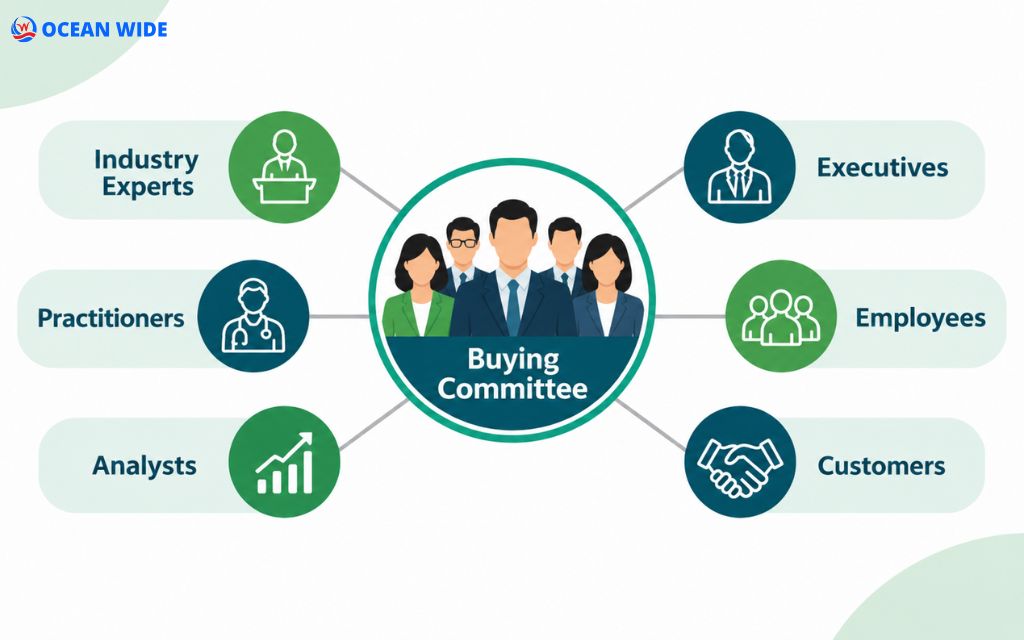
A B2B influencer is any person whose opinion shapes how business buyers choose a product or service. Follower count matters less than relevance. These 6 groups make up most B2B programs:
- Industry experts: consultants, authors, and speakers who teach a topic your buyers care about.
- Practitioners: working accountants, IT managers, or operations leads who share how they do their jobs.
- Analysts: researchers who rank vendors and publish market reports.
- Executives: your founder or CEO, who posts opinions under a personal name.
- Employees: sales reps, engineers, and account managers who act as brand advocates.
- Customers: clients who describe real results in their own words.
A trade newsletter with 4,000 readers can beat a TikTok account with 400,000 followers, if those readers sign purchase orders.
Influencer, creator, or thought leader: What is the difference?
The three terms overlap, but each describes a different role. An influencer shapes buying opinions. A creator produces content, such as videos, posts, or newsletters, for an audience. A thought leader holds recognized expertise and sets the direction of a field.
Most effective B2B partners combine all three roles. When we screen partners for clients, we look for the thought leader first and the content skills second.
Pick the person your buyers trust, not the person with the largest audience.
8 key differences between B2B vs. B2C influencer marketing
B2B and B2C influencer marketing differ in goal, audience, and time frame. The table below compares both models across 8 factors:
| Factor | B2B influencer marketing | B2C influencer marketing |
| Main goal | Credibility, consideration, and pipeline | Awareness and direct sales |
| Buyer | A buying committee of 3 or more people | One consumer |
| Influencer type | Experts, practitioners, executives, customers | Lifestyle and entertainment creators |
| Audience size | Small and niche (often under 10,000) | Large (often 100,000 or more) |
| Main platforms | LinkedIn, YouTube, podcasts, newsletters | Instagram, TikTok, YouTube |
| Content format | Webinars, how-to posts, interviews, reviews | Short videos, unboxings, discount codes |
| Sales cycle | Weeks to months | Minutes to days |
| Key metrics | Qualified leads, pipeline, deal velocity | Clicks, coupon use, sales |
The biggest shift is patience. A B2C post can sell a product the same afternoon. A B2B post plants a name that a buyer recalls during a vendor review 3 months later.

Does influencer marketing work for B2B? 3 benefits and 1 limit
Yes, influencer marketing works for B2B when the program runs long enough to build trust. In TopRank Marketing’s 2025 survey of B2B marketers, 43% of respondents reported outstanding results. That share rose to 79% among teams with mature programs. TopRank is an agency that sells influencer services, so treat its survey as directional.
Three benefits explain why the model pays off.
It reaches the whole buying committee
A B2B purchase rarely rests on one person. Finance checks the cost, IT checks the security, and a manager checks daily use. Each person follows different voices, so a mix of influencers reaches roles that one ad cannot reach.
It transfers trust from a person to your brand
Buyers trust a peer who has used a tool more than the vendor who sells it. When a respected practitioner explains how your service solves a problem, part of that respect moves to your brand.

It creates content you can reuse
One recorded interview with an expert can become a blog post, 5 short clips, a sales email, and a paid ad. Your sales team gains proof it can send to prospects who hesitate.
When it is not a good fit
Influencer marketing struggles in 3 situations: the offer is unclear, the niche has no active voices, or the team expects sales within 30 days. Fix the offer and the timeline first.

B2B influencer marketing for small businesses
Small B2B companies should start with people who already know and like their work. These voices cost little, carry real proof, and teach you what content your buyers want before you pay outside creators.
When we plan social media for small business clients, we map existing relationships before we search for new names. This step often surfaces more credible voices than owners expect. Four groups deserve attention first:
- Satisfied customers: Ask 2 or 3 long-term clients to share a short story about a problem you solved. A plain LinkedIn post from a happy operations manager carries more weight than a polished ad.
- Partners and suppliers: Co-host a webinar with a software vendor, a distributor, or a referral partner. Each side brings its own audience to the session.
- Founders and staff: Coach your owner and 2 or 3 team members to post one helpful tip each week. Employee advocacy turns daily expertise into steady reach.
- Niche experts nearby: Contact trade association leaders, podcast hosts, and newsletter writers within a 50-mile (80 km) radius or inside your industry. Micro and nano experts often accept product access or a speaking slot instead of cash.
A realistic first program for a 10-person firm could look like this example scenario: one customer story per month, one partner webinar per quarter, and weekly founder posts. That plan needs no creator fees, only planning time and light video production.

How to build a B2B influencer marketing strategy in 7 steps
To build a B2B influencer marketing strategy, link each partnership to a funnel goal, a buyer role, and a way to measure it. We follow these 7 steps when we plan creator content for clients:
- Set a goal for each funnel stage: Choose awareness (reach new buyers), consideration (educate active researchers), or pipeline (book demos and calls). One campaign should serve one primary goal.
- Define the buyer persona and committee: List the job titles that approve, use, and pay for your service. A print shop selling to restaurants, for example, needs to reach owners, chefs, and marketing managers.
- Find and vet influencers: Check 5 points before you reach out: audience match, proven expertise, comment quality, competing sponsors, and past controversies. Read 10 recent posts and the replies under them.
- Choose platforms and formats: Match the format to the buyer’s habits: LinkedIn posts for managers, podcasts for owners who commute, and webinars for teams that compare vendors.
- Set a budget and a pay model: Decide between a flat fee, product access, a commission, or a hybrid before influencer outreach. Clear terms shorten negotiation.
- Write a brief and co-create the content: Give each partner one goal, one key message, one proof point, one call to action, and the disclosure rule. Leave the voice and the examples to them.
- Amplify and measure: Promote the best posts with paid social, track every link, and review results every 30 days.
Brief the outcome, not the script. B2B audiences spot a script within one sentence.

How much does B2B influencer marketing cost? 5 pay models
B2B influencer marketing cost depends on the pay model, the partner’s seniority, and the work involved. No standard rate card exists. A customer story may cost a thank-you gift, while a known industry analyst may charge a premium fee for one sponsored webinar.
These 5 models cover most B2B partnerships:
| Pay model | How it works | Best fit | Main risk |
| Flat fee | You pay a set amount per post, video, or webinar | Experts with proven audiences; high-production assets | You pay even if results stay low |
| Product access | The partner receives free use of your product or service | Micro experts and new partners | Limited appeal to senior voices |
| Commission | You pay per qualified lead, booked call, or sale | Partners who review or compare tools | Few experts accept pure performance pay |
| Revenue share or affiliate | The partner earns a percentage of recurring revenue | Software and subscription services | Long tracking windows and disputes |
| Hybrid | A smaller upfront fee plus a lead or sales bonus | Most small B2B programs | Needs clean tracking from day one |
We suggest a hybrid model for most small B2B budgets. The upfront fee covers the partner’s time, and the bonus links their pay to real outcomes.
Six factors raise or lower the final price: partner seniority, niche depth, content volume, format, approval rounds, and usage rights. Usage rights matter most for small budgets. A partner may charge extra when you turn their post into a paid ad for 90 days.

Best platforms for B2B influencer marketing in 2026
LinkedIn leads B2B influencer marketing, but YouTube, podcasts, and newsletters reach buyers with higher intent. The right platform is the one where your buyers learn about their work. Four channel groups cover most programs.
LinkedIn: The default B2B channel
LinkedIn connects partners to job titles, industries, and company sizes in one feed. Text posts, short videos, carousels, and LinkedIn Live sessions all suit expert content.
YouTube, podcasts, and newsletters: Depth and search value
These channels hold attention for 20 to 60 minutes per episode or issue. A product walk-through on YouTube keeps ranking in search for years. A podcast interview builds trust with owners who listen during a commute.

X, TikTok, and Instagram: Reach for specific niches
X works for software developers and tech founders. TikTok and Instagram suit trades, food service suppliers, and design firms, where buyers enjoy short visual demos. Test these channels after your core channel performs.
Paid amplification of creator posts
Paid amplification turns one strong organic post into a targeted ad. LinkedIn Thought Leader Ads let a company promote posts from employees, industry experts, customers, and creators. The author must approve each request, and the ad runs under the person’s name.
We use this format to extend a post that already earns strong comments. A modest daily budget can push that proven post to exact job titles at target companies.

What is the ROI of B2B influencer marketing?
The ROI of B2B influencer marketing equals influenced revenue minus program cost, divided by program cost. A program that costs $5,000 and influences $20,000 in closed deals returns 300%. Long sales cycles delay that number, so track early signals while deals mature.
Leading and lagging indicators
Track both groups side by side:
- Leading indicators: comment quality, saves, profile visits, website sessions from partner links, and branded search growth.
- Lagging indicators: marketing qualified leads, sales qualified leads, pipeline influenced, and deals closed with a partner touchpoint.
In our experience, awareness signals appear within 1 to 3 months. Pipeline impact usually needs 6 to 12 months, depending on deal size.
How to track B2B influencer results
Tracking starts before the first post goes live. Set up these 4 tools for every partner:
- UTM links: Give each partner a unique tagged link to separate traffic by source.
- Landing pages: Build one page per campaign to measure form fills and calls.
- Self-reported attribution: Add a “How did you hear about us?” field to contact and demo forms.
- CRM fields: Log the partner’s name on every lead and deal they touch.
Self-reported attribution catches buyers who see a post on their phone and visit later from a laptop. Link tracking misses many of those cross-device journeys.

FTC disclosure rules and contracts for B2B influencer partnerships
B2B influencers must disclose any material connection with your brand, and B2B posts follow the same FTC rules as consumer posts. A material connection includes payment, free products, employment, and family or personal ties.
The FTC revised its Endorsement Guides in 2023, with the update effective July 26, 2023. The guides define a “clear and conspicuous” disclosure: hard to miss, easy to understand, and placed with the endorsement itself. A platform’s paid-partnership label helps, but the FTC advises partners not to rely on it alone.
Your contract should cover 5 points beyond payment:
- Disclosure: the exact wording, such as “#ad” or “Paid partnership with [brand]”, and where it appears.
- Approval: who reviews drafts and how many revision rounds apply.
- Usage rights: where and for how long you may reuse the content, including paid ads.
- Exclusivity: whether the partner may promote direct competitors during the term.
- Exit clause: how either side ends the deal and what happens to published posts.
This section offers general information, not legal advice. Ask an attorney to review your influencer contracts.

4 B2B influencer marketing examples small teams can copy
Large brands show which formats work, and each format scales down to a small budget. These 4 examples cover a podcast, a community, an event, and a creator video:
- SAP, the Tech Unknown podcast: SAP invited outside experts as guests on a branded podcast. The episodes taught ideas instead of pitching products. Small-team version: host a monthly 20-minute interview with one customer or partner.
- Salesforce, the Trailblazer community: Salesforce recognizes expert users with badges and speaking slots. Those advocates create tutorials on their own channels. Small-team version: feature one power user per quarter on your blog and social pages.
- Semrush, the influencer weekend: Semrush hosted a group of marketing influencers, who later spoke at its Spotlight conference. Small-team version: invite 5 local experts to a workshop at your office and record short clips.
- HubSpot, INBOUND creator content: HubSpot partnered with LinkedIn creator Sarah Chen-Spellings, who shared her first experience speaking at INBOUND. Small-team version: ask a speaker or guest at your event to post a personal recap.
Each example shares one trait: the partner speaks in their own voice about their own experience.

6 common B2B influencer marketing mistakes
Failed B2B influencer programs often repeat the same errors. We see these 6 mistakes most often when we audit social programs:
- Choosing by follower count: A large audience of students or job seekers rarely contains buyers. Check who comments, not how many people follow.
- Running one post and stopping: Single posts fade from feeds within days. Plan at least 3 to 6 months with the same partners.
- Scripting every word: Rigid scripts erase the partner’s voice, which is the reason buyers trust them.
- Skipping tracking: Programs without UTM links and form questions cannot prove value at budget review.
- Hiding the disclosure: Missing or buried disclosures put both the brand and the partner at FTC risk.
- Ignoring the exit plan: Partners change jobs and opinions. A contract with clear exit and content terms protects your published assets.

Agency, platform, or in-house: How to run your B2B influencer program
Small B2B companies can run an influencer program in-house, through a software platform, or with an agency. The right choice depends on your time, budget, and internal skills. The table compares the 3 options:
| Option | What you get | Best for | Trade-off |
| In-house | Full control of partners, budget, and messages | Firms with a marketer who has 5 or more spare hours a week | Slow to scale; skills gaps in video and paid ads |
| B2B influencer platform | A searchable creator database, outreach tools, and reports | Teams that run many partnerships at once | Subscription fees; you still write briefs and manage people |
| B2B influencer marketing agency | Strategy, recruiting, contracts, content, and reporting | Companies with budget but little team time | Higher cost; less direct contact with partners |
Many small firms blend options. They keep partner relationships in-house and hire an agency for content marketing strategy and paid amplification.

Grow B2B trust with The Ocean Wide Social Marketing Service
The Ocean Wide helps small and mid-sized businesses turn industry voices into social content that earns trust. Our Social Marketing Service covers the work that surrounds a B2B influencer marketing:
- Strategy: We define goals, buyer personas, channels, and a content calendar that fits your sales cycle.
- Content production: Our designers, photographers, and videographers produce interviews, short clips, and graphics with your partners.
- Paid amplification: We promote proven posts to exact job titles and industries on LinkedIn and Meta.
- Reporting: We connect social activity to leads, calls, and form fills each month.
Our team works from Denver, Colorado, and Ho Chi Minh City, and has served small businesses since 2019. Talk to us about social marketing if you want expert voices to reach the buyers who matter to you.

FAQs about B2B influencer marketing
How do I find B2B influencers in my industry?
Start with your customers, partners, and staff, then search LinkedIn, podcasts, and trade newsletters for voices your buyers follow. Ask 5 recent clients whom they read or listen to for work advice.
What is a B2B influencer program?
A B2B influencer program is an ongoing partnership with a fixed group of voices, rather than a one-off campaign. In TopRank Marketing’s 2025 report, 99% of marketers who used this “always-on” approach rated their programs effective.
How long does B2B influencer marketing take to show results?
Engagement and traffic usually appear within 1 to 3 months, while pipeline impact takes 6 to 12 months. Larger deals and longer sales cycles push results later.
Do I need a B2B influencer marketing agency?
You need an agency only if your team lacks the time or skills to recruit, brief, produce, and measure. Many small firms manage partners in-house and outsource content and ads.
Do B2B influencers need to disclose paid partnerships?
Yes, every paid or gifted B2B partnership requires a clear disclosure under FTC rules. Place it at the start of the post, in plain words.