Skip to content


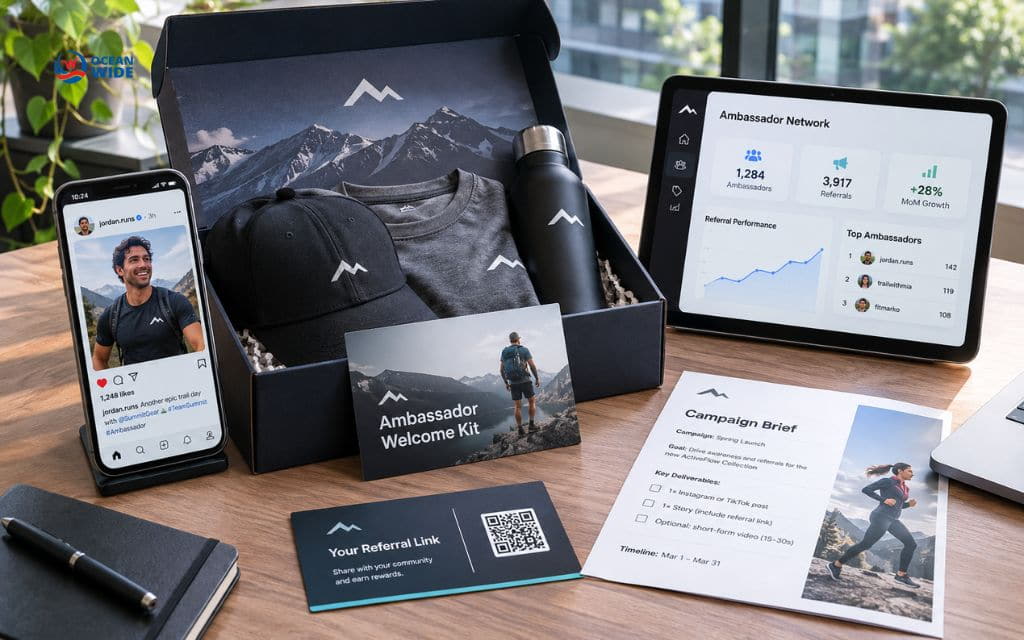
Your most enthusiastic customers may already be recommending your products, sharing photos, or answering questions about your brand. Without a plan, those valuable interactions are difficult to support, repeat, or measure. Learning how to create a brand ambassador program helps you turn existing goodwill into lasting relationships with customers, creators, and other advocates who genuinely believe in what you offer.
Successful programs need more than a list of people willing to post. They require clear goals, thoughtful recruitment, fair incentives, useful guidance, and regular performance reviews. The following steps explain how to build a program you can manage, even if your team is starting with a modest budget.
What is a brand ambassador program?
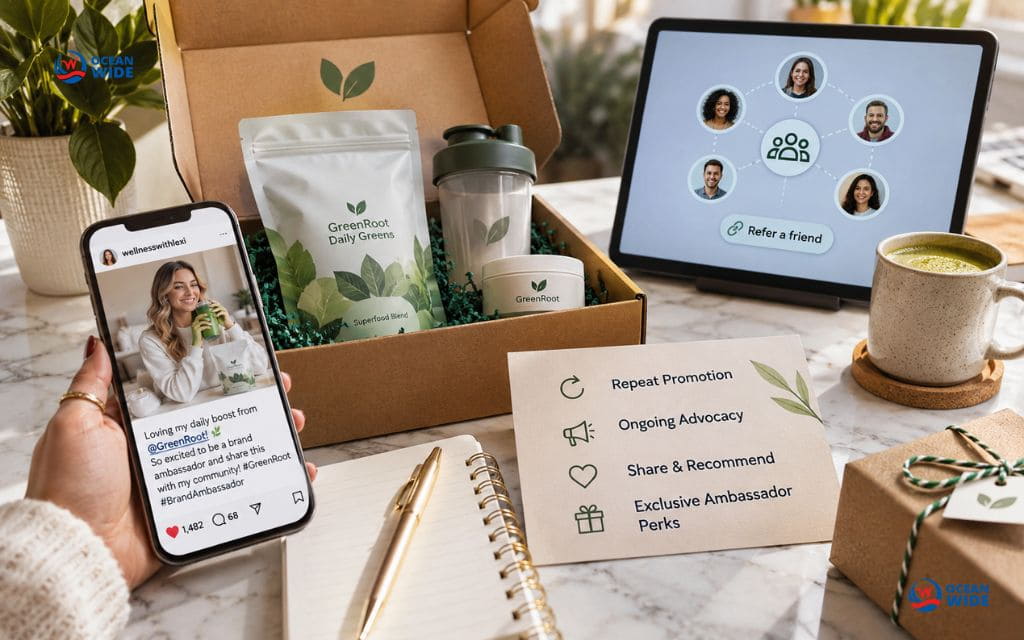
A brand ambassador program is an organized arrangement in which people represent and recommend a brand over time. Participants might create social content, share product experiences, refer potential customers, attend events, or answer questions within their communities. In return, they may receive payment, commissions, products, special access, or other agreed benefits.
Brand ambassadors often have an ongoing relationship with a company. Influencer campaigns, by comparison, may focus on a single sponsored deliverable, while affiliate programs typically center on trackable referrals and commissions. These models can overlap. For example, an ambassador might publish recurring videos and earn a commission on qualifying sales.
Programs work best when the people involved have authentic experience with the brand and enough freedom to express honest opinions.
What are the benefits of a brand ambassador program?
Well-designed programs can support several marketing objectives:
- Brand awareness: Recommendations and original content can introduce a business to relevant audiences beyond its own accounts.
- Customer trust: People can see how real customers or creators use a product in everyday situations.
- User-generated content: Ambassadors may produce photos, videos, demonstrations, and testimonials that complement a brand’s content calendar.
- Customer relationships: Recognition, useful feedback, and continued participation can strengthen connections with brand supporters.
- Referrals and sales: Unique links and codes can help businesses connect ambassador activity with website visits and purchases.
How to create a brand ambassador program in 9 steps
Begin the launch with a small number of intentional decisions. Follow these nine steps to set up the program, learn what works, and expand responsibly.
1. Define your program goals and target audience
Start with one clear objective, such as brand awareness, user-generated content, or referrals. Your goal determines whom to recruit, what to request, and how to measure results.
For example, a skincare brand may prioritize product demonstrations, while an online retailer may focus on referred purchases. Set a realistic pilot target, such as 20 approved posts, and refine it using actual results.
Define the audience you want ambassadors to reach based on their interests, purchasing needs, and preferred platforms.

2. Choose the right ambassador program model
The most suitable program depends on who already trusts your brand and what kind of participation you need.
- Customer ambassadors: Existing buyers share personal experiences, product tips, and recommendations.
- Creator ambassadors: Content creators build ongoing partnerships centered on relevant audiences and recurring content.
- Employee ambassadors: Team members voluntarily share appropriate workplace experiences or professional insights, with clear policies and disclosure of their employment connection.
- Community ambassadors: Enthusiasts, educators, or group leaders introduce the brand through discussions, gatherings, or educational activities.
Decide how participants will contribute. Some programs emphasize social content, while others prioritize referrals, product education, community events, or feedback. Mixed models can work, but begin with a clear set of responsibilities rather than assigning every possible activity to every ambassador.
3. Set your budget and ambassador rewards
Calculate what the program can realistically support, including both direct payments and the time your team will spend managing it. Common expenses include product samples, shipping, creator fees, commissions, events, content usage rights, software, and administrative work.
Consider which reward structure fits your objectives:
| Reward model | How it works | Main consideration |
| Product gifting | Participants receive products or services | Gifts do not guarantee positive coverage or a post unless terms are agreed |
| Flat fees | Ambassadors receive agreed payment for defined work | Deliverables and payment terms must be clear |
| Commissions | Participants earn a percentage or amount for qualifying referrals | Tracking and attribution rules matter |
| Exclusive benefits | Participants receive early access, experiences, or recognition | Benefits should be valuable to the participants |
| Hybrid rewards | Programs combine fees, products, and performance incentives | Costs and responsibilities can become more complex |
For a simple illustration, providing six ambassadors with $40 in product costs and $125 in fees each would total $990 before shipping, management time, commissions, and other expenses. That is a hypothetical budget example, not a market rate.
Compensation should reflect the work involved. Avoid assuming that free products are adequate payment for extensive filming, editing, or repeated promotional obligations.
4. Establish criteria for selecting brand ambassadors
Relevance matters more than a large follower count. Review whether someone understands the product, communicates credibly, and reaches people likely to care about it.
Evaluate potential ambassadors using five practical questions:
- Brand fit: Do their interests, values, and content align with your product and audience?
- Experience: Have they used the product, or are they willing to evaluate it honestly before endorsing it?
- Audience quality: Are followers and interactions relevant, genuine, and consistent?
- Content quality: Can they explain ideas clearly and create material suited to your chosen platforms?
- Reliability: Do they communicate professionally and follow through on commitments?
Look at the substance of comments, previous partnerships, and posting patterns. Smaller creators or loyal customers may be excellent candidates when their experiences are credible and their communities are a strong match.

5. Find and recruit potential ambassadors
Start with satisfied customers, reviews, tagged posts, and relevant communities. Expand to creators and previous collaborators. For creator partnerships, a structured influencer outreach process supports personalized invitations and follow-ups.
Explain why you selected each candidate, what participation involves, and how they will be rewarded. For example:
Hi Jordan, we enjoyed your fitness content. We’re inviting creators to try our training accessories and share honest feedback through a paid partnership. Would you like the details?
Give candidates room to ask questions or decline. Requesting authentic recommendations works better when the offer and expectations are transparent from the beginning.
6. Create program guidelines and agreements
Put the essential terms in writing before anyone begins publishing content. Clear expectations protect both the business and its ambassadors.
Your agreement or program brief should address:
- Scope of participation, deliverables, platforms, and deadlines
- Fees, gifts, commissions, payment timing, and any eligibility rules
- Partnership length, renewal, termination, and relevant exclusivity terms
- Content review processes and limits on revisions
- Permission to repost content and any separate rights for paid advertising
- Claims ambassadors may substantiate and products they have genuinely used
- Required disclosures and the process for correcting problematic posts
Follow US disclosure requirements. Under FTC guidance, ambassadors should clearly disclose material connections, including payments, free products, or employment, when those connections could affect how audiences evaluate an endorsement.
Encourage honest opinions, including constructive criticism. Seek legal advice for complex contract or advertising questions.

7. Onboard ambassadors and launch a pilot
Share an onboarding kit with product details, deliverables, deadlines, disclosure guidance, and a contact person. Provide referral links or codes when relevant, and give ambassadors time to experience the product.
Launch with a manageable group to test communication, approvals, payments, and tracking before expanding.
If the brand later wants to reuse ambassador content in paid campaigns, obtain the necessary usage rights first. Coordinating approved content with a digital advertising service can help keep paid promotion, audience targeting, and reporting organized.
8. Keep your ambassadors engaged and motivated
Maintain engagement through regular check-ins, timely payments, useful feedback, and recognition. Offer product previews or community activities while respecting ambassadors’ creative freedom.
Strong ambassador communities can also help participants learn from one another. Brands exploring how to build a community on social media can apply similar principles: give people a shared purpose, encourage useful conversations, and recognize meaningful participation.
Pay on time, respond to concerns, and review whether the workload matches the promised benefits. Relationships weaken when participants hear from the brand only when new content is due.

9. Review performance and improve the program
Compare actual outcomes with the goals established in step one. Review participation, content quality, referral activity, costs, and ambassador feedback at regular intervals. Monthly reviews may suit active campaigns, while smaller programs with longer content cycles may need a different schedule.
Identify which partnerships are productive and sustainable. Low participation may signal unclear expectations or an unattractive offer. Strong engagement without meaningful website activity could indicate that content resonates but the next action is not clear.
Use what you learn to adjust recruitment criteria, reward structures, briefs, and communication. Expand only when the team can maintain consistent support and reliable tracking.

How to measure the success of a brand ambassador program
Choose metrics that match the intended outcome rather than treating every like or impression as proof of business growth.
| Program objective | Useful metrics | What to check |
| Awareness | Reach, impressions, branded mentions | Whether content reaches relevant people |
| Engagement | Comments, shares, saves, engagement rate | Whether people respond meaningfully |
| Content creation | Approved posts, usable assets, content quality | Whether submissions meet agreed needs |
| Website traffic | Tracked sessions, referral clicks | Whether content sends interested visitors |
| Acquisition | Qualified leads, purchases, cost per acquisition | Whether referrals contribute to business goals |
| Retention | Active ambassadors, repeat participation | Whether relationships remain healthy |
Track results with UTM links, unique codes, and platform analytics. Use consistent methods, and account for discounts, fees, product costs, and management time when evaluating profitability.
Attribution has limits. Purchases may be influenced by several channels, while some tracked sales might have happened anyway. Combine referral data with ambassador feedback and broader trends instead of treating every attributed sale as incremental.
Brand ambassador program examples
Real-world programs demonstrate how ambassador relationships can serve different objectives.
Sephora Squad
Sephora Squad brings together beauty creators with distinct perspectives and audiences. The program has included paid partnerships, community support, mentoring, and opportunities to create content. Its approach shows how structured selection and ongoing relationships can make an ambassador program more substantial than a series of one-off posts.
Lululemon ambassador program
Lululemon builds ongoing relationships with community leaders and athletes who share an interest in movement and wellbeing. Its ambassador program connects product feedback, community experiences, and relationships with relevant audiences.
The lesson for smaller brands is to design participation around a shared interest and a practical purpose. Neither example establishes a guaranteed level of sales or engagement for another business.
Common mistakes when building a brand ambassador program
Several preventable problems can make a promising program difficult to sustain:
- Choosing people only for follower counts: Check audience relevance, genuine engagement, and brand fit before extending an offer.
- Leaving compensation or expectations vague: Put deliverables, timelines, and payment terms in writing.
- Controlling every message: Provide factual guardrails while allowing honest opinions and a recognizable personal voice.
- Neglecting disclosure and content rights: Train participants, review appropriate posts, and secure permission before reusing content.
- Tracking activity without outcomes: Connect content and participation metrics to the goals behind the program.
- Recruiting faster than you can manage: Improve onboarding and communication before increasing the number of ambassadors.
Conclusion
Understanding how to create a brand ambassador program gives your team a repeatable way to support people who genuinely connect with your business. Start with a measurable goal, recruit for relevance, agree on fair expectations, and launch a pilot small enough to manage well. Consistent communication and careful measurement will help you decide what to improve and when to grow.
For businesses that want to connect ambassador partnerships with broader social campaigns, The Ocean Wide offers social marketing services covering strategy, creator collaboration, community engagement, and reporting. Contact our team to discuss a plan that fits your audience and resources.
Frequently asked questions (FAQs)
How much does it cost to start a brand ambassador program?
Costs vary with the number of participants, compensation model, product value, shipping, software, and staff time. Small pilot programs may rely on existing customers and simple tracking systems, while larger programs can require dedicated management and creator budgets. Build a budget around actual deliverables rather than an assumed industry average.
How many brand ambassadors should you start with?
Start with the number you can onboard, communicate with, and evaluate consistently. Running a small pilot can reveal issues with rewards, content briefs, and tracking before expansion. There is no universal minimum or ideal number.
Do brand ambassadors need to be paid?
Not every recommendation involves payment, but agreed promotional work may be compensated through fees, commissions, products, or other benefits. Rewards should reflect the scope of work, and applicable material connections must be disclosed. Genuine customer praise offered without an incentive differs from a formal compensated partnership.
Can small businesses create a brand ambassador program?
Yes. Smaller businesses can begin by identifying satisfied customers, selecting one objective, inviting a manageable group, setting clear terms, and tracking results in a spreadsheet. Dedicated software can become useful as the number of ambassadors and partnerships increases.