Skip to content



You post on social media every week, people like and share your work, and you wonder whether any of it helps your website show up on Google. Business owners ask us this often, and the question deserves a clear answer. Social signals are the likes, shares, comments, and views your content earns on social platforms.
Google has said it does not use them as a direct ranking factor, yet they still shape how people find and trust your brand. This guide explains what social signals are, how they connect to SEO, and how you can build and measure them.
What are social signals?
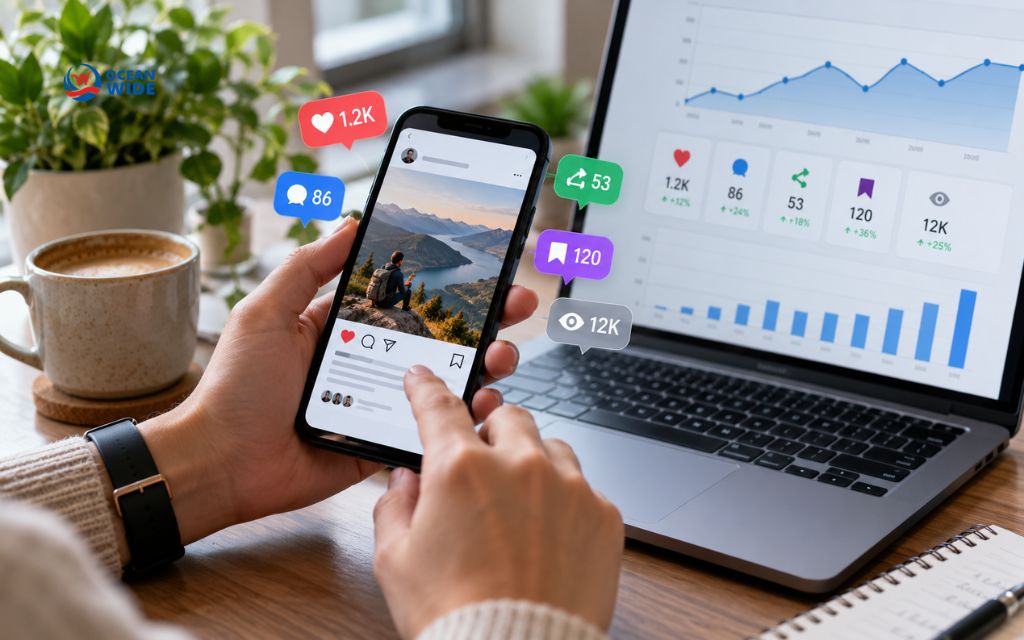
Social signals are the interactions people have with your content on social platforms, including likes, reactions, shares, comments, saves, and views. Marketers also call them social media signals or engagement signals. They show how an audience responds to what you publish, which makes them a useful measure of reach and interest.
Each platform counts engagement in its own way, so the signals you track depend on where your audience spends time. These are the most common examples:
- Facebook: Reactions, comments, shares, and clicks on links or photos.
- Instagram: Likes, comments, saves, and shares.
- LinkedIn: Reactions, comments, shares, and clicks on articles or company pages.
- TikTok and YouTube: Views, likes, comments, shares, follows, and subscriptions.
- Pinterest: Pins, views, and comments.
Social signals differ from social proof, although the two overlap. Social proof is the trust a visitor feels when they see that other people like or recommend a brand. The actions listed above create that trust, and reviews, ratings, and brand mentions add to it.
You may also see the term in sales, where social media signals describe cues such as job changes or content engagement that suggest a buyer is ready to talk. This guide covers the marketing and SEO meaning.
Do social signals affect Google rankings?
Google has said no, not directly. Likes, shares, and follower counts are not ranking factors in the way that content quality, relevance, and links from other websites are.
The confusion has a history. In 2010, Matt Cutts of Google said that links from Twitter and Facebook are read like any other link when Google can reach them. In 2014, he said Google does not include follower or like counts in its algorithm.
More recent statements point the same way. Google’s Gary Illyes said in 2017 that social media helps you market content but does not help rankings, and John Mueller replied in 2021 that Google does not use likes as a ranking factor.
Some websites claim the opposite. When a widely shared page also ranks well, popularity is the likely cause of both, because well-liked content attracts links and visits that do influence rankings. No evidence shows that a single like or share moves a page up in results.
For you, the practical point is simple: do not expect a post with many likes to lift a page on its own. Links inside social posts also do not work like links from other websites, so treat them as a path for people, not a ranking tool.

How social signals and SEO connect indirectly
Even without a direct ranking role, social signals and SEO support each other in several ways. These are the main paths:
- More traffic to your site: Every post that links to your content can send visitors to your pages, and engaged visitors give you more chances to earn a lead or a sale.
- More branded searches: When more people see your brand on social media, more of them search for your name later, which builds the demand that SEO depends on.
- Link opportunities: Content that people share reaches writers, bloggers, and partners, and some of them link to it from their own websites. Those links are the part that Google does count.
- Stronger brand presence in results: Social profiles can appear when someone searches your brand name, so complete, active profiles help you shape what people see. Linking your website and profiles, and keeping your descriptions consistent, helps search engines connect them.
- Trust and credibility: Visible likes, comments, and reviews give visitors a reason to trust you, which supports conversions even when it does not affect rankings.
These paths add up when SEO and social media marketing share the same content, keywords, and reporting, so plan the two together instead of running them as separate jobs.

How to build stronger social signals with limited time and budget
Many small business owners tell us they have little time, a tight budget, and no one on staff who knows social media well. You do not need a large team to earn real engagement. You need a steady routine and content that people want to share.
Publish content people want to share
Shareable content solves a problem, answers a question, or shows something people want their followers to see. Images, short video, and practical tips are easy to view and pass along. Add share buttons to your blog posts so readers can spread your work in one click.
Link your website from every profile, and link your profiles from your website, so visitors can move between them.
Stay active and reply to people
Engagement runs in both directions. Post on a schedule you can keep, then answer comments and questions, thank people who share your work, and tag partners or customers when it fits. These small actions show your audience that a real person is listening, and they encourage more interaction.
Collaborations help too. Working with other brands or creators puts your content in front of audiences you would not reach alone.
Skip fake engagement
Picture a shop owner who buys a large batch of followers. The follower count jumps, yet no one comments, visits the website, or buys. Those accounts have no interest in the business, so they add no real reach, and people who notice them may trust the brand less.
Real reviews and real conversations take longer, but they are the ones that build credibility.

How to measure social signals
You can track social signals with the free analytics inside each platform and with your website reports. These are the numbers worth watching:
- Engagement rate: One common formula adds likes, comments, and shares, divides the total by impressions, and multiplies by 100.
- Reach and follower growth: Reach shows how many people saw your content, and follower growth shows whether that attention turns into an audience.
- Referral traffic: Your website analytics show how many visitors arrive from each social platform and what they do on your pages.
- Branded search: Google Search Console shows how often people search for queries that include your brand name, which tells you whether awareness is growing.
- Click-through and conversion rates: Click-through rate shows how many people click your links, and conversion rate shows how many take the next step, such as a purchase or a sign-up.
Compare these numbers before and after a campaign, and give each campaign enough time to show a trend. Keep in mind that the results show a link between social activity and outcomes, not proof of cause, because branded search and traffic also respond to site updates, new content, and seasonal demand. SEO services that include keyword research, technical checks, and monthly reporting can help you separate those causes from your social activity.
Build your social presence with The Ocean Wide
The Ocean Wide is a boutique digital marketing agency, founded in 2019, that helps small and mid-size businesses grow online. We know that limited time, a tight budget, and unfamiliar platforms make it hard to turn social activity into steady results, so we work alongside you from the first conversation to the final report.
Our social media service covers the work that builds real social signals, from the first plan to ongoing reporting. Here is what it includes:
- Strategy: Audience research, competitor analysis, platform selection, content pillars, and a roadmap with clear KPIs.
- Content creation: Short-form video for Reels, TikTok, and YouTube Shorts, plus graphics, carousels, and brand voice development.
- Community management: Posting and scheduling, replies to comments and direct messages, and steps that encourage engagement.
- Paid social advertising: Campaigns on Facebook, Instagram, TikTok, and LinkedIn.
- Influencer marketing: Outreach, campaign management, and user-generated content strategy.
- Analytics and reporting: Performance insights, trend analysis, and dashboards that show how your content performs.
Social signals take steady effort, and you do not have to carry that effort alone. Schedule a free strategy session at (720) 334-0899.
Frequently asked questions (FAQs)
Are social signals a Google ranking factor?
No. Google has said that likes, shares, and follower counts are not direct ranking factors. They can still help SEO indirectly through traffic, branded searches, link opportunities, and a stronger brand presence in search results.
Do likes and shares help SEO?
Likes and shares do not raise rankings by themselves. They help when they bring visitors to your site, spread your content to people who may link to it, or lead more people to search for your brand.
Can you buy social signals?
You can find sellers, but we advise against it. Purchased likes and followers come from accounts with no interest in your business, so they add no real reach and can hurt your credibility. Genuine engagement from real customers has lasting value.
Which platforms matter most for small businesses?
The best platform is the one where your customers already spend time. Businesses that sell to other businesses often start with LinkedIn, while visual and consumer-focused businesses often start with Instagram, Facebook, or TikTok. Check where your audience engages before you commit.
Do social media links count as backlinks?
Google does not treat links in social posts the same way as editorial links from other websites. Social links still help people find your content, and a post that earns shares can lead to links from other sites. Use them as a path to discovery, not as a ranking tool.
How long does it take for social activity to show up in search?
No fixed timeline exists, because likes and shares are not a direct ranking factor. The benefits come through traffic, branded searches, and shared content, which build over time. Track those numbers for one quarter before and after a campaign, then compare the trend.
Which matters more for rankings, social signals or backlinks?
Backlinks matter more. Links from other websites count as a trust signal for search engines, while Google has said it does not use likes and shares directly. Social activity works best as support: it puts your content in front of more people, and that exposure can lead to backlinks.