Skip to content
The right words turn a scroll into a stop, and a stop into a click. Social media marketing phrases are the short pieces of copy, hooks, prompts, and calls to action that shape how an audience reacts to a post, ad, or caption. This guide breaks down the categories that matter, shows how wording shifts by platform and by stage of the customer journey, and gives eighty ready to use phrases a business can adapt right away.
What makes a social media marketing phrase work
A phrase works when it matches what the reader already wants or fears in that moment. Marketing copy fails most often because it talks about the brand instead of the reader. A strong phrase flips that order. It names a problem, a feeling, or a desire the reader already has, then points toward the brand as the way through it.
Three things decide whether a phrase lands. Audience intent comes first, since a phrase built for someone browsing casually will not work on someone ready to buy. Brand voice comes second, because a phrase that sounds nothing like the rest of a brand’s content breaks trust even if the wording is clever. Platform behavior comes third, since the same words read differently on a fast moving feed than they do in a professional network. The categories and examples below are organized around these three factors so a business can pick wording that fits the moment, not just wording that sounds good in isolation.

Categories of social media marketing phrases
Attention-grabbing hooks
A hook has one job: stop the scroll. It works by creating a small gap between what the reader knows and what they want to know, and that gap pulls attention toward the rest of the post.
- “Stop scrolling for a second”: Directly interrupts the automatic scrolling behavior.
- “You have been doing this wrong the whole time”: Challenges an assumption, which triggers curiosity.
- “Nobody talks about this, but…”: Signals insider information the reader has not heard.
- “This changes everything you thought you knew”: Promises a shift in understanding, not just information.
- “The one thing most people miss”: Implies the reader is about to learn something rare.
- “Read this before you post again”: Frames the content as time sensitive and useful.
- “Here is what nobody tells you”: Positions the brand as an honest, transparent source.
- “Wait, did you know this?”: Uses a direct question to prompt an instant reaction.
Engagement prompts
Engagement prompts invite a response, whether that is a comment, a share, or a save. They work best when the action requested is small and specific, since a vague prompt gets ignored.
- “Tell us in the comments”: Gives a clear, low effort action to take.
- “Which one are you, A or B?”: Turns engagement into a quick, binary choice.
- “Tag someone who needs to see this”: Extends reach through the reader’s own network.
- “Save this for later”: Encourages a bookmark action that boosts distribution.
- “Double tap if you agree”: Uses platform native language for a simple reaction.
- “What would you add to this list?”: Invites the reader to contribute, not just consume.
- “Drop an emoji if this is you”: Lowers the barrier to reply to a single character.
- “Share your experience below”: Positions the comment section as a real conversation.
Promotional messages
Promotional phrases announce a product, service, or offer. Clarity matters more than cleverness here, since the reader needs to know exactly what is new and why it matters.
- “New arrival, now available”: States the news plainly without extra words.
- “Introducing the newest addition to the lineup”: Frames the release as an event worth noticing.
- “Meet your new favorite”: Suggests the product will earn a place in daily life.
- “Now live”: Short and direct, built for a fast moving feed.
- “The wait is over”: Builds on anticipation the audience may already have.
- “Just launched”: Signals freshness and immediacy.
- “Available now, only here”: Adds a sense of exclusivity to the announcement.
- “Your next favorite thing just dropped”: Uses casual, conversational language suited to social feeds.
Urgency phrases
Urgency phrases push a reader from interest to action by introducing a limit, whether that is time, quantity, or availability. These work only when the limit is real, since a false deadline damages trust over time.
- “Only a few spots left”: Signals scarcity tied to a specific, limited resource.
- “Offer ends tonight”: Creates a firm deadline that discourages delay.
- “Sale ends soon”: Softer urgency for offers without an exact cutoff.
- “Last chance to save”: Frames the moment as final, prompting quick action.
- “While supplies last”: Ties urgency to inventory rather than time.
- “Today only”: Compresses the decision window to a single day.
- “Almost sold out”: Signals real time demand from other customers.
- “Hours left to grab this deal”: Adds a countdown feel without needing a literal timer.
Trust-building statements
Trust phrases reduce the doubt a reader feels before engaging with an unfamiliar brand. They work by removing risk or by pointing to proof that other people have already had a good experience.
- “Backed by our guarantee”: Removes financial risk from the decision.
- “Trusted by customers across the country”: Signals social proof without naming a specific number.
- “See what our customers are saying”: Points the reader toward third party validation.
- “No hidden fees, ever”: Directly addresses a common source of consumer distrust.
- “Cancel anytime, no questions asked”: Lowers the perceived commitment of trying the offer.
- “Real results, real customers”: Reinforces authenticity over polished marketing claims.
- “Rated highly by our community”: Uses reputation as a shorthand for quality.
- “We stand behind everything we make”: Signals accountability and long term confidence.
Value-focused messaging
Value phrases answer the reader’s unspoken question of what they actually get. These work best when they connect a feature to a clear, tangible benefit rather than listing specifications.
- “More value, same price”: Frames the offer as an upgrade rather than a cost.
- “Everything you need, nothing you don’t”: Signals thoughtful design over excess.
- “Built to last, priced to love”: Balances durability with affordability in one line.
- “Quality that speaks for itself”: Lets the product’s reputation carry the claim.
- “Get more out of every purchase”: Reframes spending as an investment.
- “Designed with you in mind”: Centers the reader’s needs over the brand’s features.
- “Simple, effective, affordable”: Compresses three benefits into a scannable phrase.
- “The smart choice for anyone ready to grow”: Positions the decision as rational, not impulsive.
Calls to action
A call to action tells the reader exactly what to do next. The strongest ones use a verb first and remove any ambiguity about the following step.
- “Shop the collection”: Direct and specific about the next step.
- “Get started today”: Pairs action with immediacy.
- “Claim your spot”: Frames the action as securing something limited.
- “Book a free consultation”: Lowers the barrier by naming the offer as free.
- “Learn more”: Works well for readers not yet ready to buy.
- “Join the community”: Frames the action as belonging, not just transacting.
- “Try it free”: Removes risk from the first step.
- “Start your journey now”: Adds momentum and forward motion to the request.
How to match phrases to your platform
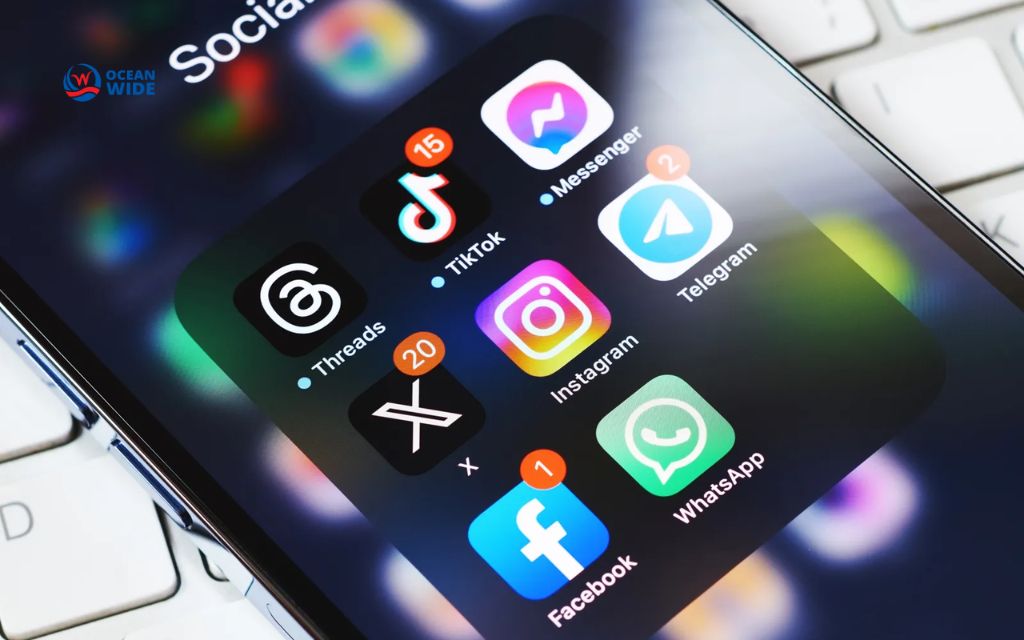
Instagram and TikTok
Both platforms favor visual first content with short, punchy captions that support rather than explain the video or image.
- “POV: you just found the answer”: Frames the post from the viewer’s own perspective.
- “Wait for it”: Builds anticipation for a payoff later in the content.
- “Save this before it disappears from your feed”: Encourages the save action native to both platforms.
Facebook audiences tend to engage through shares and comments more than quick reactions, so phrases here can invite a slightly longer interaction.
- “Share this with a friend who needs to see it”: Leverages Facebook’s strength in personal sharing.
- “Join the conversation in the comments”: Encourages the discussion threads the platform supports well.
- “Click the link to learn more”: Works well since Facebook posts commonly link out.
LinkedIn rewards professional insight and first person perspective over promotional language. Phrases should sound like a person sharing knowledge, not a brand broadcasting an ad.
- “Here is what I learned after this project”: Frames the post as experience based insight.
- “Three lessons worth sharing”: Signals a structured, skimmable takeaway.
- “Let us connect if this resonates with you”: Invites a professional relationship, not just a like.
X (formerly Twitter)
Fast moving and text heavy, this platform rewards sharp opinions and threads that unpack an idea in short, connected bursts.
- “Hot take:”: Signals an opinion piece meant to spark reaction.
- “Thread: what nobody tells you about this”: Sets up a multi post breakdown of an idea.
- “Unpopular opinion:”: Invites debate and replies from the audience.

Matching phrases to the customer journey
Awareness stage
At this stage, the reader does not yet know they have a problem the brand can solve. Phrases here should educate or spark curiosity rather than sell.
- “Did you know this about your industry?”: Opens with a fact the reader may not have considered.
- “Here is a problem you might not know you have”: Introduces a need before offering a solution.
- “Most people overlook this”: Positions the brand as noticing what others miss.
- “Curious how this actually works?”: Invites exploration without asking for commitment.
Consideration stage
Here, the reader knows the problem and is comparing possible solutions. Phrases should highlight differentiation and proof.
- “Here is how this solves the problem”: Connects the product directly to the reader’s need.
- “See the difference for yourself”: Invites direct comparison rather than a claim alone.
- “Compare your options before you decide”: Respects the reader’s research process.
- “Still weighing your choices? Here is what matters most”: Guides the reader’s evaluation criteria.
Decision stage
At this point, the reader is ready to act, and the phrase should remove friction and confirm the decision is a safe one.
- “Ready to make the switch?”: Frames the decision as already in motion.
- “Get started risk free today”: Pairs the call to action with reassurance.
- “Your solution is one click away”: Emphasizes how close the reader is to finishing.
- “Join others who already made the switch”: Uses social proof at the final decision point.

Testing and refining your phrases
No phrase works equally well across every audience, so testing matters as much as writing. A/B testing two versions of the same post, changing only the phrase while keeping the image, timing, and format the same, isolates which wording actually drives the result. Track the numbers that match the goal of the post: comments and shares for engagement prompts, click through rate for calls to action, and conversion rate for anything tied to a sale.
Consistency in brand voice matters just as much as testing. A phrase that performs well but sounds nothing like the rest of a brand’s content can boost one post while confusing the audience about who the brand actually is. The strongest approach treats every tested phrase as a variation within a consistent voice, not a departure from it. Over time, this builds a library of proven wording that a team can pull from with confidence instead of guessing at each new post.
Conclusion
Strong social media marketing phrases come from matching the right category, platform, and journey stage to the moment a reader is in, not from copying a list without context. Testing consistently and keeping a recognizable brand voice turns a collection of phrases into a reliable, repeatable system for engagement and sales.
Building and testing that system takes time most business owners do not have to spare. The Ocean Wide offers a social marketing service that helps small and medium sized businesses develop a social media voice that fits their brand and their audience, from strategy through execution. Call us at 720-295-9270 to talk through a social media strategy built around your business.
Frequently asked questions (FAQs)
What is a social media marketing phrase?
A social media marketing phrase is a short piece of copy, such as a hook, prompt, or call to action, written to move a reader toward a specific reaction on a social platform. It differs from general marketing copy in that it is built for short attention spans and platform specific behavior.
How many phrases should a single post contain?
Most effective posts use one primary phrase, whether that is a hook, a prompt, or a call to action, rather than combining several categories at once. Layering too many phrase types into one post tends to dilute the message and confuse the intended action.
Do the same phrases work on every platform?
Not consistently. A phrase built for a fast, visual feed like Instagram or TikTok often reads as too casual for LinkedIn, while a phrase written for LinkedIn can feel stiff on a platform built for quick reactions. Adjusting tone and length by platform improves how the phrase performs.
How can a business test which phrases work best?
A/B testing is the most reliable method. Running two versions of the same post with only the phrase changed, then comparing engagement, click through rate, or conversions, shows which wording actually resonates with the audience rather than relying on guesswork.
Should phrases change based on where the customer is in their journey?
Yes. A reader who has never heard of a brand responds better to educational or curiosity driven phrases, while a reader who is ready to buy responds better to direct calls to action paired with reassurance. Matching the phrase to the journey stage keeps the message relevant instead of asking for a sale too soon.