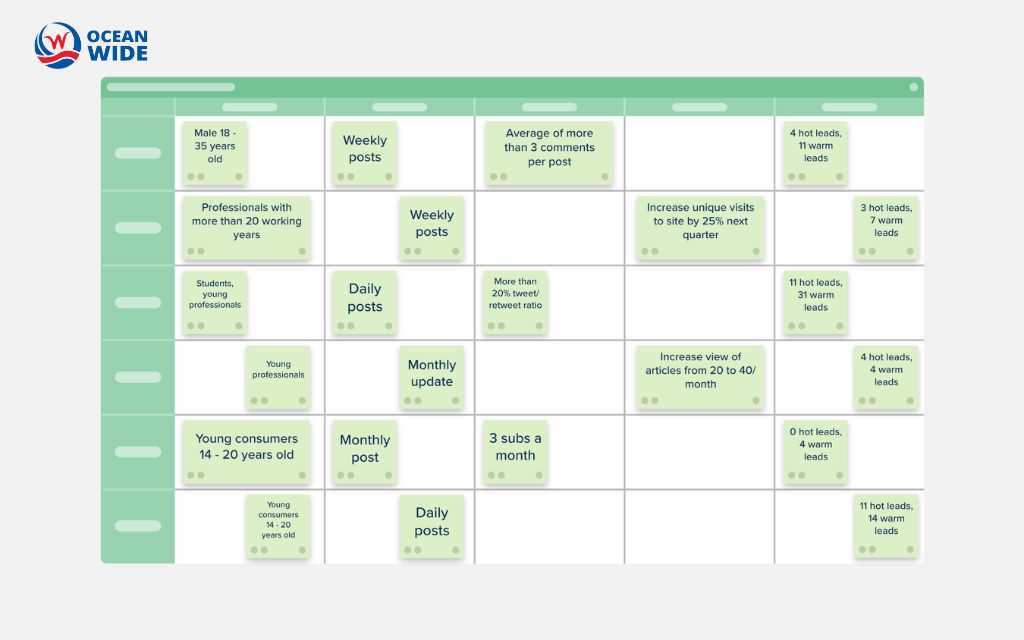
Running social media for a startup or small business in Denver can feel like juggling too many balls at once. A social media matrix gives that chaos a clear structure, helping you pick the right platforms, plan smarter content, and track results in one place. Instead of guessing what to post next, you use a simple grid that connects your goals, audience, content, and metrics across channels.
This article breaks down what a social media matrix is, why it matters for Colorado businesses, and how to build one step-by-step using practical examples. You will also see advanced ways to use measurement matrices and human-needs insights to fine-tune your social media strategy over time. Need help building your matrix or managing it month-to-month? The Ocean Wide in Denver offers free consultations for local startups and small businesses.
What is a social media matrix?
Simple definition in small business terms
A social media matrix is a structured grid that maps platforms against goals, content types, and metrics. Think of it as your command center for social media marketing. While a content calendar tells you what to post on Tuesday at 2pm, the social media matrix tells you why that post matters, which platform it belongs on, and how you will measure success.
This framework organizes and evaluates your social media activities across channels. Instead of randomly posting wherever you feel like it, you make intentional choices about where to show up, what to say, and how to prove it worked.

Core elements of the matrix
Every social media matrix for small business includes these building blocks:
- Platforms: Facebook, Instagram, LinkedIn, TikTok, YouTube, and Google Business Profile each play different roles. Facebook builds community connections. Instagram showcases visual brand personality. LinkedIn targets professional audiences and B2B prospects. TikTok reaches younger demographics with short, engaging video. YouTube hosts longer educational content and product demos.
- Goals: Brand awareness introduces your Denver business to new audiences. Engagement builds relationships through likes, comments, shares, and conversations. Web traffic sends people from social channels to your website. Lead generation captures contact information for follow-up and conversion.
- Metrics: Track fans and followers for audience growth. Monitor likes, comments, shares, and engagement rate to measure activity. Count clicks and click-through rate to evaluate traffic. Measure conversions and leads to connect social media to revenue.
Why Denver small businesses need a social media matrix
Common challenges without a matrix
Scattered posting wastes time and confuses your audience. You jump between platforms without a plan, posting whatever comes to mind. Branding feels inconsistent because different team members handle different channels with no shared strategy. Burnout hits hard when you try to be everywhere at once without prioritizing what actually works.
Proving ROI becomes nearly impossible. Your boss or business partner asks what social media is doing for the company, and you have no clear answer. For Denver small businesses, these problems multiply during seasonal tourism spikes, event-driven demand (like festivals or sports seasons), and neighborhood-based audience behavior that changes block by block.
Benefits for Colorado startups and small businesses
A social media strategy matrix saves time by focusing your limited resources on the right platforms. You stop wasting hours on channels that do not fit your audience or goals. Priorities become crystal clear. You know which platforms drive awareness, which build engagement, and which generate actual leads.
Local targeting improves dramatically. Your social media matrix for Denver businesses helps you segment content by neighborhood, highlight Colorado-specific themes like outdoor lifestyle and sustainability, and align posts with local search behavior. Better engagement with nearby audiences means more foot traffic, more phone calls at (720) 334-0899, and more emails to [email protected] from people ready to buy.

Key types of social media matrices
Platform, goal, metric matrix
This basic grid puts platforms on one axis and goals plus key metrics on the other. You might list Facebook, Instagram, LinkedIn across the top, then map brand awareness metrics (reach, impressions), brand engagement metrics (likes, comments, shares), and word-of-mouth metrics (mentions, tags, user-generated content) down the side.
Research-based models categorize metrics by awareness, engagement, and word-of-mouth to create a balanced measurement approach. This rare attribute ensures you are not just chasing vanity metrics like follower counts while ignoring the conversations and recommendations that actually drive business.
Social media content matrix
A content matrix maps topics on the Y-axis against content types on the X-axis. Topics might include frequently asked questions, behind-the-scenes stories, customer case studies, seasonal promotions, and community spotlights. Content types could be educational posts, entertaining reels, promotional offers, and community-focused updates.
This grid helps you maintain a balanced mix of posts that serve different customer needs and journey stages. When you glance at your social media content matrix template, you immediately see if you are posting too many sales pitches and not enough helpful tips.
Social media measurement matrix
A measurement matrix links platforms to specific KPIs like audience size, activity levels, engagement rates, web traffic, and lead generation. Unlike a simple analytics dashboard, this matrix ties campaign metrics to broader business objectives, turning raw numbers into decision-making tools.
The unique attribute here is strategic alignment. You are not just reporting that Instagram got 500 likes last month. You are connecting those 500 likes to increased brand awareness in the Cherry Creek neighborhood, which led to 12 website visits and 3 consultation requests. That clarity helps you decide where to invest more time and budget.
Human needs and behavior inside the social media matrix
Posters vs followers in each quadrant
Some frameworks divide users into posters (content creators) and followers (content consumers) within each social media quadrant. Posters actively share updates, opinions, photos, and videos. Followers scroll, watch, like, and occasionally comment but rarely create original content.
Understanding this split matters for your social media strategy Denver efforts. If your audience on LinkedIn consists mostly of followers, you need to post content that sparks passive engagement like thoughtful comments or shares. If your TikTok audience includes lots of posters, encourage user-generated content and duets that amplify your reach through their networks.
Relationship and need-based quadrants
Certain models organize social media services into quadrants reflecting relationship-building, self-presentation, information-seeking, and entertainment needs. Relationship quadrants include platforms where people connect with friends and family (Facebook groups, messaging). Self-presentation covers spaces where users curate their personal brand (Instagram, LinkedIn). Information quadrants deliver news and how-to content (YouTube, Pinterest). Entertainment quadrants provide fun and distraction (TikTok, memes on X).
Denver businesses can tailor content in each quadrant to local audience motivations. Community pride posts work well in relationship spaces. Showcase your involvement in Denver Startup Week or sponsor a local sports team. Outdoor lifestyle content fits self-presentation quadrants, where Coloradans love sharing hiking photos and ski trip stories. Information content could include neighborhood guides or Colorado-specific tips, while entertainment might feature lighthearted takes on Denver weather or traffic jokes.
How to build a social media matrix for your Denver business
Step 1: List your platforms and resources
Identify current and potential platforms, then get honest about the realistic time, budget, and team available to manage them. Most small businesses and startups cannot handle six platforms well, so pick two to four that match your audience and goals.
This is where the concept of an “owned social media matrix” comes in. Instead of trying to be everywhere, you intentionally curate a manageable mix of channels. Your owned matrix might include Instagram and Facebook for visual storytelling, LinkedIn for B2B networking, and Google Business Profile for local search visibility. That is enough to drive results without burning out.
Step 2: Define goals and KPIs by channel
Set specific goals for each platform and choose matching KPIs. Instagram might focus on brand awareness with reach and impressions as primary metrics. Facebook could target community engagement with comments and shares. LinkedIn might drive web traffic measured by click-through rate and landing page visits. Google Business Profile could generate leads tracked by phone calls and direction requests.
For startups, prioritize quick wins like increased engagement rate or more inbound messages alongside long-term brand-building goals like follower growth and brand recall. Having both gives you momentum now and sustainable growth later.
Step 3: Build your content matrix
Map content topics against content types to generate idea combinations. Topics might include:
- Customer FAQs and common objections
- Behind-the-scenes team stories
- Case studies and success stories
- Seasonal offers and promotions
- Local event coverage and neighborhood news
Content types could include:
- Instagram Reels and TikTok videos
- Carousel posts with tips or steps
- Stories for real-time updates
- Live videos for Q&A sessions
- Blog post shares with pull quotes
Include Colorado-specific themes for better resonance. Post about cherry blossom season in Washington Park. Share snow day tips. Highlight partnerships with other Denver small businesses. Talk about traffic on I-25 or the latest Broncos game. These local touches make your content feel relevant and relatable.
Step 4: Add a measurement matrix layer
Build a simple measurement matrix that tracks audience, activity, engagement, web traffic, and leads across platforms each month. Your grid might look like this:
| Platform | Audience (followers) | Activity (posts) | Engagement (rate) | Web Traffic (clicks) | Leads (conversions) |
| 1,200 | 20 | 4.5% | 85 | 3 | |
| 800 | 12 | 3.2% | 110 | 5 | |
| 350 | 8 | 6.1% | 45 | 7 |
Review this social media measurement matrix quarterly. Double down on what works, like LinkedIn’s higher engagement and lead conversion in this example. Trim low-value activities, like posting to platforms that generate zero leads or traffic month after month.
Step 5: Turn the matrix into a weekly content calendar
Translate matrix decisions into a practical weekly posting schedule. If your content matrix says you need two educational posts, one entertaining post, and one promotional post per week on Instagram, your calendar assigns specific days and times for each.
Use spreadsheets or lightweight planning software to stay organized. Google Sheets works fine for most small businesses. List Monday through Sunday across the top, platforms down the side, then fill in post topics, formats, and any links or assets needed. This social media content calendar Denver approach keeps you consistent without constant last-minute scrambling.

Real world examples for small businesses in Denver
Example matrix for a Denver café
A local café might focus on Instagram and TikTok for brand awareness, Facebook for community events, and email integration for conversion. Their platform goal metric matrix could look like this:
| Platform | Primary Goal | Key Metrics |
| Awareness | Reach, impressions, Reel views | |
| TikTok | Awareness | Video views, shares |
| Engagement | Event responses, comments, group activity | |
| Email (via social CTAs) | Conversion | Email signups, coupon redemptions |
Content topics fit into a social media content matrix template:
- Seasonal drinks (lattes, cold brew specials)
- Local partnerships (featuring other Denver businesses)
- Neighborhood guides (best brunch spots, walking routes)
- Behind-the-scenes (barista training, sourcing beans)
This mix keeps content fresh while supporting business goals at each stage of the customer journey.
Example matrix for a Colorado home services startup
A plumbing or HVAC startup might use Facebook and Google Business Profile for local trust and reviews, while Instagram and YouTube handle demos and how-to content. Their measurement matrix focuses on:
| Platform | Audience | Activity | Engagement | Traffic | Leads |
| Reviews, local followers | Service updates, tips | Comments on tips, review responses | Website clicks | Quote requests via Messenger | |
| Google Business Profile | Profile views | Posts, photos | Questions, reviews | Direction requests, site clicks | Phone calls |
| Homeowners in Denver metro | Before/after posts, quick tips | Saves, shares | Link clicks to blog | DM inquiries | |
| YouTube | DIY homeowners | How-to videos | Watch time, likes | Video description links | Email list signups |
This approach aligns each platform with specific business objectives and tracks what matters most: inbound leads, quote requests, and repeat customers.
Advanced tips to optimize your social media matrix
Aligning your matrix with the customer journey
Tag matrix cells by journey stage to ensure full funnel coverage. Awareness content introduces your brand to new audiences through educational posts, local event coverage, and entertaining videos. Consideration content helps prospects evaluate options with case studies, detailed FAQs, and comparison guides. Decision content closes the deal with promotions, testimonials, limited-time offers, and clear calls to action.
Denver businesses can align posts with local search behavior and seasonal demand. Post heating system tips in fall when Coloradans prepare for winter. Share spring landscaping ideas when snow melts and homeowners start outdoor projects. Match your social media strategy matrix to what your audience needs right now, right here.
Repurposing content across your owned matrix
Reuse one “pillar” piece across multiple platforms in tailored formats. Start with a blog post about common plumbing mistakes. Turn key points into an Instagram carousel. Extract one tip for a TikTok video. Share the full article on LinkedIn with a professional angle. Mention it in your Facebook group with a question to spark discussion.
This unique attribute creates a “content supply chain” that keeps your owned social media matrix running with less stress over time. You produce fewer original ideas but distribute them smarter, maximizing reach and reinforcing your message across channels.
Using analytics and A/B tests to refine the matrix
Review engagement, reach, and conversions regularly to rebalance your social media matrix for startups or established businesses. Look for patterns. Maybe Instagram Stories drive more website clicks than feed posts. Perhaps LinkedIn articles get better engagement than short updates. Use those insights to adjust your content mix and posting frequency.
Run simple A/B tests on different hooks, formats, and posting times. Try two versions of the same carousel with different opening lines. Post the same Reel at 9am and 6pm to see which performs better. Plug results back into your measurement matrix to guide future decisions.
Need help analyzing your social media performance and optimizing your matrix? Call The Ocean Wide at (720) 334-0899 or email [email protected] for expert support tailored to Denver markets.
When to partner with a social media agency in Denver
Signs you have outgrown DIY social media
You know it is time for help when posting becomes inconsistent because daily operations overwhelm your schedule. Growth plateaus no matter what you try. ROI remains unclear because you lack time to track metrics properly. Your social media matrix for small business exists on paper but never gets implemented.
Colorado startups balancing operations and marketing often hit these pain points around the six-month to one-year mark. You have proven your product or service works, but scaling social media demands expertise and bandwidth you do not have in-house.
How The Ocean Wide improves your social media matrix
The Ocean Wide offers full matrix design, content matrix creation, measurement dashboards, and ongoing social media management services Denver businesses can rely on. We combine branding, web design, and social media marketing agency Denver expertise to build strategies that fit local markets and growth goals.
Our team brings real client experience across industries, from cafés and home services to tech startups and professional services. We understand Denver neighborhoods, Colorado audience behavior, and seasonal trends that affect your business. You get a strategic approach that blends owned media, paid campaigns, and organic growth for maximum impact.
Visit us at 1007 S Federal Blvd, Denver, CO 80219, call 24/7 at (720) 334-0899, or email [email protected] to discuss your social media matrix and how we can help you implement it.
FAQ about social media matrix
What is a social media matrix vs a content calendar?
A social media matrix is the strategic grid that defines platforms, goals, content types, and metrics. A content calendar is the weekly or monthly schedule built from that strategy. The matrix tells you what to do and why. The calendar tells you when to do it. Both work together to keep your social media organized and effective.
How often should I update my social media matrix?
Review your social media measurement matrix at least quarterly. Check if platforms, goals, and content mixes still align with business priorities and audience behavior. Adjust based on performance data, seasonal trends, and any changes in your product or service offerings. The Ocean Wide can handle these reviews for you, ensuring your matrix evolves with your business.
Which platforms should be in my matrix as a Denver small business?
Choose two to four primary channels based on your audience and goals. Most Denver small businesses do well with Facebook for community engagement, Instagram for visual storytelling, LinkedIn for B2B networking, and Google Business Profile for local search visibility. TikTok works if you target younger demographics. The Ocean Wide offers free consultations to help you pick the right mix for your specific business.
Can I create a social media matrix in Excel or Google Sheets?
Yes, simple spreadsheets work great for platform goal metric grids and social media content matrix templates. Start with a basic table, add your platforms, goals, and metrics, then fill in the details. Templates and planning tools can speed up setup, but the most important thing is having a clear framework you actually use. If you want professional help designing and managing your matrix, contact The Ocean Wide at (720) 334-0899.
How does a social media matrix help measure ROI?
Mapping metrics like engagement rate, web traffic, and lead generation to each platform clarifies what drives results. You see which channels produce actual business outcomes, not just vanity metrics. This makes budget decisions easier. Invest more in platforms generating leads and less in channels that only deliver likes. For detailed ROI tracking and optimization, The Ocean Wide provides measurement dashboards that connect social media to revenue.
Conclusion
A well-designed social media matrix helps Denver startups and small businesses focus on the right platforms, content, and metrics to grow. Stop guessing what to post and start using a strategic framework that connects every activity to clear business goals.
Connect with The Ocean Wide for hands-on help designing, implementing, and managing your social media matrix:
Visit: 1007 S Federal Blvd, Denver, CO 80219
Email: [email protected]
Call 24/7: (720) 334-0899
Let’s turn your scattered social media efforts into a focused, measurable strategy that drives real results for your Denver business.