
Social media content pillars are the framework that turns random posting into a predictable system for visibility, trust, and leads. They help you know what to post, why you’re posting it, and how it supports your business goals.
Denver businesses face specific challenges when it comes to social media. You’re competing for attention in crowded feeds against national brands and local competitors. You have limited time, which leads to inconsistent posting. And there’s confusion about what content matters for local audiences who want to hire you, not just follow you.
This guide covers what social media content pillars are, how pillars differ from content ideas or formats, proven social media content pillars examples for local businesses, a step-by-step process to choose the right pillars, and how to turn pillars into a repeatable posting system that drives leads instead of just likes.
What are social media content pillars?
Social media content pillars are 3 to 5 core themes your brand consistently talks about online, aligned with your audience’s needs and your business goals. They define what you post, what you don’t post, and how your content stays focused and recognizable.
A pillar is not a content format. Reels, carousels, and stories are formats. A pillar is the strategic theme behind the content. For example, “education” is a pillar. A Reel explaining how Denver weather affects roofing is the format that supports that pillar.
Pillars create boundaries. When you know your 3 to 5 themes, you stop posting things that feel “off-brand” or irrelevant. You stop second-guessing every post. You build a reputation for talking about specific things, which makes people remember you when they need what you offer.

Why social media content pillars drive more leads
Pillars create clarity for your audience
People follow accounts that feel clear. When someone lands on your profile, they should understand within seconds who you are, what you do, and who you help. Pillars answer those questions through consistent themes.
Without pillars, your content feels scattered. One day you’re posting motivational quotes. The next day, a client photo. Then a recipe. Then a meme. Your audience doesn’t know what to expect, so they don’t engage or remember you.
With pillars, your content creates a pattern. People know you always teach something on Mondays, share client wins on Wednesdays, and spotlight local businesses on Fridays. That predictability builds trust.
Pillars support the buyer journey
Social media content pillars map to how people make decisions.
- At the awareness stage, educational content shows you understand their problem.
- At the consideration stage, authority and proof content demonstrates you can solve it.
- At the decision stage, promotional and offer content makes it easy to say yes.
A Denver fitness coach might use education to teach proper form, authority to share client transformations, and promotional content to push class sign-ups. Each pillar moves people closer to booking.

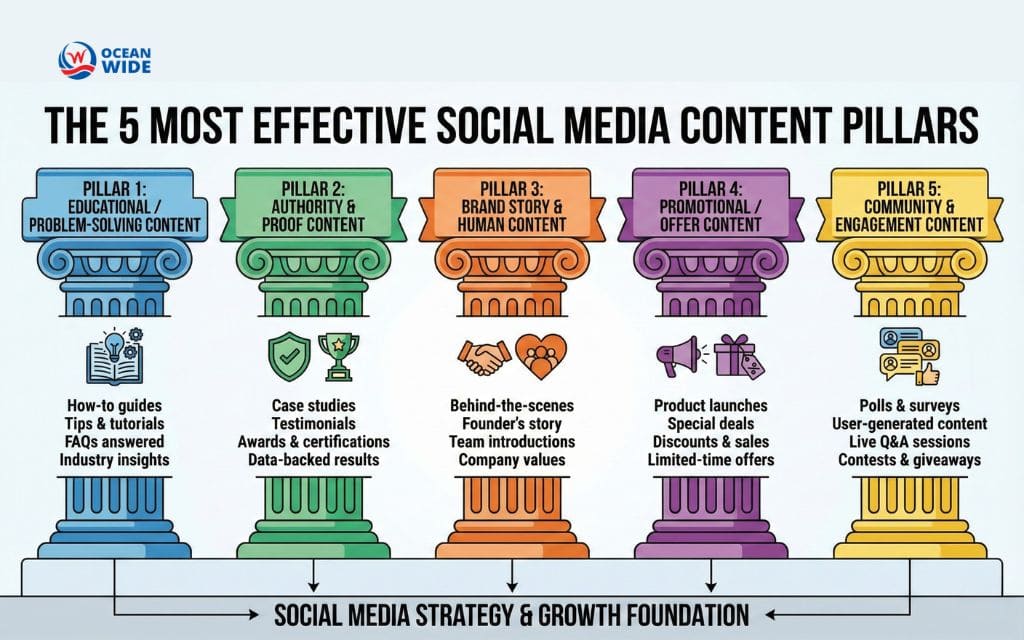
The 5 most effective social media content pillars
These five pillars of social media appear consistently across industries and platforms. Each serves a purpose, provides local Denver examples, and shows how it impacts lead generation.
Pillar 1: Educational / problem-solving content
Educational content includes tips, how-tos, explanations, and frequently asked questions. It positions you as the expert before someone needs to hire you.
A Denver roofing company could post about how Colorado hailstorms damage shingles, what homeowners should inspect after a storm, and when to call for repairs versus replacements. A Highlands esthetician might explain how Denver’s dry climate affects skin and what products work best at altitude.
This pillar drives leads by building trust. When someone searches for help or sees your post at the right moment, you’re the obvious choice because you’ve already taught them something valuable.
Pillar 2: Authority & proof content
Authority content includes testimonials, case studies, before-and-after photos, and results. It shows evidence that you deliver what you promise.
A RiNo-based web designer could share screenshots of client websites with traffic growth stats. A Cherry Creek salon might post before-and-after hair transformations with client testimonials. A Denver HVAC company could showcase furnace installations they completed in specific neighborhoods like Stapleton or Wash Park.
This pillar reduces hesitation. Seeing real results from real people in familiar areas makes prospects feel confident about hiring you.
Pillar 3: Brand story & human content
Brand story content includes your values, team, behind-the-scenes moments, and why you do what you do. It creates emotional connection and loyalty.
A Denver coffee shop might share how they source beans from a Colorado roaster, introduce their baristas, or explain why they support local artists. A family-owned plumbing company could post about their history serving Denver since the 1980s or spotlight their team at community events.
This pillar drives leads by making you memorable. People choose businesses they feel connected to, especially in local markets where relationships matter.
Pillar 4: Promotional / offer content
Promotional content includes services, packages, calls-to-action, lead magnets, and special offers. It converts attention into action.
A Denver landscaping company could promote spring lawn care packages, limited-time mulching deals, or free consultations for Lakewood residents. A Capitol Hill yoga studio might offer a free first class or spotlight their new membership options.
This pillar drives leads by making it easy to act. When you’ve built trust through education and proof, a clear offer is what moves people from follower to client.
Pillar 5: Community & engagement content
Community content includes polls, questions, local conversations, and engagement-focused posts. It boosts reach and strengthens your connection to Denver.
A Denver real estate agent could ask followers to vote on the best brunch spot in LoHi, share neighborhood spotlights, or post about local events like the Cherry Creek Arts Festival. A Boulder fitness coach might celebrate Colorado’s outdoor culture or ask followers to share their favorite hiking trails.
This pillar drives leads by increasing visibility. Engagement signals tell social platforms to show your content to more people, which brings new followers who become future clients.
How to choose the right social media content pillars
Choosing social media pillars requires strategic thinking, not guesswork. Follow this process to select pillars that support your business goals.
Step 1: Start with your business goal
Define what you want social media to do for your business. Do you need more leads? More bookings? More brand awareness in a specific Denver neighborhood?
If you need leads, your pillars should lean toward education, proof, and promotional content. If you need brand awareness, add more community and brand story content. Your goal dictates your pillar mix.
Step 2: Identify your audience’s core problems
Write down what people ask before they hire you. What confuses them? What stops them from taking action? What do they need to believe before they trust you?
A Denver mortgage broker might find that clients worry about rates, don’t understand the process, and fear rejection. Pillars would include education about rates, authority content showing successful closings, and community content that humanizes the experience.
Step 3: Choose 3 – 5 pillars max
More pillars create more confusion. Three pillars work well for solopreneurs or businesses with limited time. Five pillars suit larger teams or brands with diverse audiences.
The rule is simple: fewer pillars create stronger consistency. If you can only post three times per week, three pillars ensure each theme gets regular attention.
Step 4: Pressure-test your pillars
Ask yourself two questions about each pillar: Can I post about this weekly? Does this support sales or trust?
If you struggle to create content for a pillar, it’s not sustainable. If a pillar doesn’t move people closer to hiring you, it’s not strategic. Adjust until every pillar passes both tests.

Turning content pillars into a simple posting system
Pillars are strategy. Your posting system is execution. Here’s how to turn pillars into a repeatable schedule.
The 3–pillar vs 5–pillar model
Use 3 pillars if you post three to four times per week. Rotate through education, proof, and promotional content. Add a fourth pillar (community or brand story) when you post five or more times weekly.
Use 5 pillars if you post daily or have a team creating content. Assign one pillar per weekday. Monday is education. Tuesday is proof. Wednesday is a brand story. Thursday is community. Friday is promotional.
Weekly content mapping example
A Denver home services company posting four times per week might follow this pattern: Monday shares an educational tip about seasonal maintenance, Wednesday posts a before-and-after photo with a client testimonial, Friday highlights a promotional offer for a specific service, and Sunday features a neighborhood spotlight or community event.
This rhythm ensures variety without chaos. Your audience knows what to expect, and you know what to create.
How often should you rotate pillars?
Pillars should stay consistent for at least 90 days. This gives you time to see what resonates, build a recognizable presence, and refine your approach.
Make seasonal updates when necessary. A Denver landscaping company might emphasize snow removal in winter and lawn care in summer, but the underlying pillars (education, proof, promotional) remain the same.
Adjust pillars if your business goals change, but avoid changing them too often. Consistency builds trust. Frequent changes confuse your audience and dilute your brand.
Common mistakes with social media content pillars
Mistake 1: Too many pillars
More pillars don’t mean better content. They mean more work and less focus. If you struggle to remember your pillars, you have too many. Fix this by simplifying. Choose the three themes that most directly support your goal. Cut the rest.
Mistake 2: Pillars that don’t support sales
Some pillars feel good but don’t drive business. Inspirational quotes might get likes, but they don’t help people trust you or understand what you offer. Fix this by tying every pillar to trust or conversion. Ask: Does this pillar make someone more likely to hire me? If not, replace it.
Mistake 3: Confusing formats with pillars
Reels, stories, and carousels are formats. Education, proof, and promotion are pillars. A Reel can support any pillar depending on the content inside it. Fix this by separating strategy from execution. Choose your pillars first, then decide which formats best deliver each theme.
Mistake 4: Copying other brands’ pillars
What works for a national influencer might not work for a local Denver business. Your audience has different needs, and your goals are different. Fix this by localizing and personalizing your pillars. Add Denver-specific examples, neighborhood references, and local partnerships to make your content relevant to the people you serve.

Conclusion
Social media content pillars create clarity for your audience and reduce content stress for you. They turn posting into a lead-supporting system instead of a guessing game.
Choose three pillars today. Map one week of content based on those pillars. Stop posting randomly and start building a system that actually works.
When you need help building a social marketing strategy that drives real leads for your Denver business, call The Ocean Wide at (720) 295-9270. We help local businesses turn social media into a tool that supports growth, not just engagement.
Frequently asked questions (FAQs)
What are social media content pillars?
Social media content pillars are three to five core themes your brand consistently posts about online. They align your content with audience needs and business goals, creating a clear strategy for what you share.
How many content pillars should a small business have?
Small businesses should use three to five pillars. Three works well if you post three to four times weekly. Five pillars suit daily posting or larger teams.
Are content pillars the same as a content calendar?
No. Pillars are the strategic themes you post about. A content calendar schedules when and where you post. Pillars guide what you create. The calendar organizes when you share it.
Can social media content pillars help generate leads?
Yes. Pillars drive leads by building trust, proving authority, and making it easy for people to take action. When pillars align with your buyer journey, social media becomes a lead generation tool.
How often should I update my social media pillars?
Keep pillars consistent for at least 90 days. Make seasonal adjustments when needed, but avoid frequent changes. Consistency builds recognition and trust with your audience.