Skip to content



Visual content helps businesses communicate ideas faster, make information easier to understand, and create a more recognisable presence across digital channels. From product photography and short-form video to infographics and customer-created media, the right format can support awareness, education, trust, and conversion. The Ocean Wide connects creative production with strategy so every visual has a clear role rather than serving as decoration alone.
What Is Visual Content?
Visual content refers to information communicated primarily through images or visual media rather than text alone. Common formats include photography, video, illustrations, graphics, infographics, charts, screenshots, animations, and user-generated media.
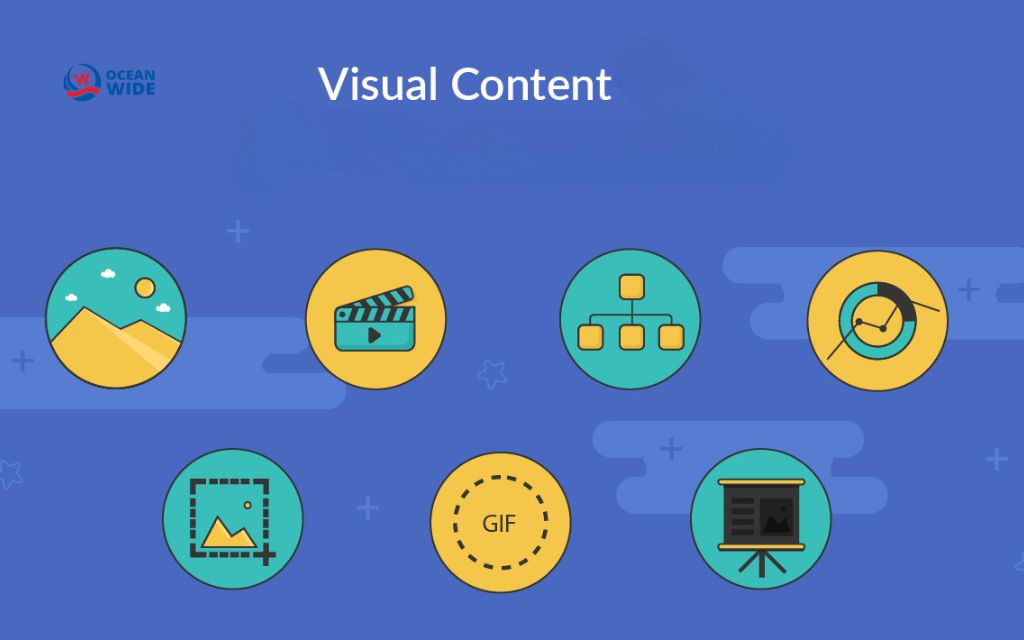
For anyone asking what is visual content, the defining feature is not simply that something looks attractive. The visual should communicate, explain, demonstrate, persuade, or help the audience understand a message more efficiently. In marketing, visual media content can support everything from product discovery to education and brand storytelling.
This also explains what is visual content marketing: the strategic use of these formats to support specific marketing and business objectives.
Why Is Visual Content Important In Marketing?
The importance of visual content comes from its ability to communicate before audiences commit much time or attention. Good visuals can clarify products, establish brand identity, create emotion, and make information easier to process across websites, advertising, email, and social channels.
Current marketing data also shows how strongly visual formats influence investment. In a 2026 global survey, 48.6% of marketers identified short-form video as the media format producing their highest ROI, followed by long-form video at 28.6%.
Effective visuals in marketing can support:
- Faster message comprehension
- Stronger brand recognition
- Higher audience attention
- Better product understanding
- More memorable storytelling
- Clearer information presentation
- Greater cross-channel consistency

What Types Of Visual Content Can Businesses Use?
The right visual content format depends on what the audience needs to understand and where the message will appear. A product may need detailed photography, while a complex process may make more sense as an infographic or demonstration video.
Photography
Photography gives audiences a direct view of products, people, services, locations, and real-world experiences. Original images can also make a business feel more distinctive than generic stock photography.
Product shots help customers evaluate details, while lifestyle photography provides context around how an offer fits into everyday life. For local businesses, authentic images of the location, work, team, or finished results can also strengthen credibility.

Short-Form Video
Short-form video delivers one idea quickly through motion, sound, text, and demonstration. Reels, Shorts, and TikTok-style clips can suit tips, product highlights, before-and-after results, quick explanations, and behind-the-scenes moments.
The format currently carries significant commercial weight: 48.6% of marketers in a 2026 survey ranked short-form video as their highest-ROI media format. For small teams, one filming session can also supply multiple clips for several weeks of social media content.
Long-Form Video
Long-form video gives businesses more room to explain, demonstrate, interview, educate, or tell a complete story. Tutorials, case studies, webinars, product walkthroughs, and expert discussions suit subjects that cannot be communicated well in a few seconds.
Infographics And Data Visualisations
Charts, diagrams, maps, and infographics can turn dense information into a format audiences can understand at a glance. They work particularly well for processes, comparisons, research findings, timelines, statistics, and step-by-step explanations.

Illustrations And Branded Graphics
Illustrations give brands more creative control when photography cannot communicate an abstract concept easily. Branded graphics can also package quotes, announcements, educational tips, service features, or campaign messages into recognisable assets.
Professional graphic design can also support campaigns that need a stronger visual system across multiple formats.
Screenshots And Product Demonstrations
Screenshots and demonstrations show audiences exactly how a digital product, service, process, or feature works. They are particularly useful when customers need practical proof rather than abstract claims.
Annotations, zoomed details, short captions, or screen recordings can guide attention towards the most important feature. Keep interfaces current so outdated screens do not undermine trust.

User-Generated Visual Content
Customer photos, videos, reviews, and real-world product examples can add a perspective that brand-created material cannot always replicate. The format often feels more relatable because it shows how actual customers experience the product or service.
Current social research also shows that audiences increasingly want brands to prioritise human-created material rather than rely entirely on automated creative.
What Makes Visual Content Effective?
Quality usually comes from a combination of clear messaging, strong hierarchy, consistent branding, audience relevance, platform fit, accessibility, and enough context to make the visual meaningful.
- Clear Message: Give every visual one primary idea instead of several competing messages
- Strong Visual Hierarchy: Make the most important information easiest to notice first
- Consistent Brand Identity: Keep colours, typography, imagery, and tone recognisable across campaigns
- Audience Relevance: Reflect interests, needs, questions, and situations the audience actually recognises
- Platform Fit: Adapt dimensions, pacing, text density, and format to each channel
- Accessibility: Use readable contrast, captions, alt text, and legible on-screen text
- Useful Context: Explain what the visual means instead of relying on imagery alone

How To Build A Visual Content Strategy
A visual content strategy defines what the business should create, who each asset should serve, where it should appear, and what outcome it should support. Without that structure, teams can spend heavily on attractive creative without knowing whether it contributes to marketing goals.
For social channels, clear content pillars can provide recurring themes that guide visual production.
A useful workflow is:
- Define The Goal: Decide whether the asset supports awareness, education, traffic, leads, or sales
- Understand The Audience: Identify what people need to see before they understand the message
- Choose The Formats: Match photography, video, graphics, or demonstrations to the objective
- Set Brand Guidelines: Define consistent colours, typography, composition, imagery, and tone
- Map The Journey: Match visuals to discovery, consideration, conversion, and retention stages
- Create A Workflow: Clarify briefs, production roles, approvals, deadlines, and asset storage
- Repurpose Assets: Rebuild strong ideas for additional formats rather than starting from zero
- Review Performance: Use results to refine the wider visual marketing strategy

How Should Visual Content Change By Marketing Channel?
The same visual content should not be copied unchanged across every marketing channel. Each environment has different dimensions, viewing behaviour, information needs, and customer expectations, so the presentation needs to change even when the underlying message stays consistent.
| Marketing Channel | Best Visual Approach | Main Priority |
| Social Media | Short video, carousels, UGC, graphics | Fast attention and interaction |
| Website | Photography, video, diagrams, demonstrations | Clarity and conversion |
| Focused graphics, product visuals, simple animation | Message support | |
| Paid Advertising | Concise, high-impact creative | Immediate relevance |
| Blog Content | Charts, diagrams, screenshots, infographics | Explanation and retention |
| Ecommerce | Product images, detail shots, lifestyle video | Product evaluation |
How To Use Visual Content On Social Media
Social feeds reward immediate clarity, but effective visual content social media strategy requires more than bright graphics or constant video production. Each asset should suit the network, make the core idea easy to recognise, and contribute to a wider content plan.
Current research across more than 2,300 consumers also shows that audience expectations vary by network, which supports a platform-specific rather than one-size-fits-all approach.
Match The Format To The Platform
Each platform has its own viewing habits, so visual content should adapt rather than repeat the same format everywhere. Reels and carousels may suit Instagram, while LinkedIn often supports document-style graphics and professional video. Keep the core message consistent, but adjust the ratio, pacing, and presentation to fit the channel.

Lead With A Strong Visual Hook
The first frame, image, or slide should show why the content deserves attention. A result, contrast, transformation, or clear focal point can work better than a slow introduction. Strong visual content does not need exaggerated effects; it needs immediate relevance and a clear reason to keep watching or swiping.
Use Carousels For Education
Carousels give brands enough space to explain one idea across several clear steps. They work well for processes, FAQs, comparisons, tips, and checklists because each slide can focus on one point. Well-structured visual content also makes more complex information easier to scan and remember.

Use Video For Demonstrations
Video is useful when customers need to see how a product, service, or process works in practice. Movement can show scale, before-and-after results, steps, or product behaviour more clearly than a static image. Keep visual content focused on the outcome first, then explain how the result is achieved.
Repurpose High-Performing Assets
Strong creative does not need to disappear after one post. A successful video can become shorter clips, screenshots, a carousel, or a blog visual, while an infographic can supply several social posts. This approach helps a visual content strategy extend production value without repeating identical assets across channels.

Keep Branding Recognisable
Consistent visual cues help audiences connect content with a brand before they read the account name. Colours, typography, photography style, layout, and editing choices should feel familiar across posts. A strong visual marketing strategy keeps that identity recognisable while leaving enough flexibility for each message to feel fresh.
Common Visual Content Mistakes To Avoid
Poor visual content often fails because the creative process starts with appearance rather than communication. So, avoid these common mistakes:
- Creating visuals without a clear purpose
- Adding too much text to one design
- Using inconsistent brand styles
- Copying identical assets across every platform
- Ignoring mobile viewing
- Publishing low-quality imagery
- Forgetting captions or accessibility
- Relying too heavily on generic stock photos
- Designing without audience context
- Ignoring performance data

Build A Stronger Visual Content Strategy With The Ocean Wide
Strong visual content needs both creative quality and strategic direction. At The Ocean Wide, we bring design, photography, video, branding, social media, paid campaigns, and web execution together so businesses can build a more consistent visual presence rather than producing disconnected assets.
Through our Social Marketing Service, we can support:
- Content Strategy: Define themes, formats, channels, and campaign priorities
- Graphic Design: Create branded graphics, carousels, infographics, and advertising assets
- Photography And Video: Produce original imagery and platform-ready video content
- Social Media: Adapt visual assets around each network and audience
- Performance Review: Use results to refine future creative decisions
For campaigns that span several digital touchpoints, our wider digital marketing services can connect visual production with websites, advertising, and growth strategy. Call (720) 334-0899 to discuss your next visual campaign.

Final Thoughts
Effective visual content does more than make marketing look polished. It helps audiences understand information, recognise brands, evaluate products, and engage with messages across different channels. The strongest results come from a clear purpose, consistent identity, appropriate formats, and a visual content strategy that learns from performance over time.
If your business needs a more coordinated creative approach, The Ocean Wide can help turn ideas into visual assets designed around real marketing goals.