Skip to content


A B2B content marketing strategy helps a small team reach buyers before they call a vendor. This guide is for owners and solo marketers who sell to other businesses. You get 7 steps, a 90-day plan, and a way to measure results without costly software.
What is a B2B content marketing strategy?
A B2B content marketing strategy is a documented plan for what a business publishes, who it serves, and how each piece moves another company closer to a purchase. It ties content to revenue, not to a posting schedule.
The plan answers 4 questions: who buys, what they need to know, where they look, and how you judge results. Business to business content marketing serves purchases that involve budgets, contracts, and several reviewers.
Strategy vs. content calendar vs. content marketing
These 3 terms often get mixed up. The table separates each job.
| Term | Job | Question it answers |
| Content strategy | Sets the audience, goals, and point of view | Why, and for whom? |
| Content marketing | Creates and shares the assets | What do we publish? |
| Content calendar | Schedules the work | When, and who owns it? |
How B2B content differs from B2C
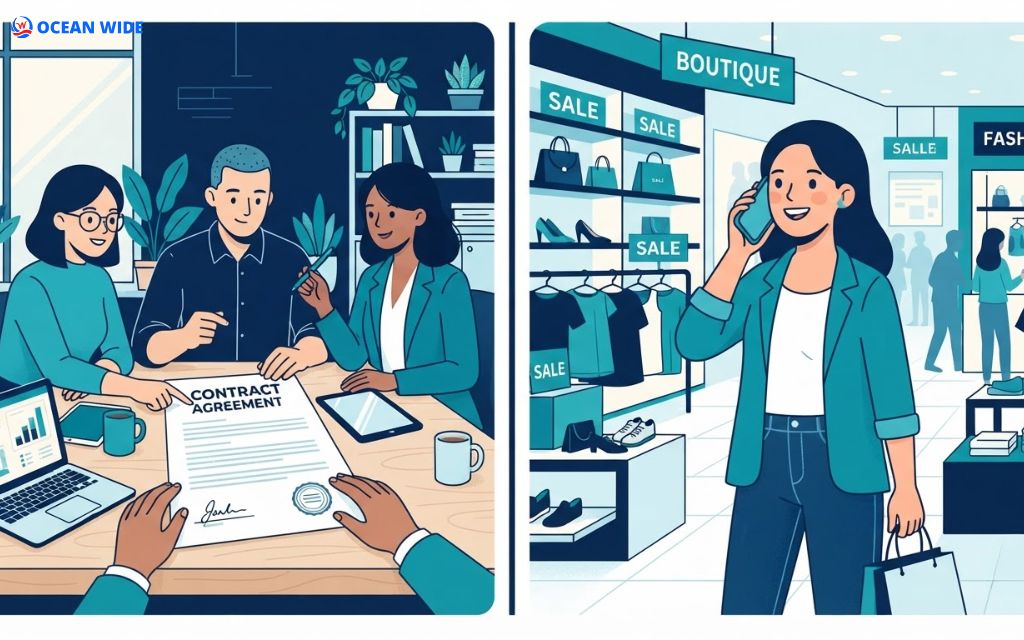
B2B content speaks to people who spend company money and must defend the choice. That pressure changes 3 things.
| Factor | B2B | B2C |
| Decision | Several people review it | One person or household |
| Main concern | Risk, fit, and payback | Preference, price, and ease |
| Content goal | Prove and educate | Attract and persuade |
Why content marketing is important for B2B
Content marketing is important for B2B because buyers form a preference before they speak to a vendor. Your content is often the only seller present at that stage.
Buyers research before they talk to you
In Gartner’s survey of 646 B2B buyers, 67% said they prefer a rep-free buying experience. In 6sense’s 2025 study, first contact with a seller came 61% of the way through the journey.
The same study of more than 4,000 buyers found that 94% of buying groups ranked preferred vendors before first contact. A page that answers hard questions does its work before your phone rings.
More than one person decides
Forrester reports that a typical buying decision includes 13 internal stakeholders and 9 external influencers. That figure comes from global buyer research, so a $5,000 contract at a small firm will involve fewer people.
The lesson still holds. The owner, the office manager, and the accountant each need a different answer.

AI tools now shape the shortlist
Forrester found that 94% of business buyers use AI during their buying process. Those buyers then check the output with peers, product experts, and analysts. Specific pages give both AI tools and human reviewers something solid to cite.
Is a B2B content marketing strategy possible for a small business?
Yes, a B2B content marketing strategy is possible for a small business, and a narrow market makes it easier. Imagine a commercial landscaper serving property managers within 30 miles (48 km). It needs a dozen useful pages, not a hundred, because every page speaks to the same few buyers.
Small teams trade volume for focus. CMI’s 2026 research shows that 39% of B2B marketers name a lack of resources as a challenge, so the plan below assumes limited hours.

How to build a B2B content marketing strategy in 7 steps
To build a B2B content marketing strategy, work through 7 steps in order. Each step feeds the next, and the roadmap fits a team of 1 to 3 people. It also shows how to start B2B content marketing with no history.

1. Tie content to one revenue goal
Pick one goal you can connect to money. Examples include more qualified calls, shorter proposal cycles, or entry into a new industry. A goal such as “more awareness” gives you nothing to test.
For example, a commercial cleaning firm might aim for 10 qualified bids per quarter from medical offices. That target tells you which industry to write for, which objections to answer, and which page needs a form.
2. Define your best-fit customer and buying group
Describe the company you want first: industry, size, location, and the event that triggers a purchase. Then list the people who weigh in.
| Role | Main question | Useful content |
| Daily user | Will this solve my problem? | How-to guide, checklist |
| Decision maker | Is it worth the risk? | Case study, comparison page |
| Budget owner | How does it pay back? | Pricing guide, ROI calculator |
| Outside adviser | Can I trust this vendor? | Reviews, partner references |

3. Collect real questions from sales and customers
Your best topics already sit in your inbox. Review 20 sales emails, call notes, and proposal questions. Then ask 5 recent customers what nearly stopped them from buying.
CMI’s research supports this step: 45% of marketers with effective content credit alignment with sales. Use the customer’s exact words in your headings.
4. Audit what you already have
List your service pages, case studies, proposals, and slide decks. Mark each asset keep, update, or remove.
Old proposals often hold your sharpest explanations, so rewrite them before you start from a blank page. Tag each asset by buyer stage, and the gaps show up fast.

5. Pick a point of view and 3 content pillars
A point of view is a stance a competitor might reject. For example: “Most small firms should fix their sales pages before they start a blog.” That is our own view on where small firms should begin.
Content pillars are the 3 themes that support your stance and match your services. CMI reports that 24% of B2B marketers struggle to differentiate their content, and a clear position answers that problem.
6. Build a calendar you can sustain
Set a pace you can hold for 12 months. We recommend 2 solid pieces per month for a team of one, plus one repurposed post each week. A modest schedule beats a burst that stops in March.
Give each piece one owner, one deadline, and one reviewer, even if the same person fills 2 roles. Write the rules in a short editorial guide covering tone, sources, and approval. That page becomes your documented strategy.

7. Publish, distribute, and repurpose each piece
A published page still needs an audience. In CMI’s research, marketers ranked LinkedIn (76%), email newsletters (54%), and speaking events or webinars (52%) as top channels for thought leadership.
Turn one case study into 4 smaller assets:
- Post a founder’s story on LinkedIn.
- Email the lesson to past leads.
- Record a 60-second video summary.
- Print a one-page sheet for sales.
Pair this with search work. Our guide on combining SEO and social media shows how the 2 channels feed each other.
The best content for B2B at each stage of the funnel
The best content for B2B matches the buyer’s stage. Early readers want clarity, and late-stage readers want proof. Use this table to set your top content creation priorities.
| Stage | Buyer question | Best formats | Next step |
| Awareness | What causes this problem? | Blog guide, short video | Email signup |
| Consideration | What are my options? | Comparison page, webinar | Case study |
| Decision | Why this vendor? | Case study, pricing guide | Free call |
| Retention | How do I get more value? | Onboarding guide, newsletter | Referral |
Small teams should build from the bottom up. Decision content helps sales this week, while awareness pieces need time to find readers.

B2B SEO content strategy for search and AI answers
A B2B SEO content strategy targets the questions buyers ask during a purchase. Google states that its generative AI features are rooted in its core Search ranking and quality systems, so sound SEO still applies.
Target problems, comparisons, and pricing questions
High-volume terms rarely bring the right people. Focus on searches with purchase intent, such as “[service] cost,” “[option A] vs. [option B],” or “[problem] for [industry].” Group them into topic clusters, and link each cluster to one service page.
Publish what an AI model cannot write for you
Google calls this non-commodity content: unique expert or experienced takes that go beyond common knowledge. Add job photos, real price ranges, failed tests, and customer objections.
You do not need an llms.txt file or special AI markup. Google says its Search systems do not use them.

Have a person check everything
Use AI for research and structure, then review the result. Google’s guidance calls it critical to fact-check all AI-generated content before publishing. That review covers titles, meta descriptions, structured data, and alt text.
CMI’s data adds context: among marketers who use AI for content, 87% report productivity gains and 58% report better quality. Speed comes easier than substance. Our SEO packages include keyword analysis, onsite optimization, and content writing, if you want that work handled.
B2B content marketing best practices and mistakes to avoid
B2B content marketing best practices come down to relevance and action. CMI found that 65% of marketers with effective content credit its relevance and quality, while 40% call content that prompts action their top challenge.
The usual failure looks the same: steady posting, thin leads, and no clear offer. Follow these 6 rules to avoid it:
- Answer one question per page.
- Name the reader. “Facility managers” beats “businesses.”
- Show proof through numbers, photos, and approved examples.
- End with one next step, not 3 competing offers.
- Refresh top pages twice a year, including dates and prices.
- Avoid volume for its own sake. Google warns that mass-produced pages without added value may breach its scaled content abuse policy.

How to measure B2B content marketing without costly attribution
To measure B2B content marketing, track 4 layers: reach, engagement, pipeline, and revenue. CMI’s survey shows that 33% of marketers find measurement a challenge, so keep the system simple.
| Layer | Metric | Tool | Review |
| Reach | Organic impressions, clicks | Google Search Console | Monthly |
| Engagement | Key page visits, email replies | Google Analytics 4 | Monthly |
| Pipeline | Qualified leads by source | CRM or spreadsheet | Monthly |
| Revenue | Won deals that used content | CRM and sales notes | Quarterly |
Add one field to every contact form: “How did you hear about us?” Buyers may name a colleague, a podcast, or an article your analytics never recorded.
Then ask sales which pages they send to prospects. A page that removes doubt in a live deal matters more than a page with 10,000 idle visits.
Compare quarters, not weeks. A purchase can sit with a buying group long after the first page view, so a slow month tells you little.

A 90-day starter plan for a small B2B team
This 90-day plan is our recommended starting point, not a benchmark. It assumes one person with about 5 hours per week.
| Period | Actions | Output |
| Days 1-30 | Set one goal, interview 5 customers, audit assets | 20 buyer questions, 3 pillars |
| Days 31-60 | Write 2 decision pages and 1 case study | Assets sales can use now |
| Days 61-90 | Repurpose for LinkedIn and email, add the source field | First report and next-quarter call |
At day 90, keep what started sales conversations. Drop what did not.

When to work with an agency
Work with an agency when the plan is clear but the hours or skills are missing. Keep what only you know: customer stories, pricing logic, and your point of view. Outsource production work such as SEO, design, video, and scheduling.
Bring in outside help, if 2 of these 4 signs apply:
- Ownership: nobody can give content 5 hours a week.
- Conversion: your site turns new visitors into few inquiries.
- Stagnation: lead quality stays flat after 2 quarters.
- Bottlenecks: design or video work stalls each campaign.
The Ocean Wide has worked with businesses since 2019, with designers, developers, and strategists in the US and Vietnam. Before you hire anyone, compare budgets with our social media marketing cost guide.

Social Marketing Service from The Ocean Wide
Our Social Marketing Service turns your B2B content marketing strategy into a steady presence on the platforms your buyers use. It fits businesses that have a message but lack the hours to distribute it.
Work runs through 5 phases: discovery, strategy, setup, launch, and reporting. The service covers 6 areas:
- Strategy: audience research, competitor analysis, content pillars, and a KPI roadmap.
- Content creation: short-form video, graphics, carousels, and brand voice development.
- Management: scheduling, comment and DM handling, and community building.
- Paid social: Facebook, Instagram, TikTok, and LinkedIn Ads.
- Influencer marketing: outreach, campaign management, and UGC strategy.
- Analytics: sentiment tracking, trend analysis, and reporting dashboards.
LinkedIn is a logical first channel for many B2B teams, and our Social Marketing team works on it alongside YouTube and other platforms. Plans start at $999 per month on our pricing page as of November 2026. Ad budgets usually sit apart from management fees.

FAQs about B2B content marketing strategy
What is the difference between content strategy and content marketing?
Content strategy decides why, for whom, and what to publish. Content marketing creates and distributes those assets.
How do I start B2B content marketing with no team?
Start with one goal, 5 customer interviews, and 2 decision-stage pages. Then follow the 90-day plan above.
What is the best content for B2B?
We recommend case studies, comparison pages, and pricing guides first. These formats support live deals, so sales can use them right away.
Does content marketing work for small B2B companies?
Yes, it can work when the market is specific and the content answers real purchase questions. Results depend on your offer, sales process, and consistency, so no one can promise a fixed outcome.
How long does B2B content marketing take to work?
No universal timeline exists. Timing depends on your sales cycle, competition, and site authority. Review the trend each quarter, and judge pipeline before traffic.
Do B2B companies need LinkedIn for content?
Most B2B companies should test LinkedIn, but it is not required. Go where your buyers gather, even if that means trade groups or email.
Can I use AI in a B2B content marketing strategy?
Yes, you can use AI in a B2B content marketing strategy for research, outlines, and drafts. A person must verify every fact and add first-hand experience before publishing.