Skip to content

Knowing how to make money on social media starts with one choice: earn from an audience you build, or turn followers into customers for your business. This guide gives creators and small business owners 12 income methods, the 2026 payout rules, and the FTC and tax steps, so you can reach your first income faster and keep what you earn.
How do people make money on Social Media?
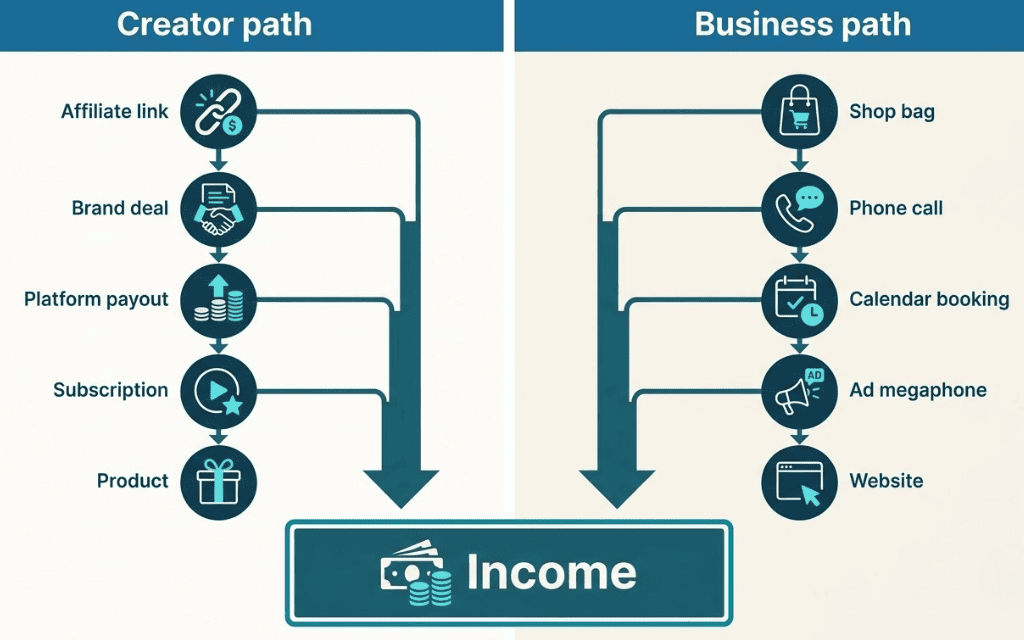
People make money on social media in two ways: they monetize an audience as creators, or they use social platforms as a sales channel for a business.
Creators get paid by three sources: brands, platforms, and fans. Businesses earn when followers become buyers, booked appointments, and phone calls. Both paths depend on trust from a defined audience, not reach alone.
7 Ways to make money on Social Media as a creator
Creator income comes from brands, platforms, and your own audience. These 7 methods cover all three payers.
1. Earn commissions with affiliate marketing
Affiliate marketing pays you a commission when a follower buys through your tracked link or code. You can join networks, such as Impact, ShareASale, and Amazon Associates, or apply to a brand’s own program.
Affiliate links convert best on search-driven content, such as product reviews, tutorials, and side-by-side comparisons.
2. Get paid for sponsored posts and brand deals
Brands pay creators to feature a product in a post, Reel, or video. Rates depend on niche, engagement rate, and deliverables, so follower count is only one part of the price.
Pitch brands you already use, and send a one-page media kit with audience data.

3. Collect platform payouts
Platforms share ad revenue or pay creator rewards once you meet their eligibility rules. YouTube pays through the YouTube Partner Program, and TikTok pays through the Creator Rewards Program.
Payouts vary by niche and viewer location, so treat them as a base layer of income.
4. Sell subscriptions, memberships, and fan support
Subscriptions give loyal followers paid access to exclusive content. YouTube channel memberships, Instagram Subscriptions, and Facebook Subscriptions run inside the apps, while Patreon and Substack run outside them.
Fans can also tip during live streams through Facebook Stars, YouTube Super Chat, and TikTok LIVE Gifts. Recurring revenue is steadier than one-off sponsorships.

5. Sell digital products and online courses
Digital products turn expertise into something you create once and sell many times. Common formats include templates, photo presets, e-books, and video courses.
A fitness coach can sell a 12-week training plan, and a designer can sell Canva templates. Post short previews on social media, then link to the checkout page.
6. Sell merch with print-on-demand
Merch works when your audience identifies with your phrases, visuals, or community. Print-on-demand services, such as Printful, Printify, and Gelato, print and ship each order, so you hold no inventory.
Show the product inside your regular content instead of posting standalone ads.

7. Offer services, coaching, or UGC creation
Services let you earn with a small following, because clients pay for your skill instead of your reach. Your profile works as a portfolio for freelance design, coaching, consulting, and social media management.
UGC (user-generated content) creators also film product videos that brands run as ads on their own accounts.
5 Ways to make money on Social Media as a small business
Small businesses make money on social media by turning attention into sales, leads, and repeat customers. For our local clients, revenue comes from consistent content, fast replies, and a clear next step.
For a full setup plan, read our guide to social media marketing for small businesses.
1. Sell directly with social commerce
Social commerce lets customers buy without leaving the app. TikTok Shop, Instagram Shopping, and Facebook Shops connect your product catalog to posts and videos.
This model fits retail products, such as apparel, beauty, and home goods. Track platform fees and returns, because both cut into margins.
2. Turn followers into calls, leads, and bookings
Service businesses earn from social media when a follower becomes a booked job. Add a booking link or call button to your profile, answer DMs the same business day, and use lead forms in Meta ads.
A restaurant can post weekly specials with a reservation link. A landscaping company can share before-and-after photos with a quote request form.

3. Put paid social behind your best posts
Paid social turns a post that already performs into a steady source of customers. Boost organic posts with high saves and shares, then retarget people who watched your videos or visited your website.
Start with a small daily budget, track cost per lead, and scale what converts with a digital advertising service.
4. Partner with local creators
Local creators lend your business trust with an audience that already lives nearby. A food creator’s visit can fill tables faster than a generic ad.
Give each creator a clear brief and a disclosure requirement. Our guide to influencer outreach covers how to get creators to reply.

5. Send social traffic to a website and email list you own
Owned channels protect revenue when an algorithm changes. Link profiles to a fast landing page and capture emails with an offer.
Professional website design and development turns social clicks into quotes, orders, and bookings.
How to get paid by Social Media platforms: 2026 Requirements
Each platform sets its own payout rules, and most require a minimum audience. Confirm the rules in each help center before you apply, because platforms update terms often.
| Platform | Program | Main eligibility rules | How you earn |
| YouTube | YouTube Partner Program | 1,000 subscribers plus 4,000 public watch hours in 12 months, or 10 million Shorts views in 90 days | Ad revenue share, memberships, Super Chat |
| TikTok | Creator Rewards Program | Age 18+, eligible region, 10,000 followers, 100,000 views in the last 30 days | Rewards for original videos over 1 minute |
| Subscriptions and Gifts | Professional account; 10,000 followers for Subscriptions | Monthly subscriptions, Gifts on Reels | |
| Content Monetization | Invite-only; express interest in the Professional Dashboard | Pay based on Reels, video, photo, and text post performance | |
| X | Creator Revenue Sharing | Premium plan, 500 verified followers, 5 million organic impressions in 3 months | Share of ad revenue |
YouTube updates its YouTube Partner Program terms on February 1, 2027. Creators must accept them by January 31, 2027.

How many followers do you need to make money on Social Media?
You need no minimum follower count for affiliate links, services, or product sales. Platform payout programs set thresholds, from 1,000 YouTube subscribers to 10,000 TikTok followers.
Engagement weighs more than size: a small audience that buys beats a large one that scrolls.
How much money can you make on Social Media?
Social media income ranges from zero to a full-time salary, and most creators start near zero. Four variables set the number: niche, engagement rate, income method, and time.
Finance, software, and B2B niches attract higher ad rates than entertainment. We skip a single typical figure, because public earnings data comes mostly from self-reported surveys.

How to start making money on Social Media in 6 steps
To start making money on social media, build trust with one audience on one platform, then add one income stream at a time. Follow these 6 steps:
1. Choose a niche and audience: Pick a topic you can cover weekly, such as home workouts, budget travel, or local food.
2. Pick one main platform: Go where your audience spends time: YouTube for search, TikTok for discovery, and LinkedIn for B2B.
3. Post on a fixed schedule: Use a content calendar and our social media post ideas to stay consistent, and learn how to create engaging content on social media.
4. Build trust before you sell: Reply to comments and DMs, and follow a clear social media engagement strategy.
5. Add one or two income streams: Start with affiliate links or a service, then layer in products or sponsorships.
6. Track what earns money: Measure clicks, sales, and leads, then repeat what converts.

Rules you must follow: FTC disclosures and taxes
Every paid post and every dollar of social media income carries legal duties in the United States.
Disclose every brand relationship
The FTC requires creators to disclose any material connection with a brand. That includes payment, free or discounted products, and family, personal, or employment ties.
Place clear words, such as “Ad,” “Sponsored,” or “Paid partnership,” at the start of the caption. Say it out loud in videos and live streams, and keep it out of a block of hashtags.
Report your social media income
Social media income is taxable, even without a tax form. Payment apps and marketplaces issue Form 1099-K once you receive over $20,000 across more than 200 transactions in a year under the 2025 and 2026 rules.
Brands that pay you $2,000 or more in 2026 generally send Form 1099-NEC. Self-employment tax applies once your net earnings reach $400. This is general information, so confirm your case with a tax professional.

5 Mistakes and scams to avoid
Most failed attempts to earn on social media share the same 5 mistakes:
- Chasing viral posts: One spike in views rarely builds an audience that buys.
- Buying followers: Fake followers lower engagement rate and damage brand deals.
- Relying on one platform: A policy change can cut your income overnight, so keep an email list.
- Paying for “passive income” courses: Many sellers earn from the course, not from the method they teach.
- Skipping disclosures: Hidden sponsorships break FTC rules and cost audience trust.

Grow revenue with The Ocean Wide social marketing service
For small businesses, how to make money on social media comes down to steady execution, and that is the job of The Ocean Wide Social Marketing Service. Our Denver team turns followers into calls, bookings, and sales, from planning posts to tracking leads.
The service covers 6 areas:
- Social media strategy: audience research, competitor analysis, content pillars, and KPI targets.
- Content creation: short-form videos, graphics, and carousels in your brand voice.
- Social media management: scheduling, comment and DM replies, and community building.
- Paid social advertising: campaigns on Facebook, Instagram, TikTok, and LinkedIn.
- Influencer marketing: creator outreach, UGC content, and brand partnerships.
- Social listening and analytics: sentiment tracking, trend analysis, and reporting dashboards.
We manage Facebook, Instagram, TikTok, LinkedIn, YouTube, and Pinterest for restaurants, clinics, real estate agencies, and local service businesses. If posts drop below once a week or DMs wait for days, book a free strategy call and see how our Social Marketing team fits your goals.

FAQs about making money on Social Media
Can you make money on social media with no followers?
Yes, through services, UGC creation, and affiliate content found through search. Clients pay for skill, which a new account can prove.
Which social media platform pays the most?
YouTube pays creators most consistently, because it shares long-form ad revenue. For businesses, the best platform is the one where customers already search and buy.
How do you get paid by social media platforms?
Platforms pay through built-in programs once you qualify. Payouts go to a linked account, such as AdSense for YouTube.
How long does it take to make money on social media?
Most people need several months of consistent posting before income becomes regular. Services and affiliate links can pay sooner than platform payouts.
Is money from social media taxable?
Yes. The IRS taxes all social media income, including gifted products used for paid posts. Track income and expenses from day one.
How do social media companies make money?
Social media companies earn most of their revenue from advertising. They also earn from subscriptions, such as X Premium and Meta Verified, and from shopping fees.
Pick one path, one platform, and one income stream, then scale what works. If you run a business and want social followers to become customers, our team can show you how to make money on social media.