Skip to content


Posting on social media without a plan rarely builds a business. Your social media content strategy gives every post a reason to exist, tied to a goal you can measure. This guide walks through the full process, covering goals, audience research, platform choice, content pillars, and a workflow your team can sustain. You will also see how to measure results against real business outcomes instead of likes and follower counts, so your strategy keeps working well even as platform algorithms change.
What a social media content strategy really does
Social media content strategy means the plan behind what you post, why you post it, and how each piece supports a larger business goal. It differs from a content calendar. Calendars handle scheduling: what goes out and when. Strategy handles direction: which topics matter, which platforms deserve your effort, and what outcome you’re working toward.
Many brands treat social media as a posting habit rather than a system. They publish because the calendar says Tuesday, not because the post moves toward something. Content built this way tends to blend together. Followers scroll past it, engagement stays flat, and it becomes hard to tell whether the effort produces any value for the business.
Building a real content strategy for social media starts with connecting each post back to a business objective, whether that objective is awareness, customer support, lead generation, or direct sales. Once that connection exists, every later decision, from platform choice to content pillars to posting frequency, gets easier to make.
Set goals that tie back to business objectives
Start with the outcome your business needs, not the platform you feel like using. Common goals include building brand awareness, generating leads, supporting customer service, driving website traffic, or increasing direct sales. Each goal calls for different content and different metrics.
Vague goals like “grow our following” rarely hold up under scrutiny. Turn them into targets you can track: a percentage increase in website clicks from social, a set number of qualified leads per month, or a target response time for customer inquiries handled through social channels.
Match each goal to the right platform and format before you create anything. Lead generation often performs best on LinkedIn through professional content and gated offers. Brand awareness spreads faster through short-form video on TikTok or Instagram Reels. Customer service questions tend to land in Facebook comments and direct messages. Knowing this in advance saves time later, since it prevents you from producing content that has no clear home.

Research your audience and pick the right platforms
Build personas from real audience data
Guesswork about your audience leads to guesswork in your content. Pull data from platform analytics, past post performance, customer service conversations, and any survey or interview data you already have. Look for patterns in age range, job type, interests, and the problems people bring up most often.
Turn these patterns into two or three personas that represent your core audience segments. Give each persona a role, a set of concerns, and a reason they would follow your brand on social media. These personas guide tone, topic choice, and format decisions throughout the rest of the process.
Match platforms to where that audience is active
Not every platform deserves equal investment. Review where your personas spend time and how they behave on each one, since browsing habits vary widely. Someone scrolling Instagram during a break behaves differently than someone reading LinkedIn during work hours.
Prioritize two or three platforms where your audience is both present and receptive to your type of content. Trying to maintain a strong presence everywhere spreads your team thin and usually produces weaker content across the board than focusing effort on fewer channels.
Build content pillars to guide what you create
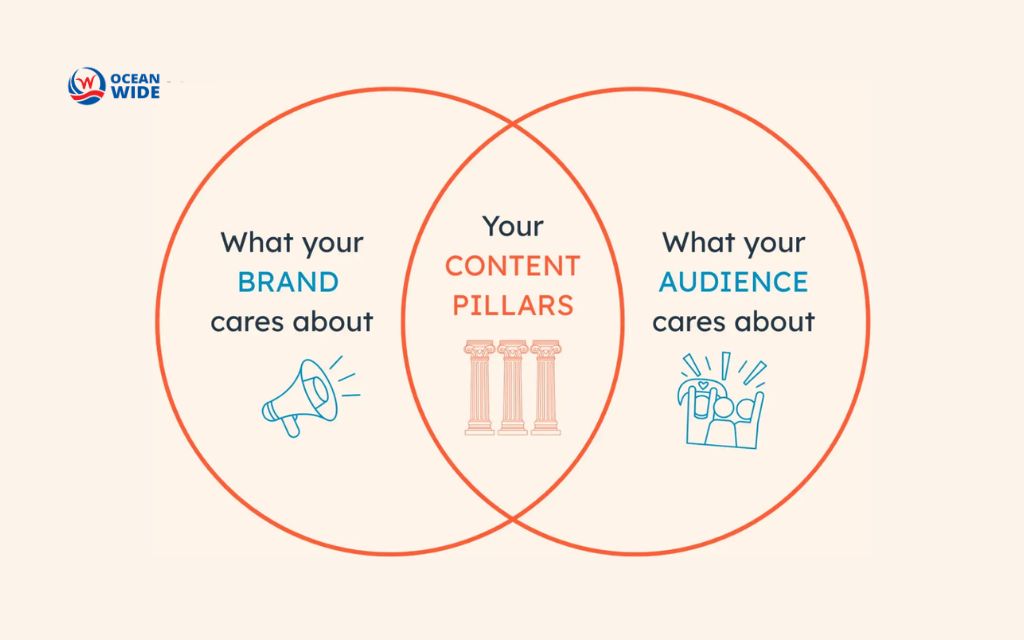
Content pillars are the three to five core themes your brand consistently talks about on social media. They keep your content plan focused and prevent the scramble of trying to think of a new topic from scratch every single day.
Pillars usually combine a mix of purposes:
- Education: How-to content, tips, and explainers that teach your audience something useful.
- Product or service: Features, use cases, and customer results that show what you offer.
- Brand personality: Behind-the-scenes content, team spotlights, and the values behind your brand.
- Community: User stories, questions, and conversations that involve your audience directly.
Once your pillars exist, content ideas become easier to generate. Instead of asking what to post today, you ask which pillar this week’s content needs more of. That shift alone removes a large part of the friction that stalls most content plans before they get off the ground.
Match content formats to each platform
The same idea should not look identical across every platform. Format expectations differ by network, and content that ignores those expectations tends to underperform even when the underlying idea is strong.Take one campaign idea and adapt it by platform instead of publishing the same asset everywhere. Product launches, for example, might become a short demo video for TikTok, a carousel breakdown for Instagram, a detailed post explaining the business case for LinkedIn, and a longer walkthrough video for YouTube. The core message stays the same. The format and the framing change to match how people actually use each platform.
Create a sustainable content workflow
Plan content ahead of time
Set aside time, weekly or monthly, to map out topics against your content pillars and goals. Planning in advance gives you room to research, gather assets, and get approvals before a deadline forces a rushed decision.
Batch creation in dedicated sessions
Group similar tasks together instead of creating one post at a time. Film several videos in a single session, write a week’s worth of captions in one sitting, or design a batch of graphics together. Batching cuts down on the setup and context switching that eats into creative time.
Repurpose one asset across formats
Turn one piece of content into several. One interview can become a short video clip, a quote graphic, a written post, and a set of Stories. Repurposing stretches your creative effort further without asking your team to start from zero for every platform.
Schedule and review on a set cadence
Use a scheduling tool to queue content in advance so publishing does not depend on someone remembering to post in real time. Set a recurring review, weekly or monthly, to check what published, what performed well, and what needs adjustment before the next planning cycle begins.
Distribute content beyond the initial post
Publishing a post is not the same as distributing it. Reach depends on what happens after the post goes live, not just the moment it publishes.
Use these tactics to extend reach after you publish:
- Hashtags: Use tags relevant to your topic to help new audiences discover your content, especially on Instagram and X.
- Community groups: Join and participate in LinkedIn or Facebook groups related to your industry, sharing content when it fits the conversation naturally rather than dropping links without context.
- Employee advocacy: Encourage employees to share company content on their own profiles, since employee networks often reach audiences your brand page cannot access directly.
- Reposting evergreen content: Repost strong content from earlier in the year when it remains relevant, since evergreen topics do not expire after one publish date.

Engage your community
Distribution brings people to your content. Engagement keeps them there. Respond to comments and messages instead of treating them as background noise, since a brand that replies builds trust faster than one that only broadcasts.
Ask questions in captions to invite responses, run polls or quizzes where the platform supports them, and highlight user-generated content when your audience creates it. Featuring a customer story or a fan repost tells your audience their voice matters, which encourages more of the same behavior over time.
Community management works best as a daily habit rather than an occasional task. Setting aside even fifteen minutes a day to respond to comments keeps the conversation alive and signals to the platform’s algorithm that your content generates real interaction.

Measure what matters and adjust
Track metrics tied to business outcomes
Reach, impressions, and follower counts describe visibility, not impact. Treat them as early signals, not the finish line. Pair them with metrics that connect directly to the goals you set at the start: click-through rate to your website, lead form completions, response time on customer questions, or conversions tracked through platform pixels and UTM links.
Engagement quality matters more than engagement volume. Thoughtful comments and shares from your target audience carry more weight than thousands of passive likes from accounts outside your market.
Review performance and adjust the plan
Set a monthly review to check performance against your goals. Identify which pillars, formats, and platforms produced the strongest results, and shift effort toward what works. Drop or rework whatever consistently underperforms instead of continuing it out of habit.
Treat this review as the step that keeps your strategy current. Platforms change their algorithms and features often. The underlying principles behind good strategy, connecting content to goals, understanding your audience, and building a repeatable workflow, stay steady even when the tactics on top of them shift.
Conclusion
Building a social media content strategy takes real work upfront, but it pays off in content that performs with intention rather than luck. Set goals first, understand your audience, build pillars that make ideation easier, and create a workflow your team can sustain over time. Review results regularly and let real performance data guide what comes next.
The Ocean Wide turns a strategy like this into a functioning content engine, from planning through measurement, so your team can focus on running the business while the content keeps working in the background. Growing teams often bring in a dedicated social media service to keep this system running day to day, whether that means building a strategy from scratch or refining one already in place. Call 720-295-9270 to start the conversation.
Frequently asked questions (FAQs)
What is the difference between a social media strategy and a content calendar?
Social media strategy sets the direction: goals, audience, pillars, and platforms. The content calendar handles execution: what gets posted, on which platform, and on what date. Strategy answers why you’re posting. The calendar answers when.
How many content pillars should a brand use?
Most brands work well with three to five pillars. Fewer than that limits variety, while more than five makes the plan harder to manage and dilutes focus across too many themes.
How often should a business post on social media?
Frequency depends on the platform and your team’s capacity to maintain quality. Consistency matters more than volume. Posting three times a week with strong content outperforms posting daily with weak content.
How do you measure the success of a social media content strategy?
Success ties back to the goals set at the start. Track metrics like click-through rate, lead generation, conversions, and engagement quality rather than relying only on reach or follower growth.
Should each platform have a different content approach?
Yes. Audience behavior and content formats vary by platform. Adapting your message to fit each platform’s format and audience expectations performs better than posting identical content everywhere.