Skip to content


Running an awareness campaign on social media isn’t about chasing viral moments or overnight fame. It’s about consistently reaching the right people in your Denver community, building recognition for your message, and earning trust through repeated, reliable presence.
This guide will walk you through everything you need to know about building an effective awareness campaign social media strategy:
- What a social media awareness campaign actually is (and isn’t)
- 10 practical, tested ways to run awareness campaigns in Denver
- Local targeting strategies that respect community trust
- How to measure success beyond vanity metrics like likes and follows
Whether you’re a nonprofit launching a health initiative, a school district promoting a new program, or a community coalition building support for a local cause, this playbook will help you execute with confidence.
What is a social media awareness campaign?
A social media awareness campaign is a planned series of posts and activities designed to increase recognition, understanding, and recall of a message, cause, or brand among a specific audience.
Unlike sales campaigns that push for immediate purchases or lead campaigns that collect contact information, awareness campaigns focus on one primary goal: getting your message in front of people repeatedly until it becomes familiar and trusted.
Typical goals for awareness campaigns include:
- Reach new people who don’t yet know about your cause, event, or organization
- Increase message recall so people remember your key points when they matter most
- Normalize a behavior or idea that might be new or unfamiliar to your community
- Build familiarity and trust over time through consistent, helpful presence
Think of awareness campaigns as planting seeds. You’re not harvesting results immediately, you’re building the foundation for future action, whether that’s attending an event, or simply recognizing your organization as a trusted community resource.

How Denver audiences experience awareness campaigns on social media
Local context matters more than algorithms
Denver audiences don’t respond to social media in a vacuum. They filter every post through their lived experience in specific neighborhoods and communities.
- Neighborhood identity and community pride: A message that resonates in RiNo might need different framing for residents in Westwood. People trust content that reflects their specific community reality, not generic stock photos or one-size-fits-all messaging.
- Trust in familiar local voices: Denver residents are more likely to share a post from a recognized community leader, local nonprofit, or neighbor than from a faceless brand account. This matters enormously for awareness campaigns about sensitive topics like public health, safety, or community services.
- Offline conversations reinforce online exposure: When your social media message aligns with what people are hearing at community meetings, school pickups, or local coffee shops, awareness compounds quickly.
Platforms that work best for awareness in Denver
Different Denver audiences live on different platforms. Here’s what typically works for awareness campaigns:
Facebook remains the go-to platform for community groups, local events, and reaching older demographics (35+). Denver’s neighborhood Facebook groups are particularly active and trusted sources of local information.
Instagram excels at visual storytelling and reaches younger audiences (18-44). Stories and Reels perform well for humanizing your message and showing real faces from the Denver community.
TikTok offers unprecedented organic reach for awareness campaigns when done authentically. Short, genuine storytelling videos can reach thousands of Denver residents who would never see your posts on other platforms, especially younger audiences (18-34).
LinkedIn works for professional and B2B awareness campaigns, particularly if your message targets Denver’s business community, healthcare professionals, educators, or city/county staff.
The “see it multiple times” rule
Awareness doesn’t happen from a single post. Research consistently shows people need to see a message 7-10 times before it registers and sticks.
This means your awareness campaign social media strategy must include:
- Repetition of your core message across multiple posts and formats
- Consistent visuals and language so people recognize your campaign instantly
- Time to let exposure build – awareness campaigns typically run 2-12 weeks, not 2-3 days
Resist the urge to constantly change your message or creative. That fresh new angle you’re excited about? Your audience hasn’t even noticed the original one yet.
The foundation of a strong social media awareness campaign
Define one clear message
Before posting anything, identify the single most important thing you want audiences to know, understand, or remember.
Strong awareness campaign messages are simple and specific:
- “Free mental health counseling is available at three Denver locations”
- “The city’s new recycling program starts June 1”
- “This summer reading program exists for all Denver kids”
Witty wordplay might win creative awards, but plain language wins awareness. If your grandmother, a busy parent, and a non-native English speaker can all understand your message in 3 seconds, you’ve nailed it.
Identify your primary local audience
Who specifically in Denver needs to hear your message? Get concrete:
Geography: Are you targeting all of Denver metro, specific zip codes, certain neighborhoods, or areas near particular landmarks?
Demographics: Age ranges, language preferences, family status, income levels – but only the factors that truly matter for your message.
Community roles: Parents of school-age children? Small business owners? Healthcare workers? College students? Seniors? Be specific about who you’re trying to reach.
Example: “Spanish-speaking parents of elementary students in Southwest Denver” is far more useful than “Denver families.”
Choose a realistic campaign timeline
Awareness campaigns need enough time to build repetition but not so long that your team burns out.
Short bursts (2-4 weeks): Work well for specific events, deadlines, or time-sensitive messages. Post daily or every other day.
Ongoing awareness (2-3 months): Better for behavior change, new programs, or causes that need sustained attention. Post 2-3 times per week with variation.
Consistency matters more than volume: 3 posts per week for 6 weeks will build more awareness than 15 posts in one week followed by silence. Your audience needs repeated exposure over time, not information overload in a short window.
10 practical ways to use social media for brand awareness
Consistent visual identity across posts
Create a simple visual template for your awareness campaign and stick with it. Use the same colors, fonts, and logo placement across every post.
This visual consistency helps people recognize your campaign instantly, even before they read a single word. When scrolling quickly through feeds, that instant recognition is powerful.
Use colors and imagery that reflect your specific community. If you’re promoting a program in Five Points, include images and graphics that authentically represent that neighborhood’s culture and identity.
Practical tip: Create 2-3 Canva templates and reuse them throughout your campaign. This saves time and builds recognition.
Repetition of key messages (without copy-paste)
Say the same thing multiple ways. Your core message stays identical, but the format changes.
- Week 1: Static image post with your main message
- Week 2: Short video of a community member sharing the same information
- Week 3: Carousel post breaking down the message into steps
- Week 4: Story series featuring the message in different contexts
This approach prevents audience fatigue while building the repetition awareness campaigns require.
Denver application: Share your message in both English and Spanish (when relevant to your audience). Different community members consume content in different languages, and reaching both expands your awareness impact.
Community-focused storytelling
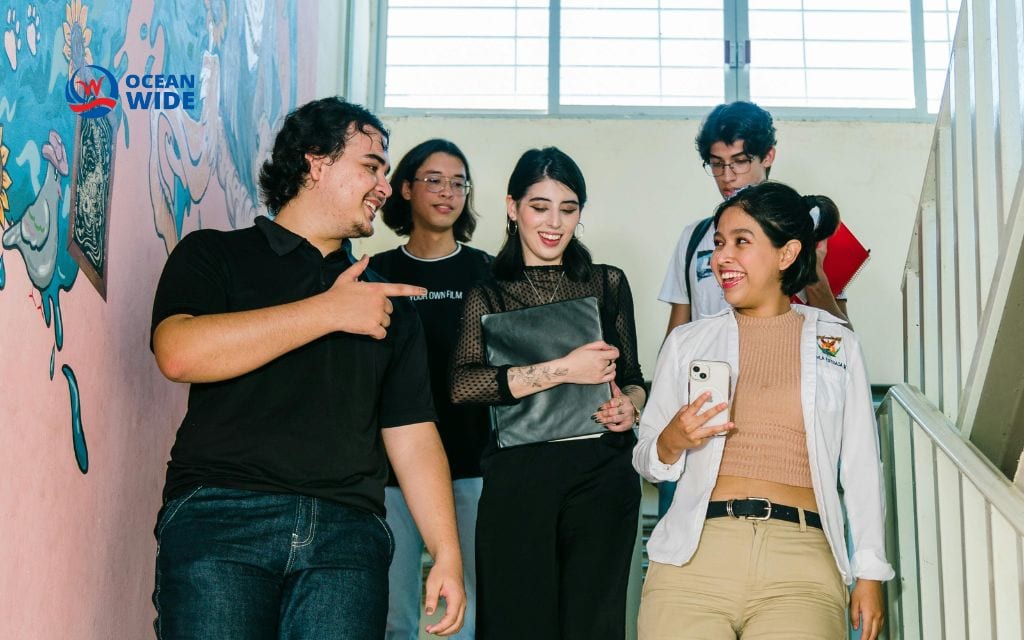
Feature real people from your Denver community, not stock photos, not abstract concepts. Put faces and names to your message.
People trust people. When Denver residents see their neighbors, coworkers, or community leaders talking about your cause, credibility and awareness both increase.
Examples that work:
- Short video of a program participant explaining how it helped them
- Quote graphics featuring local community leaders
- Before/after stories from real Denver families or organizations

Educational, plain-language content
Awareness campaigns often introduce new information, programs, or ideas. Make learning easy.
Create posts that answer:
- “What is this?”
- “Why does it matter to me?”
- “What should I do with this information?”
Format suggestions:
- FAQ posts addressing common questions
- “What this means for you” explanations in everyday language
- Step-by-step guides with numbered lists
This approach is especially critical for public health awareness campaigns, new city programs, or safety initiatives. Denver’s diverse population includes people with different educational backgrounds, English proficiency levels, and familiarity with official programs. Plain language respects everyone’s time and comprehension.
Use of local hashtags and location tags
Make your awareness campaign discoverable to people searching for Denver-specific content.
Effective hashtag strategy:
- City-level: #Denver, #DenverCO, #MileHighCity
- Neighborhood-level: #CapitolHill, #Highlands, #ParkHill
- Community-level: #DenverNonprofits, #DenverFamilies, #303Community
Always add Denver-area location tags to posts and Stories. This increases visibility to people browsing location-based content and reinforces your local credibility.
Instagram and Facebook Stories: Use location stickers for Denver neighborhoods when posting Stories, this gets your content into location-based Story feeds where Denver residents browse.
Partner and cross-post with local organizations
Amplify your awareness reach by collaborating with other trusted Denver organizations.
Partnership opportunities:
- Nonprofits serving similar communities
- Schools and parent organizations
- Community centers and neighborhood associations
- Local businesses with aligned values
- Denver media outlets and community blogs
When you share each other’s awareness campaign content, you tap into established trust and reach new audiences who already follow your partners.
Denver example: A mental health awareness campaign partnering with Denver Public Schools, local pediatricians, and family-focused nonprofits reaches far more parents than any single organization could alone.
Short video and story formats
Video, especially short-form video, humanizes your message and stops scrollers in their tracks.
High-impact formats:
- Instagram/Facebook Reels (15-60 seconds): Share quick tips, testimonials, or explanations
- Stories (15 seconds per slide): Behind-the-scenes content, quick announcements, polls
- TikTok (15-60 seconds): Authentic, personality-driven content works best
You don’t need professional equipment. Denver audiences respond better to authentic smartphone videos from real community members than to polished corporate productions.
Script template for awareness videos:
- Hook (3 seconds): “Did you know Denver offers free…”
- Main message (30 seconds): Explain the key information
- Call to action (5 seconds): “Learn more at [website]” or “Share with someone who needs this”

Light paid promotion to extend reach
Even small ad budgets ($50-$200 total) can significantly expand your awareness campaign’s reach in Denver.
How to use paid promotion for awareness:
- Boost your best organic posts to a targeted Denver geographic area
- Select “Awareness” or “Reach” as your objective (not clicks or conversions)
- Target by location (specific Denver zip codes or radius around a location)
- Run ads for 7-10 days to build repetition
$5-10 per day can reach an additional 500-2,000 Denver residents. For many community awareness campaigns, that’s a significant impact from a small investment. Use Facebook’s detailed targeting to reach specific demographics (parents, healthcare workers, age ranges) within Denver boundaries.
Encourage low-barrier engagement
Make it easy for supporters to help spread your awareness message without requiring significant effort.
Engagement prompts that work:
- “Share this to your Story” (Instagram/Facebook)
- “Tag someone who needs to know this”
- “Save this post to find it later”
- “Turn on post notifications to stay updated”
These actions cost your audience nothing but seconds of time, yet they dramatically expand your message’s reach within Denver networks. Every share, story reshare, or tag introduces your message to new people. Awareness compounds through these small social actions.
Address questions and misinformation promptly
Your awareness campaign doesn’t stop when you hit “post.” Active monitoring and response builds trust.
Comment monitoring strategy:
- Check comments at least twice daily during active campaign periods
- Respond to questions within 24 hours
- Address misinformation calmly with facts and credible sources
- Thank people for sharing and engaging
In tight-knit Denver communities, how you handle public comments and concerns directly impacts your organization’s reputation. Respectful, prompt responses demonstrate that real people stand behind your message.
Don’t delete (unless truly abusive). Instead, respond with correct information and link to trusted sources. Other readers see this exchange and learn from it.

Measuring success in a social media awareness campaign
Metrics that matter for awareness
Forget likes. Awareness campaigns succeed based on how many people see and remember your message.
Primary metrics to track:
Reach: The number of unique people who saw your content. This is your awareness metric.
Impressions: Total times your content was displayed. Higher impressions relative to reach mean people are seeing your message multiple times, exactly what awareness requires.
Frequency: Average number of times each person saw your content. For awareness campaigns, frequency of 3-5 is ideal.
Secondary signals:
Saves: People bookmark your post to reference later, strong sign they value the information
Shares: Community members spreading your message to their networks
Comments: Questions, discussions, and reactions that show engagement with your message
What not to over-optimize for
These metrics matter for other campaign types but are poor indicators of awareness success:
Sales or conversions: Awareness campaigns plant seeds; sales happen later in the customer journey.
Immediate website clicks: Awareness builds recognition first. Action comes after awareness is established.
Viral spikes: Going viral sounds exciting but rarely builds sustained awareness or trust. Consistent reach beats viral moments for awareness goals.
Qualitative indicators of awareness
Sometimes the best proof of awareness happens offline:
People reference your posts in conversations: When you hear “I saw on Instagram that…” or “Someone shared that post about…”, your awareness campaign is working.
Increased inquiries or questions: More people calling, emailing, or visiting your website asking about your message or program.
Media or partner mentions: Local journalists, bloggers, or other organizations start referencing your campaign message.
Community conversations shift: People start using your language or talking about your issue differently than before your campaign launched.
These qualitative signals often matter more than any analytics dashboard for understanding true awareness impact in Denver communities.
Conclusion
Social media awareness campaigns work through consistency and trust, not creative genius or lucky timing.
Remember what matters most:
- Awareness campaigns succeed through repetition. Post your core message in multiple formats over weeks, not days. Let repeated exposure do its work.
- Local relevance matters in Denver. Generic content gets ignored. Posts that reflect specific neighborhoods, authentic community voices, and real Denver experiences build trust and awareness.
- Clear messaging beats clever messaging. Your audience should understand your main point in 3 seconds. If they have to think hard about what you mean, awareness won’t happen.
- Start small and commit. You don’t need a massive campaign. Choose one clear message, commit to posting consistently for 4-6 weeks, and measure your reach, not your likes.
Ready to launch your awareness campaign? Pick one message that matters to your Denver community. Create 2-3 simple post templates. Then show up consistently on social media where your audience already spends time. Track your reach, listen to feedback, and trust the process.
Awareness builds gradually, like trust. Give it time, stay consistent, and measure what actually matters.
____________
Social Marketing Services at The Ocean Wide
The Ocean Wide’s social marketing service creates awareness campaigns that build recognition and trust for Denver businesses. We develop complete strategies – visual identity, multi-platform content, community partnerships, and local targeting – designed to establish your message in the Denver market.
With 15+ years serving Colorado clients, we manage campaigns across Facebook, Instagram, TikTok, and LinkedIn. We track real awareness metrics: reach, impressions, and message recall, not vanity numbers. Most Denver clients see measurable growth within 3-4 weeks.
Contact: 1007 S Federal Blvd, Denver, CO 80219 | (720) 334-0899
Frequently asked questions (FAQs)
What is an awareness campaign on social media?
A social media awareness campaign is a planned series of posts designed to increase recognition and understanding of a specific message, cause, or brand among a target audience. Unlike sales campaigns, awareness campaigns focus on reaching people repeatedly until your message becomes familiar and trusted, not driving immediate action.
How long should a social media awareness campaign run?
Most effective awareness campaigns run 4-8 weeks minimum. Short bursts (2-4 weeks) work for time-sensitive messages like events, while behavior change or new program awareness needs 2-3 months of consistent posting. The key is posting regularly throughout the timeline, not cramming all your content into one week.
Which platform is best for awareness campaigns?
The best platform depends on your Denver audience. Facebook reaches older demographics and community groups effectively. Instagram works well for visual storytelling and reaching ages 18-44. TikTok offers strong organic reach for younger audiences. LinkedIn serves professional and B2B awareness. Start where your specific audience already spends time.
How do you measure brand awareness on social media?
Track reach (unique people who saw your content), impressions (total views), and frequency (average times each person saw your message). These metrics show whether you’re building the repeated exposure awareness required. Saves and shares indicate message value. Avoid over-focusing on likes or clicks – those don’t measure awareness effectively.
Do small organizations need paid ads for awareness?
Paid promotion helps but isn’t required. Organic posting, community partnerships, and cross-posting can build significant awareness without ad spend. However, even small budgets ($50-200 total) dramatically expand reach. Consider light paid promotion to boost your best posts to targeted Denver geographic areas if budget allows.