Your Instagram grid looks perfect. Your Facebook posts get scheduled on time. But engagement keeps dropping, and customers scroll right past.
The problem is not your content calendar. The issue is that static posts no longer create the kind of interaction that turns browsers into buyers. Augmented reality social media marketing changes that dynamic completely. Instead of passive scrolling, your audience tries on products, plays branded games, and creates memories with your brand at the center.
In 2026, augmented reality is not a gimmick. It has become a conversion tool that works when you choose the right platforms and formats for your business goals. The landscape shifted dramatically in 2024 when Meta shut down Spark AR, forcing brands to rethink their AR strategy entirely. The channels changed, but the opportunity grew stronger.
This guide shows you what augmented reality social media marketing actually means for Denver businesses right now. You will learn which platforms still deliver results, how to plan your budget, launch your first campaign, and measure the outcomes that matter: engagement, leads, and sales.
What is augmented reality in social media marketing?
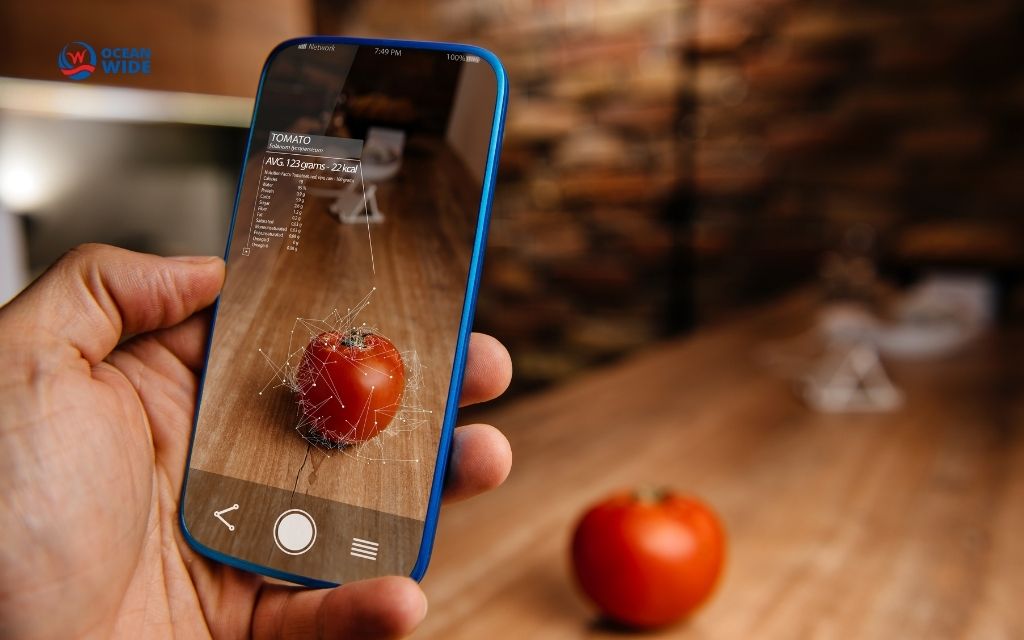
Augmented reality in social media marketing uses interactive digital overlays to let users engage with your brand through their phone camera or screen. The technology places filters, lenses, 3D objects, and WebAR experiences into the real world users see through their device.
The difference between showing a photo of sunglasses and letting someone try them on through their phone camera matters. The first asks customers to imagine. The second removes that friction entirely.
The technology takes several forms:
- Try-on lenses let customers preview products in real time.
- Interactive games create branded entertainment.
- Location-based AR connects digital experiences to physical spaces.
- Product visualization shows customers exactly how items look before purchase.
Each format creates active participation instead of passive viewing, which creates stronger memory formation and better conversion outcomes.
AR social media vs traditional social content
Traditional social content asks users to look at something. Augmented reality social media asks users to create something with your brand.
- When someone scrolls past a static post, they pause for one or two seconds. When someone opens an AR lens, they spend 20 to 75 seconds interacting. The engagement time difference ranges from 10x to 40x longer.
- Static posts create recognition memory. AR experiences create episodic memory, the strongest form. 6 weeks after seeing a static post, most users cannot remember the brand. 6 weeks after using an AR lens, users often recall both the brand and the specific experience.
- Sharing behavior tells the same story. Static posts get shared when they contain remarkable information. AR experiences get shared because users want to show what they created.
The motivation shifts from “this is interesting” to “look what I did,” which drives higher organic reach.
The 2026 reality – Where AR social media still works
What changed
Meta shut down Spark AR Studio in January 2024, removing custom AR filters for Instagram and Facebook. Brands that built their strategy entirely on Instagram lost their distribution channel overnight. The shutdown did not kill augmented reality social media marketing. It forced the industry to diversify.
The shutdown improved the AR landscape by pushing brands toward platforms with stronger targeting and measurement tools. Brands that diversified maintained their programs without disruption. The lesson for Denver businesses is clear: build your augmented reality social media marketing strategy across multiple channels from day one.
Top platforms for AR social media marketing now
3 platforms deliver consistent results today.
- Snapchat remains strongest for retail, restaurants, nightlife, and events. Users expect AR experiences, and the platform offers geo-targeting that reaches users within walking distance of your business. That combination makes Snapchat the top choice for foot traffic campaigns.
- TikTok entered AR through Effect House. TikTok effects go viral when creators use them in trending content. That makes TikTok ideal for maximum reach and social proof rather than direct conversion.
- WebAR works through QR codes without requiring app downloads. Users scan codes and access AR through their browser. WebAR excels at event activations, in-store experiences, and product packaging.
| Platform | Best For | Engagement Time | Local Targeting | App Required |
| Snapchat | Retail, dining, nightlife, events | 20 – 45s | Yes, precise | Yes |
| TikTok | Brand awareness, viral campaigns | 15 – 60s | Limited | Yes |
| WebAR | Events, in-store, packaging | 30 – 90s | Placement only | No |
Choosing the right platform for your business
The platform choice depends on where your customers are and what action you want them to take.
- Want foot traffic to a physical location? Snapchat gives you the best tools with specific radius targeting and direct attribution from AR engagement to physical visits.
- Want to reach younger audiences who need brand exposure? TikTok delivers scale. Users create content actively, turning your brand into their content background.
- Run events or pop-ups? WebAR eliminates friction. Users scan QR codes and immediately access experiences without app downloads or account creation.
Ask 3 questions:
- Where do your target customers spend time?
- What specific action do you want them to take?
- How will you measure success?
Those answers point to the right platform.
Why Denver businesses should care about AR in social media
AR fits local, experience-driven marketing
Denver customers expect experiences, not just transactions. The local market values authenticity, creativity, and brands that understand the culture. Augmented reality social media marketing aligns perfectly with those preferences.
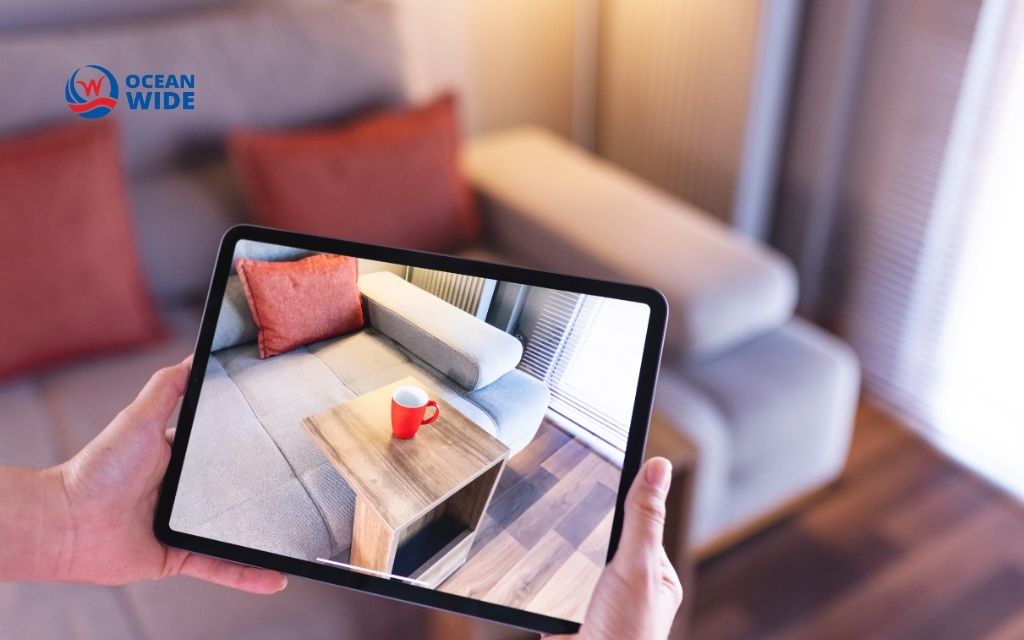
Try-before-you-buy AR removes purchase friction. Furniture stores show how couches look in living rooms. Eyewear retailers let customers try frames through phone cameras. Each use case reduces uncertainty that prevents purchases.
Event-based engagement turns temporary moments into shareable memories. Music festivals create AR scavenger hunts. Restaurants launch limited-time AR experiences tied to seasonal menus. These campaigns create urgency and social proof simultaneously.
The physical and digital bridge matters in Denver. Residents value outdoor activities, local businesses, and community events. A brewery uses WebAR to tell stories behind each beer when customers scan coasters. A hiking outfitter creates AR trail guides through QR codes at trailheads. A gallery adds AR layers to exhibitions with artist commentary.
Industries that win with AR in Denver
Restaurants and bars use AR for menu previews, limited-time drink promotions, and event-night lenses. A bar creates Snapchat lenses for First Friday. A restaurant builds WebAR showing plating and portion sizes.
Retail and boutiques benefit from try-on experiences and style visualization. A clothing boutique creates TikTok effects showing outfit combinations. A furniture store builds WebAR placing 3D models in customer homes.
Fitness studios and gyms use AR challenges and transformation visualizations. A yoga studio creates Snapchat lenses tracking daily practice streaks. A gym builds TikTok effects overlaying workout stats onto user videos.
Real estate and property tours gained tools through AR visualization. Potential buyers scan QR codes on for-sale signs to see 3D floor plans. Developers show what empty lots will look like when construction completes.
Festivals, sports venues, and nightlife brands create memorable experiences. Concert venues create AR effects turning crowd photos into shareable content. Sports teams build AR games fans play during halftime.
When AR is worth the investment
- AR is worth investment when you want differentiation in a crowded market. AR creates clear contrast when competitors use the same marketing playbook.
- AR delivers value when you have physical space or products that benefit from visualization. Customers who need to see how something looks, fits, or functions get the most value.
- AR makes sense when you run promotions or events creating natural sharing moments. Limited-time experiences create urgency. Location-based AR creates exclusivity.
AR is not ideal for pure B2B lead generation or when you cannot define clear interaction goals connecting to business outcomes.
The right time to invest is when you can answer: What specific problem does the AR experience solve? How will you measure success? What happens after someone uses it?
How to plan an AR social media campaign
Step 1: Define the business goal
Every augmented reality social media marketing campaign needs one primary goal.
- Choose awareness when you need to reach new audiences.
- Choose engagement when you have awareness but need deeper interaction.
- Choose leads when you need contact information.
- Choose in-store visits when you operate physical locations.
- Choose sales when you need immediate revenue.
Write your goal as one sentence with a number and timeframe. “Generate 10,000 AR lens uses from Denver-area users in 30 days” is a goal. “Increase awareness” is not.
Step 2: Choose the right AR format
| Business Goal | Best AR Format | Platform | Budget Range |
| Awareness | Branded lens or effect | TikTok/Snapchat | $3,000 – $8,000 |
| Engagement | Interactive game or quiz | Snapchat/WebAR | $5,000 – $12,000 |
| Leads | Gated experience | WebAR | $4,000 – $10,000 |
| Store visits | Geo-targeted lens | Snapchat | $3,000 – $15,000 |
| Sales | Product try-on | WebAR/Snapchat | $6,000 – $18,000 |
The format determines creative requirements, development timeline, and measurement approach. Match your format to audience behavior. Younger audiences engage with TikTok effects. Older audiences respond to utility-focused WebAR. Local audiences prefer Snapchat lenses rewarding location visits.
Step 3: Map the user experience
Define discovery, interaction, and outcome before development begins.
- Discovery: How do users find your AR experience? Organic sharing, paid ads, QR codes, email links, or influencer promotion.
- Interaction: What exactly does the user do? Point camera at face? Scan environment? Tap buttons? Simpler interactions drive higher completion rates.
- Outcome: What happens after completion? Sharing to social media, clicking to landing page, receiving discount code, getting directions, or adding to cart.
Map the complete flow.
A restaurant promotion example might look like this: The user sees a Snapchat ad promoting a new menu item. They swipe up and the lens opens. Lens shows them holding 3D dish models with animation. Text offers 20 percent off this week. The user taps the offer button and receives unique code. They share lens results. Friends see the story and try the lens.
Step 4: Set a realistic budget
Simple lenses with basic face tracking cost $3,000 to $8,000 for development. Development takes two to four weeks. These work for awareness campaigns.
Custom AR experiences with 3D object placement or complex interactions cost $8,000 to $18,000. Development takes four to eight weeks. These work for engagement and conversion campaigns.
WebAR activations with event integration cost $5,000 to $15,000 plus $500 to $2,000 monthly for hosting. Development takes three to six weeks.
Distribution costs sit on top. Organic reach costs nothing but delivers unpredictable results. Snapchat ads require $2,000 to $10,000 minimum to reach Denver audiences. Influencer partnerships range from $500 to $5,000 per influencer.
Complete first campaign budgets typically range from $8,000 to $25,000 including development, promotion, and measurement.
Measuring ROI for AR social media marketing
Engagement metrics that matter
Time spent measures how long users engage from opening to closing. Below 15 seconds suggests lack of value. Above 30 seconds indicates strong engagement.
Interaction rate measures percentage who actually interact rather than immediately close. Below 40 percent suggests confusing interfaces. Above 70 percent indicates intuitive design.
Shares and saves measure social amplification. Share rates vary by platform. TikTok effects enabling creative expression can see 30 percent share rates. Utility WebAR might see below 5 percent. Neither is better – they serve different goals.
Conversion & business metrics
Click-through to offer measured percentage taking next steps toward purchase. Below 5 percent suggests weak offers. Above 15 percent indicates strong product-market fit.
QR scans to visits measures foot traffic attribution. Restaurants see 10 to 25 percent redemption. Retail stores see 5 to 15 percent. Service businesses see 3 to 10 percent.
Promo code redemptions measure direct revenue attribution. Track unique codes separately from other sources. Calculate revenue generated divided by campaign cost. Augmented reality in social media marketing typically delivers 1.5x to 4x ROAS.
| Campaign Type | Click-Through | Visit Rate | Purchase Rate | ROAS |
| Awareness lens | 2-5% | N/A | N/A | Not measured |
| Geo-targeted offer | 8-15% | 10-25% | 3-8% | 1.5-3x |
| Product try-on | 15-30% | N/A | 5-12% | 2-4x |
| Event activation | 5-12% | 20-40% | N/A | 1-2.5x |
Conclusion
Augmented reality social media marketing creates memorable experiences that static posts cannot match. The platforms changed after Meta shut down Spark AR, but opportunities expanded through Snapchat, TikTok, and WebAR.
Local businesses win with AR when they focus on specific outcomes. Choose one format solving a real customer problem. Launch one campaign with clear measurement. Learn what works and do more of it.
Your competitors post static images hoping for engagement. You can create experiences customers remember and share.
Ready to build AR experiences that bring customers to your door? The Ocean Wide helps Denver businesses plan, launch, and measure augmented reality social media marketing campaigns that deliver real results.
Call us at (720) 295-9270 or visit our office at 1007 S Federal Blvd to start your first AR campaign.
Frequently asked questions (FAQs)
What is augmented reality social media marketing?
Augmented reality social media marketing uses interactive digital overlays on platforms like Snapchat, TikTok, and WebAR to let users engage with brands through phone cameras. Users try on products, play branded games, or explore virtual content in real environments. The format creates higher engagement and better conversion than traditional social content.
Is AR still effective after Instagram removed Spark AR?
AR became more effective after Meta shut down Spark AR in 2024 because brands diversified to platforms with better targeting and measurement. Snapchat offers precise geo-targeting. TikTok provides viral distribution. WebAR works across any device without app downloads. The platform change forced stronger strategies instead of single-channel reliance.
How much does an AR social media campaign cost?
AR campaign costs range from $8,000 to $25,000 for most Denver small businesses. Simple lenses cost $3,000 to $8,000. Custom product visualization costs $8,000 to $18,000. WebAR activations cost $5,000 to $15,000 plus monthly hosting. Budget another $2,000 to $10,000 for paid promotion.
Which platforms are best for AR in social media?
Snapchat works best for driving foot traffic through geo-targeted lenses. TikTok delivers maximum reach for brand awareness campaigns. WebAR excels at event activations and in-store experiences because it requires no app download. Choose based on your goal: foot traffic needs Snapchat, awareness needs TikTok, events need WebAR.
Can small local businesses use AR marketing successfully?
Small businesses see strong ROI from augmented reality social media marketing with specific outcomes. Restaurants use AR menu previews. Retail stores use try-on experiences. Fitness studios use challenge filters. Success requires clear goals, appropriate budget, and measurement of business outcomes rather than vanity metrics.